Medical advances and public health interventions have helped dramatically reduce the stroke death rate in the U.S. Overall age-adjusted stroke mortality fell 82% in the last half-century, according to an August 2026 study in the Journal of the American Heart Association.
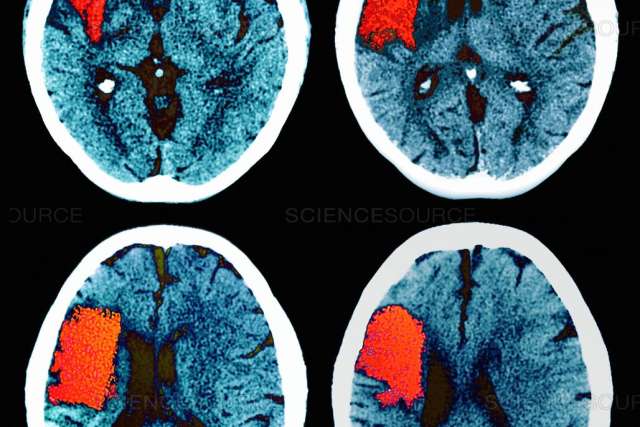
Stroke occurs when a clot or clogged artery is blocking blood flow to the brain (ischemic stroke: the vast majority). Less common is the rupture of a brain blood vessel (hemorrhagic stroke).
Specialists at the UCLA Health Comprehensive Stroke Center have an array of tools and treatments – Mobile Stroke Units, clot-busting drugs, clot-retrieving devices, neurovascular surgery – in a race against time and the threat of losing millions of precious brain cells.
Rescuing the brain in this acute period is critical. Repairing the brain afterward is less certain. A leading cause of adult disability is injury to the brain from stroke.
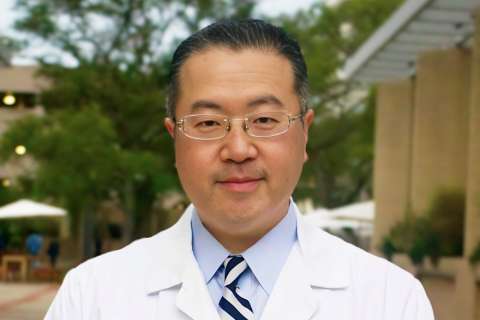
“The brain has a limited capacity to repair,” says S. Thomas Carmichael, MD, PhD, professor and chair of the department of neurology at the David Geffen School of Medicine at UCLA. “Most of us have seen that stroke survivors get a little or much better and then hit a ceiling and don't get all the way back.”
Dr. Carmichael explains that the bulk of recovery happens in the subacute period, the first three months after a stroke, at the height of neuroplasticity, the brain’s ability to reinvent itself.
What kind of new connections the brain forms is key. So rehabilitation has been the standard of care for the last 70 years. Repetitive, focused practice through physical, occupational and speech therapies helps mold and reinforce the brain’s rewiring through activity-dependent plasticity.
But for most patients, rehab is generally small and inconsistent, not nearly enough to aid the brain. And unlike so many other diseases and conditions, stroke has no approved drug, gene therapy or vaccine.
That will soon change.
Clinicians and scientists in UCLA’s neural repair group, one of the largest and most recognized in the U.S., are developing new ways to repair the brain after stroke. And they’re expanding the timeline to rebuild and restore neuronal connections by months and years. Federal and state dollars and philanthropic funds have powered decades of their research that looks to transform the lives of millions of stroke survivors.
Repair with telehealth
“If you listen to patients, they will teach you a heck of a lot.”
Steven Cramer, MD, was testing a robotic device for physical therapy. A stroke survivor in the study had a pointed observation: “Dr. Cramer, if I could get to rehab, I wouldn't need rehab.”
The director of the neurorehabilitation program at UCLA Health realized his lab wasn’t the best place for people with injury to the central nervous system.
For the last 15 years – since well before the pandemic-era boom in virtual care – Dr. Cramer and his team have been studying how telerehabilitation can bring intensive, effective therapy to stroke survivors in their homes.
It focuses on improving arm and hand mobility, since 80% of survivors experience upper limb impairment.
“In my lab we say, no arm movement, no Mozart, no Monet. It's fundamental to human expression,” says Dr. Cramer, a professor in the department of neurology at the medical school.
The patient logs on to an in-home workstation six days a week to play 35 different functional games, such as Whack-A-Mole, a slot machine and clay pigeon shooting. Each one varies demands on the patient’s movement speed, range of motion and squeeze strength.
A licensed therapist guides the 70-minute sessions remotely three times a week. The patient independently completes the rest.
Studies over the last decade have demonstrated significant improvements.
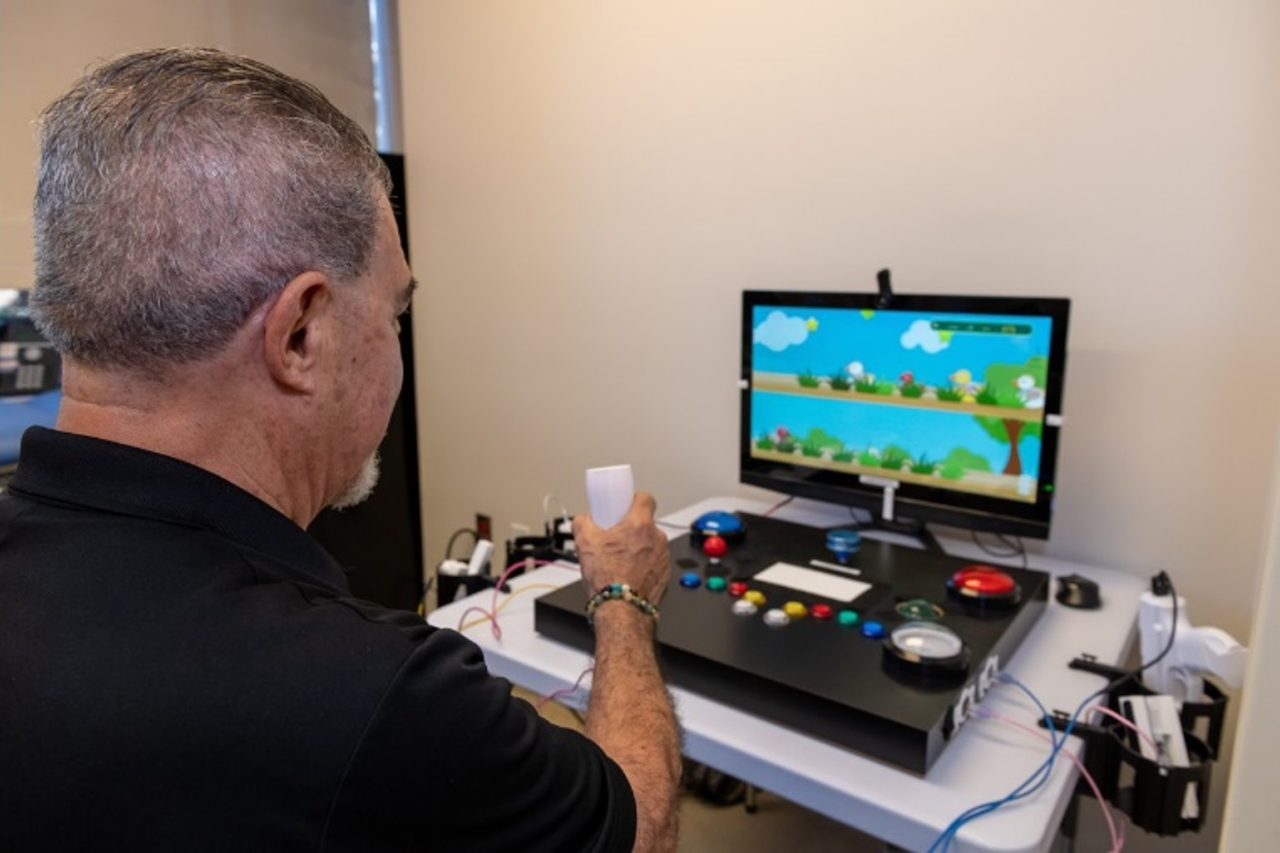
“Everyone had some benefit, but about half of the people who got the telerehab had a major boost in overall function,” says Dr. Cramer, who is also medical director of research at California Rehabilitation Institute, a UCLA Health affiliate hospital.
“People's arms start moving and they can make that bologna sandwich or hug their grandkids.”
Dr. Cramer’s team is now conducting a national phase 3 clinical trial of telerehabilitation for patients who had a stroke three to nine months before.
A positive outcome could help change how medicine is practiced. In the current system, Dr. Cramer points out, most stroke survivors receive little or no outpatient therapy. That’s due to high costs, health insurance restrictions and transportation issues.
In the future, he hopes to study the effects of telerehabilitation on other impairments, such as language deficits and difficulty walking.
“Stroke is a condition where patients retreat,” he says. “We're just trying to ensure that this population, with these difficulties, has maximum access to the care that they need and deserve.”
Repair with a device
Another method to target arm movement implants a device into the nervous system.
Dr. Cramer was co-author of a pivotal April 2021 study in The Lancet medical journal which found that vagus nerve stimulation (VNS) doubled improvement in arm and hand mobility, compared with standard rehab alone. A few months later, the Food and Drug Administration approved VNS paired with rehabilitation for ischemic stroke survivors.
The ideal candidate has moderate to severe impairment, but with some level of function. Most have reached a plateau in gains with physical rehabilitation.
VNS is for patients at least six months out from an ischemic stroke. But they can be years out, with no real expiration on how long since the stroke, says Ausaf Bari, MD, PhD, an associate professor and a vice chair in the department of neurosurgery at the medical school.
“We’re really trying to target hand function. Reaching and grasping is what we're trying to make better.”
Dr. Bari has also been implanting VNS devices for many years for other conditions, such as treatment-resistant epilepsy and depression.
In an outpatient procedure, he makes a small incision several centimeters deep on the left side of the patient’s neck. He gently lifts up a blood vessel to expose about 2 inches of the vagus nerve, the communication highway that links the brain with the heart, lungs and digestive tract.
Dr. Bari wraps the spring-like VNS device around the nerve, like ivy tightly coiled around a pole. He attaches the wire of the device to a long-lasting battery and places it below the patient’s collarbone through a second incision.
During an intensive, six-week rehab, a licensed therapist stimulates the device only when the patient is attempting to reach or grasp. The device remains in place long-term so the patient can then do VNS for 30 minutes a day on their own.
Active research is now exploring if VNS can improve post-stroke speech and walking difficulties. Further studies may also uncover a fundamental unknown: how exactly the technology works beyond promoting activity-dependent plasticity.
“We believe it prompts the brain to release neurotransmitters, such as norepinephrine, which helps neurons near the area of the stroke to function better,” Dr. Bari says.
That translates to a stroke survivor’s ability to resume aspects of daily life. Dr. Bari recalled one of his patients, a young woman whose simple goals were to hold a purse and apply her own lipstick. A year after a VNS implant and therapy, she was able to do both.
Dr. Bari finds that restoration the most fulfilling aspect of functional neurosurgery. Being “an electrician for the brain” is what has long fascinated him, even as a teenager shadowing a neurosurgeon at his local community hospital.
“Even after you know the science behind it, and you've done maybe a hundred of the same procedure, it never gets old,” Dr. Bari says. “It's still sort of miraculous.”
Repair with a therapeutic
In an expanded study of telerehabilitation, stroke survivors began their in-home therapy by ingesting a placebo pill. It was meant to simulate the day when a drug would be available to link with physical rehabilitation and accelerate activity-dependent plasticity.
That day is getting closer. UCLA scientists, including neurology chair Dr. Carmichael, have not only determined what rehab does on a molecular level but have already developed a drug that mimics it. The therapy is a third of the way toward clinical trials in patients.
“We found the drug activates a neural circuit that's turned off after stroke in both mice and humans,” Dr. Carmichael says. “It helps brain areas that previously didn't do a function, like moving a limb, to coordinate and start doing it.”
The drug, DDL-920, was formulated by the team of Varghese John, PhD, a medicinal chemist from the pharmaceutical industry who was recruited to UCLA as professor and principal investigator of the Drug Discovery Lab in the department of neurology.
In the Carmichael Lab, assistant researcher Naohiko Okabe, PhD, devised a setup to mimic human rehab with an animal model. A mouse ingests a few drops of a sweet condensed milk formula with DDL-920.
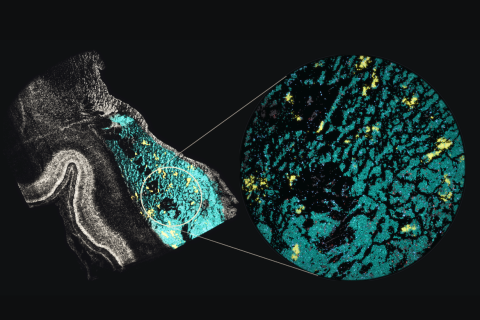
The drug turns on a brain rhythm called gamma oscillations, which were previously silenced by stroke. The therapy is also being extensively tested in human cell culture models.
DDL-920 is actually the second drug UCLA researchers are studying for brain repair. The first repurposes maraviroc, a medication already approved to treat HIV infections.
The Carmichael Lab determined that blocking a molecule called CCR5 improves stroke recovery in mice. Maraviroc acts as a CCR5 blocker. The repurposed drug is in clinical trials at three global sites and the trials are expected to be completed this year.
The goal with both drugs is to treat all types of stroke. Dr. Carmichael’s team has also tested DDL-920 in models of Alzheimer's disease, to enhance memory.
“The future of neurology is that we develop therapies that generalize, that use the same principles across brain disease,” he says.
That’s also the case for stem cell technology, which is being studied for chronic “white matter strokes” and vascular dementia. Both affect connections in the brain and expand progressively into normal tissue.
The stem cells develop into immature astrocytes, star-shaped brain cells that support neurons. They are master regulators that can direct organized repair by insulating injured connections and sprouting new ones in damaged areas.
Yet another novel therapy arose when the Carmichael Lab collaborated with biomedical engineer Tatiana Segura, PhD. The team created a hydrogel that is injected into the stroke lesion in the brain. The gel contains growth factors that prompt new connections in the adjacent tissue, the area with the most robust plasticity. Animal models showed marked improvements in function after injecting the hydrogel.
Dr. Carmichael devotes Monday and Friday afternoons to his lab, with much of the week to see patients, including stroke survivors, in the clinic. But the interaction he remembers most was nearly 20 years ago when he was junior faculty.
A woman brought in her husband. A hemorrhagic stroke in his mid-40s had confined him to a motorized wheelchair for five years. They had three young sons at home. Her conversation revealed she could no longer take care of him and was considering a skilled nursing facility.
“She was almost looking for permission,” Dr. Carmichael recalls. “So she asked me, ‘Can I do this and still love him?’”
Dr. Carmichael later learned that the woman did decide to move her husband into a nursing home.
“For me, that's the most poignant example of why we need to get people better.”