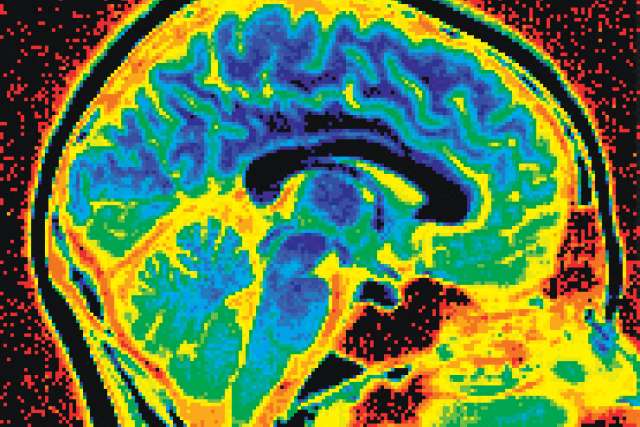
Historically, the search for answers in neurodegenerative disease has focused on neurons, brain cells that ultimately die as disorders such as Alzheimer’s disease progress. However, a study from UCLA suggests researchers should pay equal attention to cells working behind the scenes.
In a recent paper published in Nature Communications, UCLA investigators described the use of advanced single-cell genomic technologies to examine how neuropathological characteristics of the brain shape cellular responses in several devastating tauopathies. Findings reveal previously unrecognized glial cell states that may help the brain respond to disease-related stress and could represent new therapeutic targets.
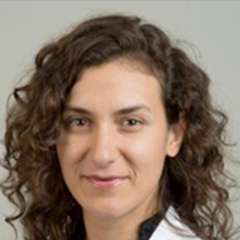
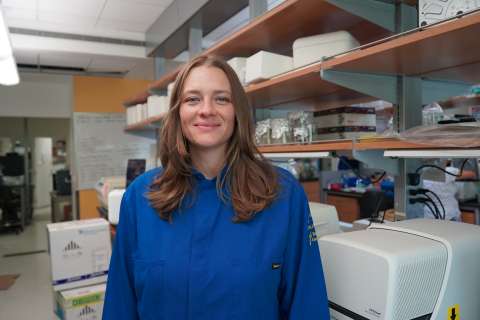
The research was led by Jessica Rexach, MD, PhD, associate professor of neurology and associate director for research at UCLA’s Mary S. Easton Center for Alzheimer’s Disease Research and Care, and post-doctorate scholar and first author Xia Han, PhD.
Mapping disease through tau
Tauopathies are a group of neurodegenerative disorders characterized by the abnormal accumulation of tau protein. Under normal circumstances, tau helps stabilize the cellular transport system within neurons. In disease, however, tau becomes chemically altered, misfolds and forms toxic aggregates.
“Tau aggregation is what people look at under the microscope when they’re identifying these diseases,” Dr. Rexach explains. “It’s a normal protein in neurons, but in disease it gets aggregated and moves to the wrong part of the cell and influences the health of the brain.”
The distribution of these aggregates can mirror disease progression. As affected brain regions accumulate tau, symptoms emerge that correspond to the functions controlled by those regions.
The UCLA team studied three distinct tauopathies in Alzheimer’s disease, Pick’s disease, and progressive supranuclear palsy (PSP).
“While they all involve tau pathology, they differ substantially in affected brain regions, cell types and genetic factors,” says Dr. Han.
Genetics and brain pathology
“Most cases of degenerative tauopathies are influenced heavily by the way our whole genetic makeup is built,” says Dr. Rexach. “One central goal of the study was to ask if we can understand how the whole genome influences the choices that the cells in the brain can make when they’re responding to stress.”
Researchers analyzed chromatin accessibility and gene expression in individual brain-cell nuclei from postmortem tissue to examine how disease-associated genetic variants influence cellular behavior. Rather than studying entire brain regions as a single unit, the team investigated individual cell populations, revealing disease-specific molecular programs that would otherwise remain hidden.
“When you look in diseased tissues, you can see the specific ways the tissue is stressed or called to overcome the disease process,” Dr. Rexach says.
Glial cells discovery
The study also revealed an unexpected finding involving glial cells, the brain’s support and immune cells. “We found two previously unrecognized glial states that may represent potentially beneficial adaptive responses to disease,” Dr. Han says.
One involved a microglial state associated with Pick’s disease, and the other involved an astrocyte state associated with PSP. These cells appeared to activate pathways involved in lysosomal activity and cellular waste processing and may help the brain manage toxic tau accumulation. The researchers also identified unique molecular signatures, including elevated expression of genes such as SOX10 and PLP1, not previously linked to these disease-associated microglial and astrocytic states.
Another major finding from the study is the realization that many genetic risk signals converged on pathways governing brain immune responses.
“We observed that the ability of the brain immune system to respond to tau and handle the stress of responding to tau really seems to be an important spot where disease could be influenced,” Dr. Rexach explains.
The work identified two entirely new cellular states for future therapeutic investigation, both supported by human genetic and tissue data.
Future therapies
Although clinical applications remain a future prospect, study findings provide a road map for developing new biomarkers and treatments. Rather than targeting tau alone, future therapies may focus on enhancing the resilience of glial cells and improving the brain’s ability to clear toxic proteins.
“Neurodegenerative disease should increasingly be viewed as disorders of cellular ecosystems rather than simply disorders of neurons,” Dr. Han says. “Glial cells are not merely bystanders in these diseases. Together with neurons and other brain-resident cells, they actively shape disease progression and might provide important therapeutic opportunities.”
Dr. Rexach offers a broader message. “Opportunities to fill major gaps in our field by combining pathological samples, genetics and other types of data are enormous,” she stresses. “This study demonstrates the kind of novel insights that can be gained from those approaches.”
Both investigators hope their findings will help usher in a new era of precision therapies for tauopathies, guided not only by neurons that succumb to disease, but also by cellular networks that may help fight it.