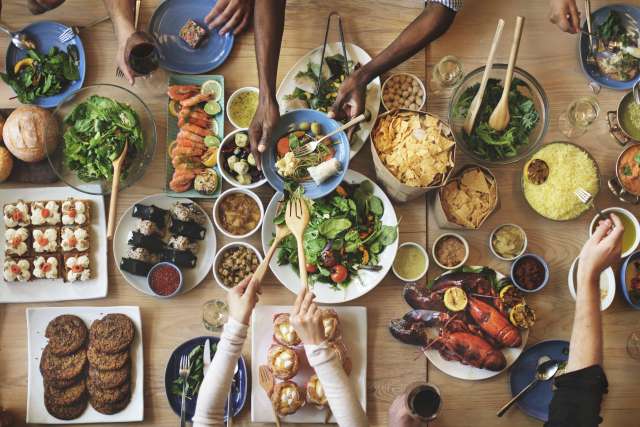
Dear Doctors: I read about a study that says eating meals with other people is good for your mental health. Considering takeout, convenience foods and how much time we spend apart these days, this seems like important information. Do you know what study that was and how it was done?
Dear Reader: The importance of social connections has been the focus of a fairly robust body of research. This includes interest in the potential physical and mental health benefits of eating together. A study published earlier this year in the journal Scientific Reports found a strong correlation between sharing meals with other people and greater emotional well-being. A number of news organizations have reported on the research, perhaps because there's an intuitive "yes, of course" to the study's outcome.
The researchers looked at two years of data collected from more than 150,000 people throughout the world. Participants were asked how often they had eaten either lunch or dinner with someone they knew in the preceding week. It could be a family member, a friend or even an acquaintance. They also provided information about their sense of satisfaction with their lives and the range of positive or negative emotions they experienced. A statistical analysis of the responses found that the people who shared meals more frequently felt more satisfied with their lives. They reported more positive emotions and experienced fewer negative emotions than those who often ate alone. It turned out that even one communal meal was associated with a measurable difference to someone's mental health.
Another study, published in the journal npj Aging, added an intriguing twist. The researchers looked at 727 cognitively healthy older Japanese adults. Some ate alone and some shared their mealtimes. Two interesting pieces of information emerged. One was that the diets of the solo eaters suffered in comparison to the communal diners. This included a lower intake of protein, fiber, vitamins, minerals and other essential nutrients. Both groups in the study underwent brain scans. The results showed that, on average, solo eaters had smaller brain volumes in regions associated with memory and other cognitive function than did the communal diners. To be fair, it was not possible to know whether this was due to differences in diet, reduced social interaction or other factors.
So, what's going on? The data suggest that people who eat together may be more likely to consume meals that are nutritionally balanced and healthful. This, in turn, can help support brain and cognitive health. Some researchers believe that sharing a meal stimulates the release of endorphins. These are naturally occurring brain chemicals that boost mood and mute or block pain signals, leading to reduced stress and increased feelings of well-being.
As always with observational studies, the data can only suggest a connection; it cannot prove it. Still, multiple studies with a range of approaches continue to find associations between eating together and benefits that extend beyond mere nutrition. So, the next time someone asks if you would like to share a meal, set aside the takeout menu and say yes.
(Send your questions to [email protected], or write: Ask the Doctors, c/o UCLA Health Sciences Media Relations, 10960 Wilshire Blvd., Suite 1955, Los Angeles, CA, 90024. Owing to the volume of mail, personal replies cannot be provided.)