
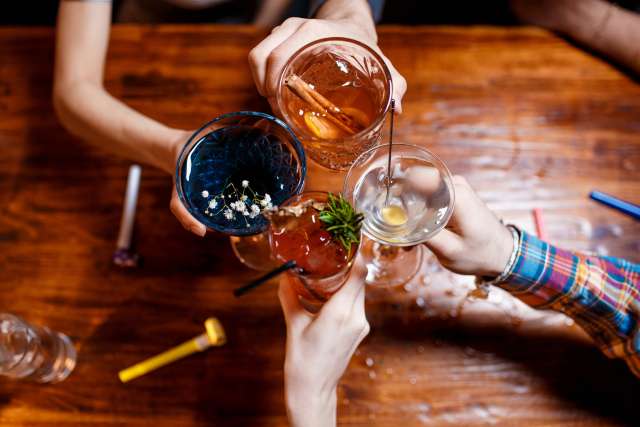
Most people know that smoking causes cancer and that there’s no “safe” number of cigarettes that are OK to smoke.
But not everyone knows the same is true of alcohol.
Alcohol is a carcinogen and there’s no “safe” level of consumption, according to the American Institute for Cancer Research, the U.S. Centers for Disease Control and Prevention and the World Health Organization.
“Based on the evidence, even small amounts of alcohol – less than one drink a day – is associated with higher risk” of at least seven cancers, says Emma Veilleux, RDN, a senior dietitian with the Simms/Mann UCLA Center for Integrative Oncology.
The Simms/Mann Center provides nutrition consultation, as well as psychosocial and spiritual support, educational programs and support groups for people undergoing cancer treatment at UCLA Health. The whole-person care is free to people with cancer and their loved ones, from the time of diagnosis through survivorship.
Benefits of Dry January
“It doesn’t matter how much you drink – the risk to the drinker’s health starts from the first drop of any alcoholic beverage,” says Dr. Carina Ferreira-Borges of the WHO. “The only thing we can say for sure is that the more you drink, the more harmful it is. Or, in other words, the less you drink, the safer it is.”
Dry January – the practice of abstaining from alcoholic beverages for the first month of the year – is a great way to assess your relationship with alcohol and reap the benefits of drinking less, Veilleux says. Even “damp January,” where folks aim to reduce alcohol intake, can be a boon for health.
“Even just small reductions make a difference,” Veilleux says. “The amount and frequency of alcohol intake has an impact on risk.”
Alcohol consumption has been linked with higher risk of liver, breast, mouth, throat, esophageal, laryngeal and colorectal cancers, and possibly stomach, pancreatic and prostate cancers, according to the CDC. A 2020 study found that alcohol is associated with more than 740,000 new cancer cases globally each year.
But isn’t red wine good for you?
For years, people were told that drinking red wine was a healthy practice. Red wine contains resveratrol, a plant compound high in antioxidants. A 2023 review of studies found that consuming red wine did reduce oxidative stress among study participants with diabetes. However, “there are healthier ways to obtain resveratrol,” Veilleux says. “And we know the detriments of the alcohol itself – the ethanol in that wine – override the benefits you get from resveratrol.”
How does alcohol cause cancer?
Alcohol’s impact on cancer risk is multifactorial, Veilleux says. The body breaks down ethanol into acetaldehyde, a toxic compound considered a “probable human carcinogen” by the U.S. Environmental Protection Agency. Alcohol also causes oxidative stress in the body, generating free radicals that can damage DNA. As cells try to repair themselves, mutations can occur that could lead to cancer.
Alcohol can potentially impact estrogen metabolism, which could influence hormone-sensitive breast cancers, Veilleux says. And it changes how the body absorbs or removes other chemicals, according to the American Cancer Society, allowing harmful chemicals such as tobacco smoke to enter cells more easily and preventing absorption of nutrients such as folate.
Ride Dry January’s momentum
Cutting back on booze, beer or wine during Dry (or damp) January can potentially generate momentum for reducing alcohol intake overall, Veilluex says.
She acknowledges that it can be challenging to cut back in a culture that treats alcohol consumption as normal and expected – associated with celebrations, stress relief and social gatherings. But there are benefits beyond reducing cancer risk: Drinking less alcohol can also improve sleep, boost energy and reduce inflammation.
Not everybody who drinks is going to get cancer, she says, and quality of life matters, too.
“It doesn’t have to be all or nothing,” Veilleux says, adding that what we do regularly matters more than what we do once in a while. “I don’t think you need to worry about the one glass of Champagne you’re having on New Year’s.”