For decades, donor lungs were always transported using hypothermic temperatures. This static cold storage, however, posed risks of ischemia. Newer devices have tested ex vivo warm perfusion: a partial plasma solution that circulates through the lungs while they’re being transported to maintain them in a “breathing” rather than a static state.
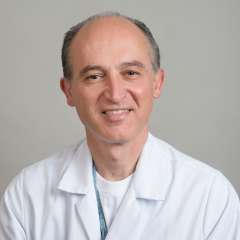
Now, the first transplant of donor lungs transported using the newest Transmedics OCS warm perfusion device has been performed at UCLA Health by Abbas Ardehali, MD, director of the UCLA Heart, Lung, and Heart-Lung Transplant Programs and professor of surgery and medicine at the David Geffen School of Medicine at UCLA.
The transplant, which took place in April, represents “a new chapter in the field of organ transplantation,” said Dr. Ardehali, principal investigator for the FDA-approved clinical trial, which incorporates updates to improve organs prior to transplant.
Most significantly, the new device is able to remove extra fluid in the lung tissue, he said.
Dr. Ardehali, who has long been at the forefront of developing new technologies for transporting hearts and lungs, previously served as principal investigator for trials that pioneered various warm perfusion techniques.
“The whole story behind ex vivo organ perfusion has been to preserve the organs better for transplantation,” he explained.
Despite the advances in transport technology, fluid in the lung tissue has remained a concern. This neurogenic pulmonary edema can damage the delicate tissue of the lungs, something the new device addresses.
“Being able to remove the extra fluid before you transplant has been one of the challenges in the field,” Dr. Ardehali said. “With the new technology, the blood that circulates through the lungs has very high osmotic pressure to pull the fluid from inside the airways into the blood vessels.”
The device also has a new monitoring mode that continuously assesses the health and function of the lungs, he noted. Additionally, the chamber housing the organs has a softer base for the lungs to rest upon to cushion them from potential damage, and the lung covering has been improved to better drain excess fluid.
“Minor changes to the lung wrap include drainage holes that align with the redesigned floor and facilitate better drainage of the perfusate to the reservoir,” he explained.
Finally, the preservation gas used to inflate the lungs during transport has been updated. “It’s more physiologic and closer to room air,” Dr. Ardehali said.
“All of these modifications were learned from the previous version,” he said. These modifications “make clinical sense and will likely lead to improvements in clinical outcomes.”