
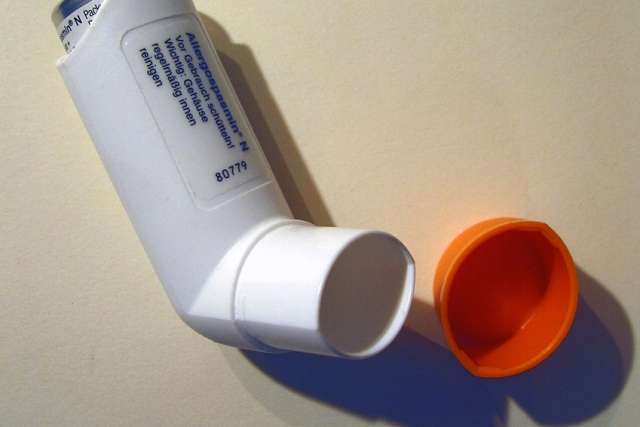
Despite guidelines recommending daily controller inhalers as the best treatment for asthma, new UCLA-led research finds that Blacks, Hispanics and Asians use them less than whites, suggesting that socioeconomic factors and lack of access to specialty care are at the root of this gap.
Asthma is a common condition that strikes people of all races and ethnicities, and the medications available to patients can substantially improve their quality of life, said Dr. Utibe Essien, assistant professor of medicine, division of general internal medicine and health services research, at the David Geffen School of Medicine at UCLA and the study’s senior author. But no one had undertaken a thorough look at who has access to these medications in more than 15 years, he said.
So the researchers on the new study, published in the peer-reviewed journal JAMA, looked at who was using appropriate, guideline recommended inhalers for the condition in more recent years, when more people have been diagnosed for asthma—and the medications have become more expensive.
They found significant gaps in usage remain, Essien said.
“This is a really important extension of the data from the late nineties, given the fact that we have more access to care since the late 1990s and 2000s and we have a lot more people with health insurance through policies like the Affordable Care Act, so we have more people engaged in medical care and still see these gaps in treatment,” he said.
The researchers pooled data from the Medical Expenditure Panel Survey for the years 2014 through 2023 for about 10,500 US adults representing over 1.1 million Americans 18 years of age and older who were being treated for asthma. Of these patients, 55% where white, 20% were Black, 16% were Hispanic, 3% were Asian and the rest were other or multiracial.
They examined the use of inhaled corticosteroids (ICS), which reduces airway inflammation; long-acting beta agonists (LABA), which keeps airways open in the long-term; long-acting muscarinic antagonist (LAMA), which also relaxes airway muscles to allow for unobstructed breathing, and short-acting beta-agonists (SABA), which provide quick relief when patients have an asthma attack.
Reliance on SABA inhalers suggests that the user’s asthma is not well controlled and could be undertreated.
Overall, they found that more whites used ICS, LABA and LAMA inhalers, but fewer SABA inhalers, compared with the other groups. After adjusting for ethnicity and socioeconomic factors, the researchers broke down some inhaler usage as follows:
- 30% of Asians, 34% of Blacks, and 35% of Hispanics used ICS compared with 39% of whites
- 21% of Asians, 27% of Blacks, and 25% of Hispanics used LABA vs 32% of whites
- 3% of Asians and Hispanics, and 4% of Blacks used LAMA vs 6% of whites.
The researchers found no statistically significant differences in SABA use among the different groups.
“Observed racial and ethnic differences in ICS utilization were mostly but not completely attenuated in the fully adjusted model, suggesting sociodemographic and healthcare access factors are key drivers of treatment variation,” the researchers write. “However, these factors—including income, education, insurance status, and access to specialty care—are themselves affected by racial and ethnic disparities, underscoring the complexity of achieving pharmacoequity.”
The researchers were particularly surprised that the widest gap was in the short acting inhalers, which are easier to obtain and generally less expensive.
“Again, that underscores the complexity of treating asthma when policies change and guidelines change in terms of what is recommended versus not recommended, which doctors have access to those guidelines, and how patients change their treatment based on those new guidelines,” Essien said.
There is still much to learn and research is needed into physicians’ prescribing behavior. “That may be a question that comes up in terms of next steps, and that’s something that we’re hoping to do in our future work,” Essien said.
Dr. Jing Ren, health sciences clinical instructor of medicine, division of pulmonology, critical care and sleep medicine, at the Geffen School, led the study. Dr. Ashkan Ara of UCLA and Dr. Christopher Scannell of USC co-authored the paper.
The National Heart, Lung and Blood Institute partially funded this study.