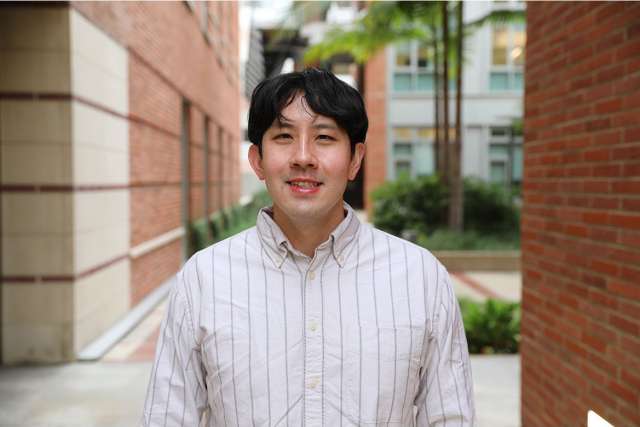
Jason Zhang, PhD, an assistant professor of bioengineering in the UCLA Samueli School of Engineering and a member of the UCLA Health Jonsson Comprehensive Cancer Center, has received an $800,000 grant from the V Foundation for Cancer Research to investigate how glioblastoma cells become resistant to targeted treatments.
Glioblastoma is the deadliest and most difficult-to-treat brain tumor. One of the major challenges is that glioblastoma tumors are made up of many different types of cancer cells. While treatment may eliminate some cells, others can survive, adapt and continue to grow.
The award will support Zhang’s research into how glioblastoma cells become resistant to drugs that block important signals that drive tumor growth. Although these drugs can effectively shut down their primary targets, some cancer cells are able to activate alternative pathways that restore the signals they need to survive.
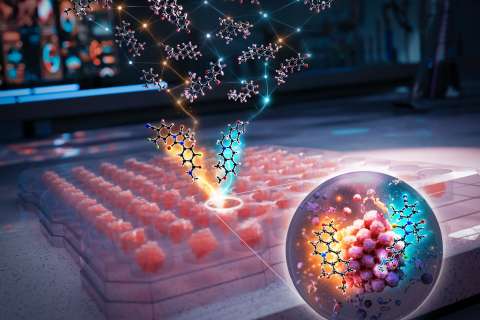
To better understand this process, Zhang and his team will use artificial intelligence to design protein-based sensors that act like molecular “flashlights,” allowing them to watch growth signals inside individual living cancer cells during treatment. In collaboration with UCLA scientists Aparna Bhaduri, PhD, assistant professor of medicine and biological chemistry, and David Nathanson, PhD, professor of molecular and medical pharmacology, the researchers will study these cells using patient-derived tumor models designed to capture key features of the brain and the diversity of human glioblastoma tumors.
The research could help scientists identify rare populations of glioblastoma cells that are missed when tumors are studied as a whole. Understanding when and where these cells activate backup survival signals may reveal opportunities to combine therapies in ways that prevent cancer cells from escaping treatment.
“Understanding how these cells escape treatment is critical for developing better therapies,” said Zhang, who is also a member of the California NanoSystems Institute at UCLA. “This support from the V Foundation will allow us to look at glioblastoma in a fundamentally different way, not as one uniform tumor, but as a collection of individual cancer cells that can respond to treatment in very different ways.”