
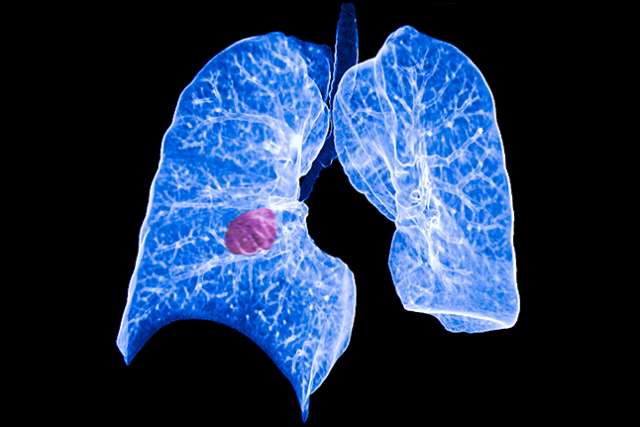
A new study co-led by investigators at the UCLA Health Jonsson Comprehensive Cancer Center shows that the targeted cancer drug selpercatinib can significantly reduce the risk of lung cancer returning in patients with a rare genetic subtype of early-stage non-small cell lung cancer (NSCLC), potentially offering a new treatment option to help keep the disease from coming back after standard therapy.
The international phase 3 clinical trial, called LIBRETTO-432, found that after two years, 92% of patients with stage II–IIIA RET fusion-positive NSCLC who received selpercatinib after standard treatment were alive without their cancer returning — a measure known as event-free survival — compared with 61% of patients who received a placebo. Overall, the treatment reduced the risk of cancer recurrence or death by 83%.
The results were shared today during the Plenary Session at the American Society of Clinical Oncology Annual Meeting by Dr. Jonathan Goldman, Health Sciences Clinical Professor in the Department of Medicine at the David Geffen School of Medicine at UCLA, and published in the New England Journal of Medicine.
“Even when patients with early-stage RET-positive lung cancer undergo surgery and other standard treatments with curative intent, many still face the possibility that their cancer will return,” said Goldman. “These findings show that a targeted therapy drug can dramatically reduce that risk and may represent an important new treatment approach for patients with this rare subtype of lung cancer.”
RET fusion-positive lung cancer is a rare subtype of NSCLC caused by abnormal rearrangements in the RET gene and occurs in approximately 1% to 2% of patients with the disease. While some patients are diagnosed at an early stage and can be treated with surgery, radiation and chemotherapy, many still experience recurrence, often in more advanced forms.
Selpercatinib is a targeted therapy designed to specifically block RET-driven cancer growth. The drug is already approved for patients with advanced or metastatic RET-altered cancers and has shown strong and durable responses in previous studies involving later-stage disease. LIBRETTO-432 is the first randomized study to evaluate whether the drug can also help patients with earlier-stage RET-positive lung cancer after surgery or other definitive treatment, an area where there is currently no approved adjuvant targeted therapy.
To assess whether the targeted therapy could improve outcomes in the early-stage setting, researchers enrolled 151 patients with stage IB-IIA RET fusion-positive NSCLC who had already received standard treatment into the trial. The participants were randomly assigned to receive either selpercatinib (75) or a placebo (76) for up to three years.
In addition to improving event-free survival in patients with stage II–IIIA disease, researchers also found benefit across the broader study population, including Stage IB disease. Among all 151 participants, 94% of patients who received selpercatinib remained cancer-free at two years, compared with 70% of those who received a placebo.
The safety profile of the drug was consistent with prior studies. The most common serious side effects involved elevations in liver enzymes, which were generally managed with dose adjustments or temporary interruptions in treatment.
“These results have the potential to change clinical practice for patients with early-stage RET-positive lung cancer,” said Goldman. “They also underscore the importance of early comprehensive biomarker testing to help match patients with targeted therapies that can dramatically reduce the risk of recurrence. For patients, this represents a new layer of protection after surgery and a step closer to preventing the disease from returning altogether.”
The researchers plan to continue following patients in the study to better understand the long-term benefits of selpercatinib, including whether the treatment improves overall survival. Additional follow-up will also help investigators learn more about how different groups of patients respond to the therapy and further strengthen the overall findings from the trial.
This study was funded by Eli Lilly and Company.