Fever, cough, body aches. Many people infected with COVID-19 saw, at most, these and other moderate symptoms. Some were entirely asymptomatic. Yet the virus left a critical subset of patients gasping for air and needing a ventilator.
Many of these patients died from Acute Respiratory Distress Syndrome (ARDS), massive inflammation that leads to fluid buildup in the lungs. Every year, ARDS kills 75,000 adults and 1,500 children in the U.S.
Besides infections, a variety of conditions can lead to ARDS: physical trauma to the chest, a burn injury, inhaling toxic gases during a wildfire or in war, even choking on severe acid reflux. In the pediatric population, ARDS mainly affects children who are already hospitalized.
While the clinical picture may be similar, each patient – whether child or adult – is distinct when it comes to responding to treatment.
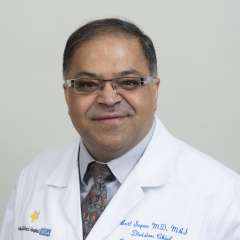
“Even though the end result is that they all need support to breathe, it’s important to understand the biology of a particular patient,” says Anil Sapru, MD, a pediatric critical care physician at UCLA Health. “What should I be targeting in this patient versus that patient?”
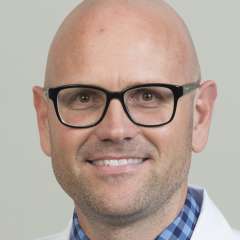
Dr. Sapru and his colleague Andreas Schwingshackl, MD, PhD, division chief for pediatric critical care, have teamed up to research a precision medicine approach to treating ARDS.
Dr. Schwingshackl digs deep to the cellular level to find new molecules and pathways common to lung inflammation by using experimental models of ARDS. Dr. Sapru’s lab then screens their existing ARDS data sets to see if these targets also exist in humans, and whether there are any known associations with patient outcomes – after which they go back to Dr Schwingshackl’s group for further analysis.
In adjacent labs a few feet apart, each physician-scientist informs the other’s work in a research model that continuously loops bench to bedside to bench.
Electrical states
In his 11 years at UCLA Health, Dr. Schwingshackl, an associate professor of pediatrics at the David Geffen School of Medicine at UCLA, has focused on one of the most primitive mechanisms uniting all cells: their ability to store and move electrical energy to regulate the body’s fundamental functions.
“Every cell in our body is basically a battery,” he says.
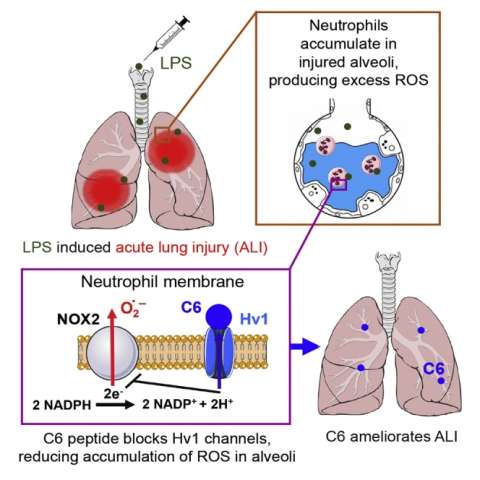
Potassium channels in a cell membrane maintain the cell interior’s negative charge. When Dr. Schwingshackl’s lab simulates injuries to lung cells, the number of those channels decreases. As a result, positively charged ions are trapped inside the cell, causing the “battery” to drain.
This disruption sends a biochemical signal that triggers the lung’s immune system to flood the lung with cytokines. It is a completely novel understanding of lung inflammation.
Can the disruption be reversed? Working with pharmacologists and biochemists around the country, the researchers have formulated new chemical compounds that target the residual – but still functional – potassium channels.
Several of these compounds activate the remaining membrane channels, returning the cell interiors to a negative charge and re-establishing bioelectric stability.
“Human bodies are very resilient and very powerful in healing themselves if you get the body close to homeostasis,” says Dr. Schwingshackl.
“This is one way to limit the amount of inflammation and buy our body time to heal.”
Biobank
When Dr. Sapru left UCSF a decade ago, he brought with him a large, minus-80 degrees Celsius freezer and installed it in his new lab at UCLA Health.
Inside is a biorepository from about a thousand children critically ill with ARDS. The collection of tens of thousands of plasma and blood samples is one of the largest of its kind. Rounding it out are each child’s clinical and metabolic data and complete RNA profiles.
Dr. Sapru’s team employs machine learning and other techniques to analyze the data and understand the biological differences between patients who, at the bedside, look to have the same condition.
In one striking example of precision medicine, the team turned a therapy long thought ineffective into a potential lifesaver. The Sapru lab pioneered using blood tests to identify a select group of children who benefit from tight blood-sugar control with insulin, significantly lowering ICU deaths. It’s now being tested in a prospective clinical trial.
Though immersed in their research, both physicians also continue to treat pediatric patients with ARDS. Dr. Sapru, who has been practicing medicine for 40 years, still remembers many of his patients with the syndrome.
When he first arrived at UCLA Health, he treated a boy with staphylococcal pneumonia. The infection had eaten away the child’s lungs, and physicians had placed him on ECMO to stay alive. The machine acted as his heart and lungs.
“We would be able to control the infection eventually,” recalls Dr. Sapru. “We just had to give his body time to heal and regrow his lungs.”
Eight weeks later, the boy recovered and returned home.
“To this day,” Dr. Sapru says, “the knowledge that a child dying of ARDS comes into the ICU, and many times walks out, is very exhilarating for me.”
Collaboration
As they work in their neighboring labs to understand the biology of individual patients and model the molecular processes at high precision, these researchers are continuously sharing what they learn.
The collaboration bridges the gap between Dr. Schwingshackl’s experimental models in mice and cells, and the patients in Dr. Sapru’s biobank.
“Every time we discover a new, interesting finding in our experimental models, we look for a correlate in the human body,” explains Dr. Schwingshackl. “Is this molecule associated with a human getting more sick, less sick, or dying? We're no longer stuck in the experimental silo without knowing if this is important to humans or not.”
The hope is that, in the next five years, this species cross-validation will lead to clinical testing of one of their potassium channel-activating compounds.
“The research at single cell level and the patient level truly overlap in our collaborative program,” says Dr. Schwingshackl. “The combination of these two worlds is unique to UCLA. There is no other institution that has this breadth of scientific investigation all in one division.”