
The health risks of sitting all day
In recent years, research has consistently linked too much sitting to a variety of negative health consequences. Prolonged sitting — such as being at a desk all day — can lead to increased cholesterol and body mass index (BMI). Both are factors that put you at higher risk of conditions such as obesity, diabetes and heart disease.
Other research has found that greater amounts of sitting can increase your risk of death as much as smoking or obesity do.
Making your office easier on your body
Sitting is generally bad for your health. But sitting and working at a desk and computer that aren’t tailored to your body and habits can be even worse.
Good office ergonomics means setting up your desk, chair and computer height to allow for good posture and comfortable arm positioning. When speaking on the phone, use a headset to avoid neck strain.
In recent years, alternatives to traditional desks and chairs have become popular. Sitting on an exercise ball instead of a chair for portions of your day engages your core muscles and improves your posture.
Standing desks (or ones that adjust from sitting to standing) are another way to add movement to a desk job. Using these to take a break from sitting can help you burn more calories, engage more muscles and reduce strain on your lower back.
Exercises you can do at your desk
One way to make a sedentary job healthier is to make it less sedentary. Working some stretches and strengthening moves into your workday can help.
Set an automatic timer on your computer to remind you to get up at least once an hour. Start with some simple stretches to open up your chest and relieve stress in your neck, shoulders and low back. Every other break, add in a few moves that engage and strengthen key muscles. As always, check with your doctor before beginning any new exercise routine.
You could try things such as:
- Calf raises: Stand with feet hip-width apart. Using a wall for support, slowly rise onto your toes and lower back down.
- Chest stretch: Lace fingers behind your back, straighten your arms and gently lift up until you feel a stretch through your shoulders and chest.
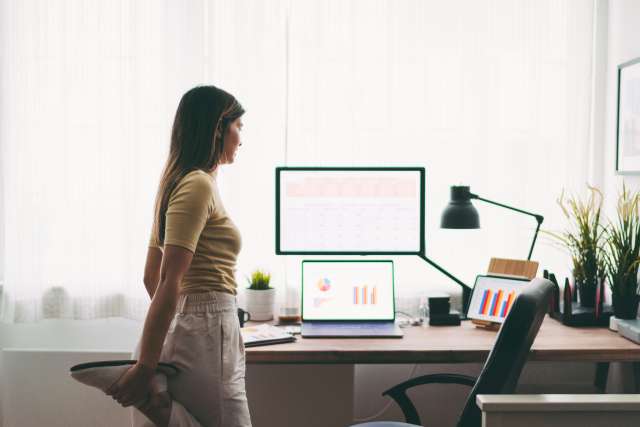
- Figure four stretch: While sitting in your chair, place your right ankle over your left knee. Lean slightly forward, while using your right hand to gently press your right knee toward the floor. Repeat on the other side.
- Neck stretch: Use your left hand to gently pull your head sideways, bringing your left ear toward your left shoulder. Repeat on the other side.
- Push-ups: If you can, do them discreetly on the floor behind your desk. You can also do a modified version standing up, pressing against the wall.
- Spinal twist: While sitting in your chair, gently rotate your torso to the right. Hold at a point where you feel a comfortable stretch. Repeat on the other side.
- Squats: Stand with your feet hip-width apart. Slowly push your hips back, keeping your back straight while you bend from the knees into a squat position.
- Toe touch: Stand with your feet hip-width apart, knees slightly bent. Slowly roll down, reaching toward the ground. Roll back up slowly to a standing position, reaching your arms up over your head.
Other ways to get fit while you work
Even if you don’t have time to hit the gym during your workday, you can still fit in small bursts of movement. At the office, routinely use the stairs instead of the elevator if you can. And instead of calling a coworker, walk over and talk to them in person.
Other easy ways to sneak in more activity include:
- Moving during phone meetings: Depending on your situation, you could march in place, pace your office, invest in an under-desk or desk treadmill, or even walk outdoors. Use a headset and try a voice memo app to record notes rather than having to write them down.
- Organize in-office fitness classes: Consult your human resources department to see if they can arrange for an instructor to come in once a week to take employees through a stretching and strengthening workout.
- Take the conference out of the room: Instead of sitting with coworkers, encourage your group to have some meetings on the move.
- Walk at lunch: Instead of more time at your desk scrolling on your phone while you eat, get outside for some fresh air and movement.
Allowing yourself these mini activity breaks throughout the day can not only improve your health and fitness, it may also make you more productive. Moving your body also gives your brain time to refresh. When you return to your desk, you’ll be more ready to tackle that to-do list.