Ask the digital natives of Gen Z about the source of their biggest mental health challenges, and most will say social media and AI.
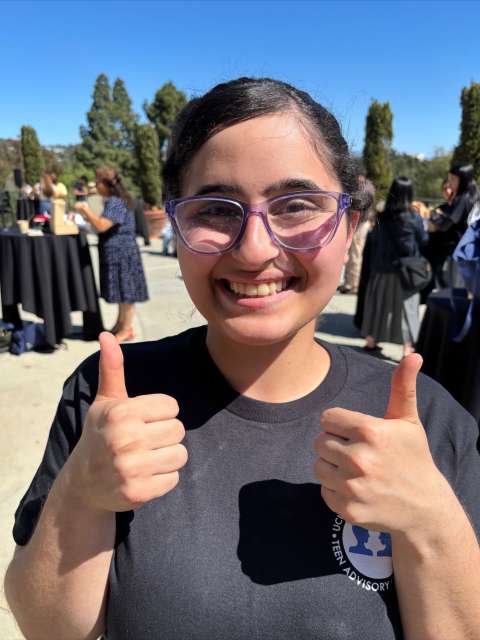
Several of the nearly 400 guests at the third annual Gen Z Wellness Summit, presented by the Friends of Semel Teen Advisory Council at UCLA on March 8, explicitly named the endless stream of content on their phones as serious stressors.
“Everybody is addicted to (Tik Tok) as if they were addicted to substances,” said Jantin Asmar, 17, a senior at Virtual Academy in Antelope Valley. “We’re always chasing that dopamine. We’re expecting that dopamine rush and it’s really decaying our interactions with others.”
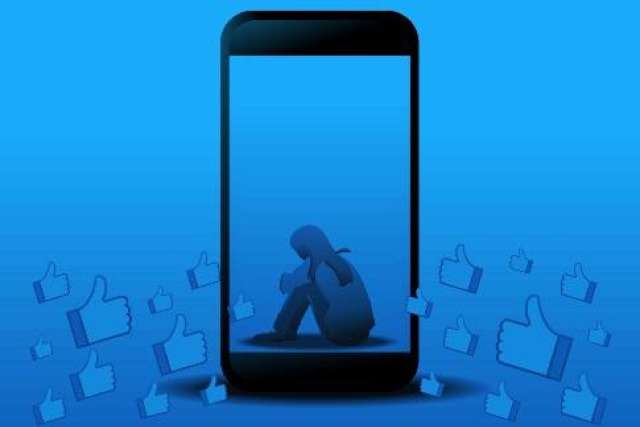
Even young teens feel pressure to be on social media constantly, both to consume content and collect “likes,” said 13-year-olds Chloe and Sophia, both students at Brentwood School.
“Everyone’s always on, and you miss stuff if you’re not on it,” Chloe said, adding that social media’s emphasis on appearances is leading to eating disorders: “That’s a big thing for our generation.”
The incessant influx of images and updates creates expectations that “weigh teenagers down,” said Linda Kou, 16, a junior at San Gabriel High School.
Even though digital spaces allow people to connect with others beyond their immediate surroundings, it doesn’t always translate to real-life community, said Kelah Morgan, 17, a senior at Animo South Los Angeles Charter High School.
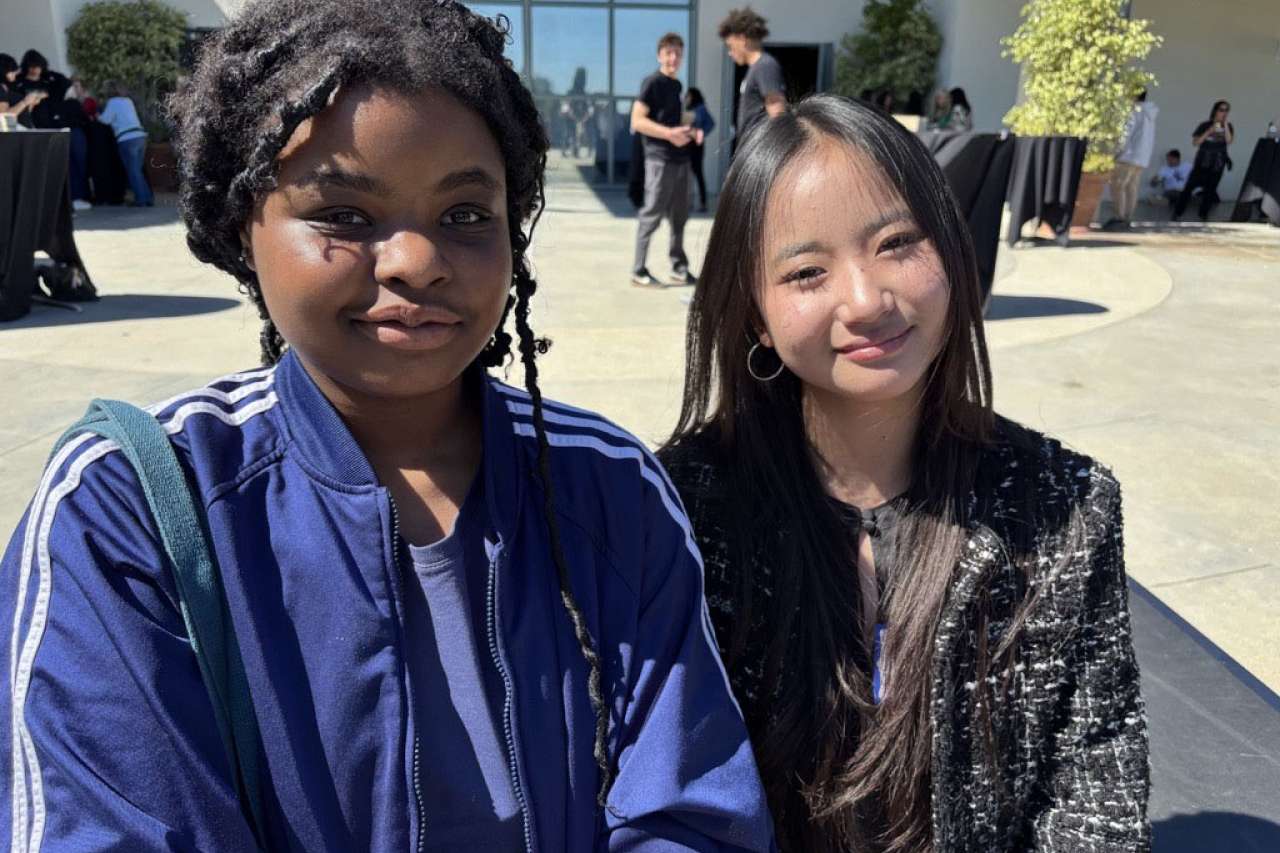
“Even if you see people saying that they relate to you online, it might be hard to find people in your personal life who you see every day who you feel comfortable enough to say, ‘You see me online, but this is me in real life and what I’m actually going through,’” she said.
Solutions for our digital times
The Gen Z Wellness Summit was intentionally designed as a free, in-person gathering where young people interested in mental health from across the southland could meet in person.
“Peer support is the most important element of maintaining our mental health in community,” said Helena Hansen, MD, PhD, director of UCLA’s Semel Institute for Neuroscience and Human Behavior.
Keynote speakers at the summit addressed AI, social connection and self-empowerment, while breakout sessions included discussions about eating disorders, dating, substance use, phone detox and breathwork. Here are some of the day’s top takeaways:
Beware of FOPO: Scott Barry Kaufman, PhD, a psychology professor at Columbia University, said that rather than FOMO, or fear of missing out, we ought to be more aware of FOPO: fear of people’s opinions.
“Just think about how much your FOPO might be holding you back in your life,” Dr. Kaufman said. “And just that inner contemplation should be enough for you to change your life, because there’s so many things we don’t go after because we have debilitating FOPO.”
We don’t need to feel like we’re the best – or what he called “narcissistic self-esteem” – but it’s helpful to acknowledge our own worth, recognize our good qualities and develop self-belief in the skills and talents we’ve cultivated. When we have that – dignity and self-respect, without needing everyone to like us – FOPO is less of a concern.
Self-reflection is most effective in community: “When we try to self-reflect alone, we sometimes ruminate,” said Ira Bedzow, PhD, executive director of the Emory University Purpose Project. “But when we self-reflect with people that we trust … (it) allows us to hold ourselves accountable to different ways of seeing and different ways of hearing and different ways of being.”
Opening up about our experiences and listening to others are skills we can develop, Dr. Bedzow said.
He invited students to participate in what he called a “fishbowl exercise,” where four students sat in a small circle, surrounded by a dozen or so students forming a larger circle. Those in the inner circle answered such questions as: “What stops you from being you today?” and “What helps you feel most like you?”
Within minutes, the group in the small circle (the fishbowl), were sharing intimately about their life challenges as those in the outer circle nodded in understanding.
After the exercise, one participant said, “I felt like I wasn’t alone, that it wasn’t just me who feels that way.”
Another remarked on how “personal” it felt to share face-to-face with others, even strangers.
Don’t let AI crush your creativity: Theoretical neuroscientist Vivienne Ming, PhD, has been studying artificial intelligence for more than 20 years. And while she said “it’s reasonable to be concerned” about the fast-growing technology, it can also help humans become better problem-solvers when used strategically.
“The smartest thing on the planet today are humans and machines working together creatively,” Dr. Ming said. “What gets more valuable in humans as machines get smarter? Our ability to explore the unknown.
“Your unique voice is literally your value to the world … but most of us for most of our lives have been taught to not be unique,” she continued. “Be your own person. Celebrate being different. It is genuinely, measurably, truly valuable.”
In a breakout session called “Phone Detox? IYKYK: Living Your Story IRL” led by Don Grant, PhD, students shared their frustrations with AI compromising academic work, art and creativity.
“Art is a translation of human experience,” one participant said. “When people use AI, they diminish their own human experience.”
Dr. Grant urged them, as “the last generation to remember a world before AI,” to remember the power of imagination and creativity – and to act on it.
Remember that social media distorts perceptions: Stuart B. Murray, PhD, PsyD, who directs the Eating Disorders Program and Translational Research in Eating Disorders Program at UCLA, asked the students in his breakout session to take a spontaneous selfie and edit it to conform with society’s beauty standards. All 20 girls in the room immediately got to work, thickening their hair, slimming their faces, plumping their lips.
“The pressure to look like what we present on social media can be crippling,” Dr. Murray said. “We now know that social media use is part of a causal pathway into an eating disorder.”
Adolescents and young adults are most at risk of developing an eating disorder, he said, with one in three students on college campuses exhibiting clinically meaningful eating-disorder symptoms. More than 4 million people in California will have an eating disorder in their lifetime.
Even for those who don’t develop anorexia or bulimia, the ubiquity of modified images online distorts what we consider normal, making us feel worse about ourselves. Remembering that, he and other speakers said, might inspire us to log off occasionally and spend time in the real world with people who love us as we are.