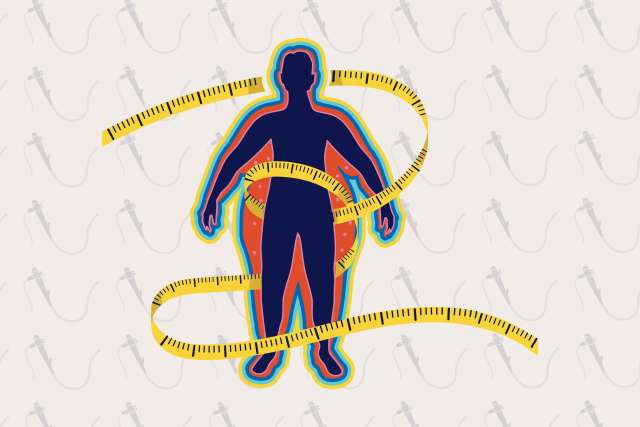
Obesity is a chronic, relapsing disease resulting from the complex interplay of multiple factors, including environmental, genetic, epigenetic, behavioral and social, among others. The simplistic notion that obesity is nothing more than the result of diet choices and inactivity has long resulted in misunderstanding of the disease.
“One of the biggest barriers to care remains the stigma surrounding obesity. Patients often see it as a personal failure rather than a chronic medical condition,” explains Danny Issa, MD, health sciences assistant clinical professor of medicine at UCLA Health. “They feel disappointed with themselves, and often frustrated with the health care system because they cannot find a way of breaking out of this condition.”
While significant differences in metabolism among individuals and age groups are recognized as playing important roles in obesity and overweight, other contributors, including stress and suboptimal sleep habits, remain underestimated and under-studied in their influence on obesity.
Over the past several years, glucagon-like peptide-1 receptor agonist (GLP-1 RA) therapies have dramatically reshaped the obesity treatment landscape. In June 2021, semaglutide was approved by the Food and Drug Administration in adjunct to a reduced-calorie diet and exercise for the treatment of obesity, and in November of 2023 tirzepatide was FDA-approved.
“The increases in obesity medicine clinics and access to obesity practices that have followed the approval of GLP-1 RAs have been very positive trends. More patients are now seeking care for obesity and realizing that medical therapy can be effective. Yet real-world evidence has shown that these medications are not a complete solution for every patient,” states Dr. Issa.
In addition to some patients’ being non- or partial-responders to GLP-1 RA therapy, tolerability issues — principally GI side effects — cause some patients to discontinue use. Among patients who successfully lose weight with GLP-1 RAs, the majority will regain a significant amount of the weight if the drug is withdrawn.
Endoscopic bariatric therapies can provide an effective weight-loss alternative to medical therapies or more invasive or open surgical treatments.
“Endoscopic therapies are an ideal option for a broad range of bariatric patients,” states Jennifer Kolb, MD, MS, health sciences assistant professor of medicine at UCLA Health. “Patients who have not achieved success from diet and lifestyle interventions, those who have failed or prefer to avoid pharmacotherapy, patients who are unwilling or ineligible to have bariatric surgery — including those who don’t have high enough BMI or who have disqualifying comorbidities — many of these patients may be excellent candidates for endoscopic bariatric procedures.”
Endoscopic weight loss procedures can also be an attractive option for patients whose weight is preventing them from qualifying for another surgery, such as knee replacement or hernia repair.
Endoscopic sleeve gastroplasty (ESG) provides a non-invasive way to modify and remodel the stomach. By significantly reducing the gastric reservoir using a full-thickness endoscopic suturing device, ESG has resulted in total body weight loss of 15% to 18% in randomized clinical trials and large retrospective studies. The procedure is associated with a low risk of complications, in the range of 1% when performed by experienced endoscopists.
Candidates for ESG typically have BMI in the range of 30 to 50 and should have an intact stomach prior to the endoscopic procedure. Extensive pre-cancerous changes in the stomach and advanced liver cirrhosis are contraindications for the procedure, says Dr. Kolb.
New-onset gastroesophageal reflux disease (GERD) after laparoscopic sleeve gastrectomy (LSG) has been a challenging long-term complication. Multiple studies have shown that approximately 20% of LSG patients develop GERD within five years, with some progressing to Barrett’s esophagus, a known precancerous condition. ESG, on the other hand, has been associated with a much lower risk of GERD — below 1% in clinical trials — which can make it a favorable intervention for patients with pathologic acid reflux.
“Further research is needed to optimize patient selection and validate long-term outcomes,” states Dr. Issa. “Our group is leading a prospective, multicenter study to better understand the pathophysiology behind differences in rates of GERD following sleeve gastroplasty, with the goal of providing better treatment options to all patients.”
Endoscopic revision after sleeve gastrectomy or Roux-en-Y bypass
Weight regain is a common and well-recognized delayed manifestation of all weight-loss procedures. Studies have shown that 20% to 50% of patients who have had laparoscopic sleeve gastrectomy or Roux-en-Y bypass will experience weight regain at five to seven years. The regain is often in the range of one-third to one-half of the weight originally lost, but a small percentage of patients will regain nearly all of the lost weight.
Among patients who regain weight after Roux-en-Y bypass surgery, both the pouch created in the original procedure and the pouch’s outlet to the small bowel have typically expanded, ending the restrictive feeling and enabling them to take in more calories. Transoral outlet reduction (TORe) is a well-established procedure in which sutures are placed around the outlet of the pouch to slow stomach emptying and make the patient feel full longer. If the pouch is very expanded, that can also be revised to cinch it down so it’s less of a reservoir.
“TORe has an excellent safety and efficacy record and is probably the most commonly performed bariatric endoscopy procedure around the country,” explains Alireza Sedarat, MD, health sciences associate clinical professor of medicine at UCLA Health. “Considering the alternative would be re-operation, TORe is much safer.”
More recently, similar techniques have been applied to treat patients who have regained weight following sleeve gastrectomy. When the formerly restrictive sleeve stretches to accommodate a larger volume of food, the endoscopist can place sutures to create folds, or plications, in the sleeve that reduce its caliber.
“While it’s simplistic to think that weight regain is strictly an anatomic issue, these physical changes give us something to target,” says Dr. Sedarat.
In addition, these endoscopic procedures can be repeated as needed throughout the patient’s life. “The revision of a revision is definitely not a failure,” states Dr. Sedarat. “I would characterize it as part of the weight-loss journey that some patients experience.”
Metabolic syndrome and duodenal resurfacing
Obesity does not exist in isolation from other important health issues. Metabolic syndrome includes obesity, diabetes, hypertension and dyslipidemia. “No health issue is more important as it relates to obesity than diabetes,” states Adarsh M. Thaker, MD, health sciences assistant clinical professor of medicine at UCLA Health.
According to the CDC's National Center for Chronic Disease Prevention and Health Promotion, $1 out of every $4 in U.S. health care costs is spent caring for people with diabetes. “While patients are often focused on weight loss, it’s important that we look at outcomes for all these other metabolic conditions as well. I’m always thinking about what I can do to make sure that the patient’s overall health and longevity are improved,” says Dr. Thaker.
Duodenum-directed therapy is one of the interesting areas of research into metabolic syndrome currently being pursued at UCLA Health. Dr. Thaker explains that it has long been known that the duodenum plays a key role in regulating metabolism and that the conditions that are part of metabolic syndrome, including obesity, can be linked to diseased duodenal tissue.
Working under the theory that these metabolic conditions can be treated by eliminating the diseased duodenal tissue and allowing heathy, new tissue to take its place, Dr. Thaker and other UCLA Health endoscopists have been actively researching duodenal mucosal resurfacing/recellularization, or DMR, as a way to “reset” patients’ metabolisms. During this endoscopic procedure, duodenal mucosal tissue is exposed to either gentle heat or electric current that causes it to slough off. When the area heals, the new duodenal tissue should exert a more positive influence on metabolic function.
Clinical studies at UCLA Health and other institutions exploring the effect of DMR on diabetes suggest the interesting possibility that the procedure could be effective in preventing weight regain when GLP-1 RA treatment is discontinued.
A new study was designed in which patients at UCLA Health were given tirzepatide to control obesity. After the patients lost at least 15% of their total body weight, the medication was withdrawn and a DMR procedure was done. These patients are being followed to see if DMR helps in preventing weight regain, and so far the results have been promising.
“We know these GLP-1 medications work very well, but they have a lot of side effects, they’re expensive, and it had looked like you would have to stay on them forever,” explains Dr. Thaker. “This DMR procedure may be an off-ramp to help patients stop these medications without reversing the weight loss.” For now, DMR remains an investigational procedure, though with continued data collection it could become part of the standard of care for diabetes and weight-loss maintenance within the next few years.
Multidisciplinary approach to weight loss
The coordination of UCLA Health experts in a range of specialties ensures that each weight-loss patient receives the care that is best suited to their needs. Two specialty clinics at UCLA Health — PRO (Program for Reducing Obesity) and COMET (Center for Obesity and METabolic Health) — bring together a team of bariatric endoscopists, endocrinologists, bariatric surgeons, hepatologists, medical weight-loss specialists, psychologists and dietitians with training and experience in obesity.
Modern obesity management does not rely on a single therapy, but in a precision, multimodal approach tailored to each patient. Endoscopic weight-loss interventions, supported by a strong track record of safety and efficacy, are rapidly emerging as first-line options. The addition of a dedicated CPT code for endoscopic sleeve gastroplasty in 2026 represents an important step, making it available to more patients with insurance coverage.