When her father was diagnosed with cancer, Kristen Elliott, RN, most remembers the impact of his palliative care team, who were “instrumental in his quality of life and our dealing with his disease.”
Now, Elliott is part of a specialized interdisciplinary medical team that provides that same care to patients undergoing outpatient treatment for cancer at UCLA Health.
Palliative care specialists help patients manage a range of symptoms and stresses, from pain to the side effects of radiation and chemotherapy, and from challenging family dynamics to the emotions tied to food because they have difficulty eating.
“We provide patient-centered care, looking at what's really important to them in their life and focusing on those pieces while they're navigating complicated diseases,” she said.
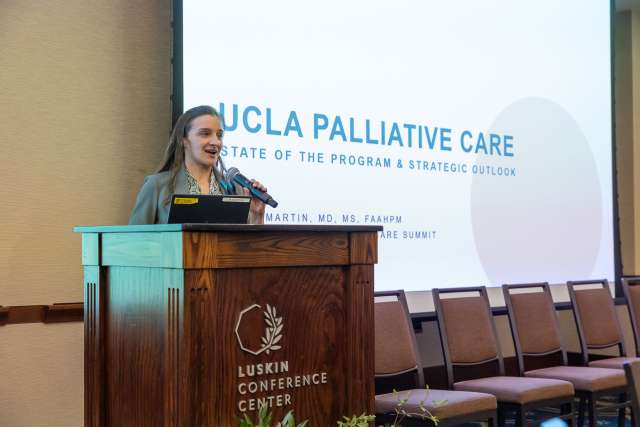
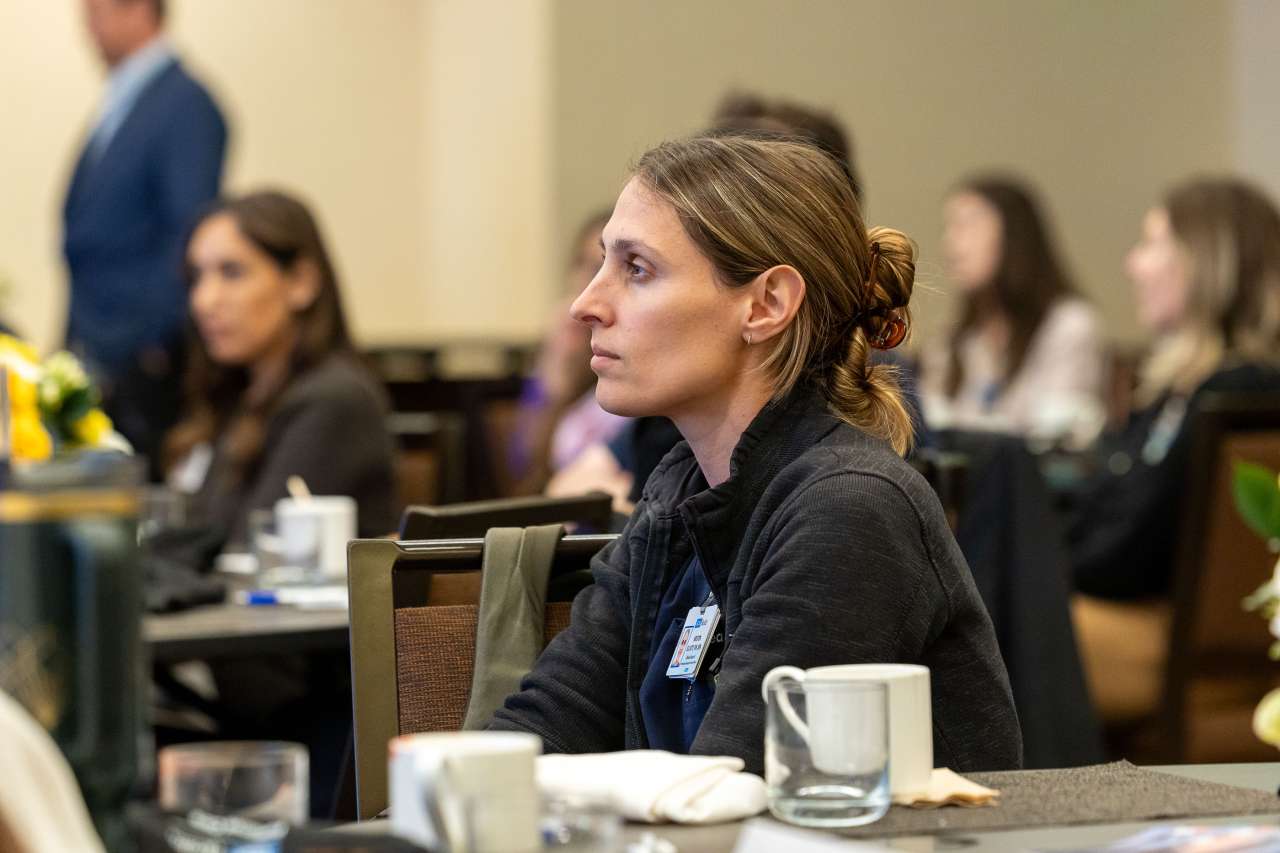
UCLA Health’s second annual palliative care summit highlighted the specialty’s role in improving quality of life for patients living with serious illness and their families, supporting healthcare teams and advancing patient-centered care. The summit also addressed the importance of a culture of wellness as a hedge to workplace burnout.
The afternoon gathering brought together local healthcare leaders and interdisciplinary professionals, including physicians, advanced practice providers, nurses, chaplains and social workers.
“This is a passion that we have,” said Emily Martin, MD, director of the UCLA Health Palliative Care Program.
“Outside of seeing patients in clinical care, we are advancing the field by making sure that the narrative is that we're not just end-of-life care,” she said. “We are relevant and appropriate from the time of diagnosis of a serious illness.”
High-value care
Patient access to palliative care is key, ideally at or near the time of diagnosis of an advanced illness in the outpatient setting, and within the first 72 hours of a hospitalization. That’s because palliative care is associated with improvements in quality of life, patient and family experience, clinical outcomes and healthcare efficiency.
Dr. Martin noted that only about 50% of inpatient palliative care consults occur within the recommended 72 hours of admission to Ronald Reagan UCLA Medical Center and UCLA Santa Monica Medical Center. And of the patients that are seen in the palliative care clinic, the majority are referred near the end of life.
“Oftentimes patients who are connected with our team have one visit, maybe two visits, and there's not really as much of an opportunity to have that longitudinal relationship,” said Dr. Martin, also an assistant clinical professor in the department of medicine at the David Geffen School of Medicine at UCLA and member of the UCLA Health Jonsson Comprehensive Cancer Center.
Greater awareness of the role of palliative care can drive earlier referrals. In one example of coordination, providers of palliative care are working with those treating patients with advanced liver disease.
These patients often receive burdensome care at the end of life. So the collaboration aims to introduce earlier conversations with patients about the goals for their care.
“In many ways, palliative care is exemplary of high-value care in terms of making sure patients' symptoms are well controlled and they have an overall better understanding of their illness and trajectory,” said Dr. Martin.
Wellness
Patients do better with palliative care. But the risk of burnout for its providers is high.
“It's emotionally taxing work and there's a lot of suffering that we're exposed to on a daily basis,” said Dr. Martin. “So we have to make sure we are building resilience and fostering team cohesion.”
Leading the program’s wellness initiative is Shannon Bell, DO, an inpatient palliative care physician.
A question many palliative care providers get asked is, “How do you do this every day?”
“Most of the time I'm able to answer this question very truthfully and honestly,” said Dr. Bell, “as this is the part of medicine that gives me the most meaning. We witness such intimate and human moments with our patients and, for me, that connection is what it’s all about.
“Year after year, our group reports that our patients and our colleagues are the reasons why we can continue to do this work.”
She noted that a survey of the program showed job satisfaction has risen in the past year and burnout across the team has improved, but she said attention is needed for the continuing rise in physician-reported burnout.
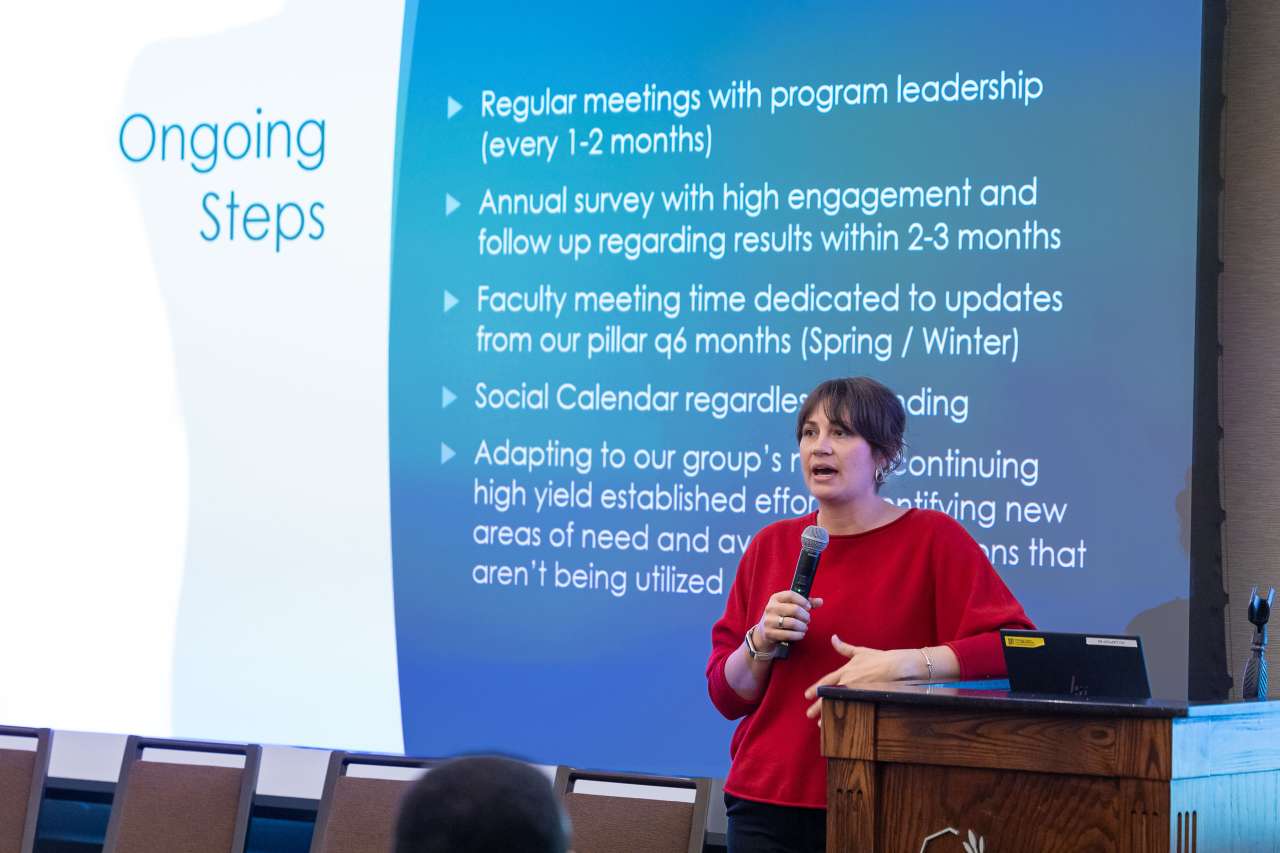
Dr. Bell’s team has a range of programming to help ease burnout among colleagues. That includes annual surveys and frequent communication with leadership about results and areas of need.
The palliative care team promotes wellness by optimizing workflow, building support and relationships among colleagues through social activities, creating space for learning and reaching out for help with difficult cases, expressing gratitude for each other, and highlighting personal and group achievements.
Nurse Kristen Elliott said she copes with burnout by working out, spending time with her loved ones and through close bonds with her team, whom she considers her family.
“You have to be kind to yourself and take care of yourself to help build your resilience.”