
Dear Doctors: Can you please explain the ice cream headache? My kids get it from popsicles, and I just gave myself one by drinking some iced tea too fast. Is there anything you can do to make the pain go away more quickly? More important, any way to not get one in the first place?
Dear Reader: Ah, the ice cream headache. Add it to sunburn, mosquito bites and poison ivy as one of the rites of summer. For anyone fortunate enough never to have experienced one, an ice cream headache is a sudden piercing pain deep in the forehead or temples. It is triggered by eating or drinking something frozen or very cold. And while the phenomenon also goes by the more evocative name of brain freeze, the medical term is cold-stimulus headache.
The pain of an ice cream headache arrives suddenly and can be shockingly intense. It reaches its peak in about 10 to 20 (long) seconds, and in most cases is completely gone after a minute or two. Considering the amount of discomfort involved, it can be surprising to learn these episodes are harmless. No, you did not literally freeze your brain cells. But you did set into motion some interesting physiology.
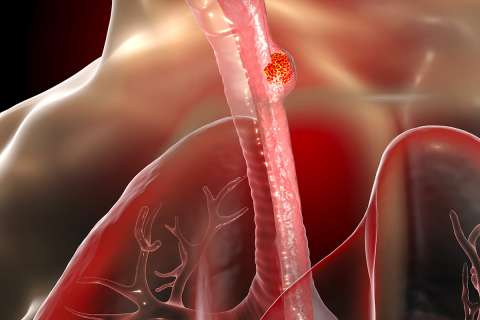
Let's begin with the roof of the mouth, which is known as the hard palate. It is served by a rich network of blood vessels and sensory nerves. In an earlier theory, those blood vessels were the main players in an ice cream headache. Upon direct contact with cold food or drink, they swiftly contract. The resulting changes in blood flow were believed to cause the characteristic stabbing pain. But a more recent hypothesis shifts the focus to the branches of the trigeminal nerve. One of the 12 pairs of cranial nerves, this nerve carries pain signals from the face to the brain. It also plays a role in a fascinating paradox of the ice cream headache.
We've already established that while the cold food or drink chills the roof of the mouth, the discomfort is felt deep in the forehead or the temples. This is a phenomenon known as referred pain. It occurs when, due to the presence of multiple neural pathways, the brain can misidentify the true source of a pain signal. And while rapid changes in blood flow may still play a role in an ice cream headache, it is the sensory nerves in the roof of the mouth that are now suspected to be the main drivers.
Unfortunately, you can't stop an ice cream headache. With that first stabbing pain, the physiological cascade is already underway. However, you may be able to blunt the discomfort. The goal is to warm the roof of the mouth. If your tongue is warm enough, pressing it against the hard palate can help. So can sipping a room-temperature beverage. To avoid brain freeze altogether, pay close attention to eating and drinking technique. If you eat or drink more slowly and minimize contact with the roof of the mouth, future icy treats should be pain-free.
(Send your questions to [email protected], or write: Ask the Doctors, c/o UCLA Health Sciences Media Relations, 10960 Wilshire Blvd., Suite 1955, Los Angeles, CA, 90024. Owing to the volume of mail, personal replies cannot be provided.)