Dear Doctors: I had a bad reaction to the barbs of a prickly pear cactus. Most of the itching stopped after I found and removed 20 tiny barbs, but now there's tingling and itching in my hands. Antihistamines help, but I'm looking for a long-term solution. I am 70, a vegan and take a low-dose B12 pill.
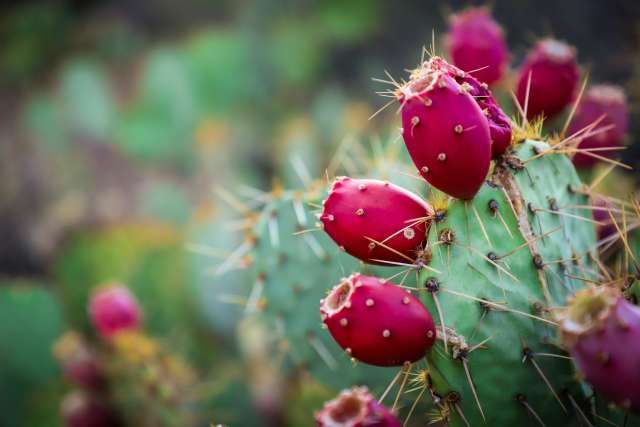
Dear Reader: It is easy to think of a cactus injury as just a nuisance. You bump or brush against a cactus pad; it hurts; you pull away. But depending on the species of cactus, the mechanics of the wound can be quite complex. This is true of the prickly pear.
In addition to long, smooth spines that can make a puncture wound, these cacti are covered with clusters of tiny hairs. Known as glochids, they are made up of multiple overlapping and sharp barbs. Glochids can easily pierce the skin and hook into the surrounding tissue. And as you have found, they are both difficult to see and to remove.
Unfortunately, even a few retained glochids can contribute to prolonged inflammation. The immune system, having identified the hairlike barbs as foreign invaders, immediately mounts an assault. This typically results in pain, swelling, tenderness and itching. Any barbs that remain embedded in the flesh can continue to trigger an immune response. This can lead to ongoing symptoms, sometimes months after an initial injury.
Research has found that retained cactus barbs and spines can induce allergic reactions, dermatitis and granuloma formation. It is possible that retained cactus barbs from your own accident are contributing to a prolonged inflammatory response.
Because of the size of the barbs and the passage of time, your best bet for finding any that remain is to consult a dermatologist. They can examine the skin using magnification or with an instrument called a dermatoscope. In addition to the barbs themselves, the doctor would look for the small papules, nodules or localized areas of inflammation they may have caused. If suspected barbs are found, the doctor can remove them.
The information that you follow a vegan diet and take a low-dose vitamin B12 supplement is also interesting. B12 is an essential nutrient derived from animal products such as red meat, dairy products and eggs. Our bodies can't manufacture B12, and it is not naturally available in adequate amounts in plant-based foods.
One of the roles of B12 is to make and support healthy nerve cells. When someone is deficient in the vitamin, the itching and tingling sensations that you described can occur. Additional symptoms can include numbness, problems with balance, fatigue and weakness.
In addition to checking in with a dermatologist, it would be wise to have your levels of B12 checked with a simple blood test. Not only does the optimal amount of B12 vary from person to person, but absorption of the vitamin often declines with age. The good news is that if you find a deficiency exists, it can often be corrected with appropriate supplementation.
(Send your questions to [email protected], or write: Ask the Doctors, c/o UCLA Health Sciences Media Relations, 10960 Wilshire Blvd., Suite 1955, Los Angeles, CA, 90024. Owing to the volume of mail, personal replies cannot be provided.)