A 77-year-old patient at UCLA Health was preparing for lung cancer surgery when her care team encountered a serious cardiac complication.
The patient was enrolled in a clinical trial of a new approach in which she received preoperative targeted therapy against her tumor. She was scheduled to undergo robotic right lower lobectomy with Bryan M. Burt, MD, professor and chief of the division of thoracic surgery at UCLA.
But the patient’s preoperative workup showed that her mitral valve regurgitation had worsened. In this condition, blood leaks backward from the left ventricle into the left atrium, increasing the risk of heart failure, stroke and other issues.
Dr. Burt consulted with a multidisciplinary team, including colleagues in medical oncology and cardiac surgery, to determine the safest approach.
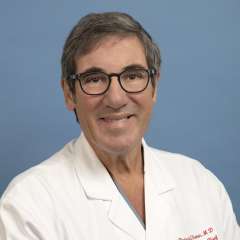
“We had thorough discussions about various ways to treat her. If we were to repair the mitral valve first, her cancer care would be delayed,” explains Dr. Burt. “If we were to perform the lobectomy first, she would be at high risk for having a non-favorable cardiac outcome.”
A key question was whether to replace or repair the leaky mitral valve. Richard J. Shemin, MD, Robert and Kelly Day Professor & Chief of Cardiothoracic Surgery, David Geffen School of Medicine at UCLA, is a leading expert in minimally invasive mitral valve repair.
“I said to Dr. Burt, I think I can repair the mitral valve, and I think I could do it robotically,” recalls Dr. Shemin. Both surgeons had the same idea: What if the cardiac and thoracic procedures could be done together in a single operation?
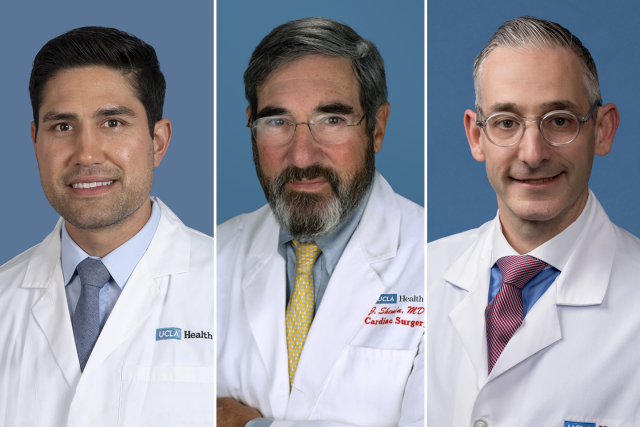
In December 2025, Drs. Shemin and Burt performed a combined robotic mitral valve repair and lung lobectomy. The extremely rare surgery highlights UCLA Health’s unique ability to deliver highly innovative, individualized care for even the most complex patients.
Oncologic innovation
The patient’s early-stage lung cancer was first diagnosed at UCLA Health, where a tumor biopsy revealed an abnormal anaplastic lymphoma kinase (ALK) gene. That mutation is present in only a small percentage of lung cancers, Dr. Burt notes.
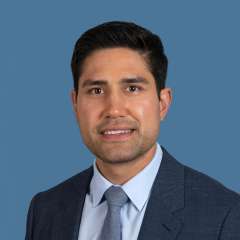
Although her lung cancer was operable, emerging data show that patients with ALK-positive tumors can benefit from targeted therapy before surgery. Dr. Burt and Arjan Gower, MD, a hematologist/oncologist at the David Geffen School of Medicine and investigator at the UCLA Health Jonsson Comprehensive Cancer Center, worked together to enroll the patient in the NAUTIKA1 trial, which evaluates targeted therapies in early-stage lung cancer.
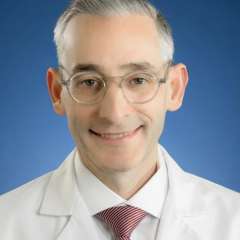
“The patient was an excellent candidate for a clinical trial based on her strong performance status and absence of significant comorbidities,” says Dr. Gower. “Our goal was to deliver targeted therapy to effectively eliminate cancer cells prior to surgery and improve long-term oncologic outcomes and cure rates.”
The NAUTIKA1 protocol called for two months of alectinib, an oral ALK inhibitor, followed by lung resection. But the patient’s mitral valve disease complicated the surgical timing and put her clinical trial eligibility at risk.
“Ultimately, combining the procedures represented the best option for the patient,” Dr. Gower explains.
Complex cardiac care
Medical oncology, thoracic surgery, cardiology, cardiac surgery and anesthesia teams collaborated to plan the heart and lung surgery.
A combined approach offered several advantages: It reduced the patient’s anesthesia exposure, eliminated the need for two separate hospitalizations and prevented delays in cancer care. The robotic technique also minimized her postoperative pain and improved recovery time.
“It was health care planning at its best,” says Dr. Shemin. “You bring different expertise and points of view, and you come up with a medical/surgical plan. Then you present it to the patient honestly, with the pros, cons and unknowns. And then you make a joint decision.”
On the day of surgery, Dr. Shemin began with the complex mitral valve repair. After the patient came off the heart-lung machine, successful repair was confirmed with echocardiography. Next, Dr. Burt immediately proceeded with the right lower lobectomy using the same robotic system, which eliminated the need for thoracotomy. Dr. Shemin remained present to monitor the patient’s cardiac condition.
When the lung specimen was removed, there was no evidence of residual tumor.
“Our patient achieved a pathologic complete response, which bodes very well for her long-term outcome,” Dr. Gower confirms.
The patient is doing well postoperatively and will resume alectinib for up to two years as part of the NAUTIKA1 trial. She will undergo close radiographic surveillance to monitor for recurrence.
Looking ahead, Dr. Burt says this combined robotic procedure may be a safe option for appropriately selected patients at expert centers.
For Dr. Shemin, the thrill of collaboration is enduring — even after nearly five decades in cardiac surgery.
“This case illustrates the unique environment in which we’re privileged to practice medicine,” Dr. Shemin says. “We’ve got doctors who are on the cutting edge and can give patients options that, in another American center, don’t even exist.”