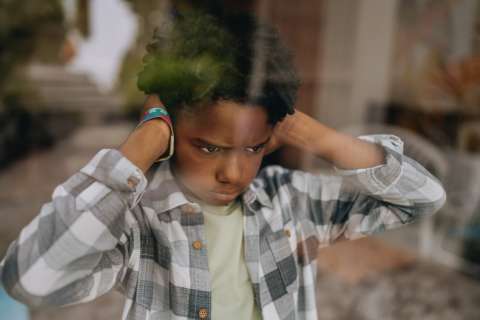
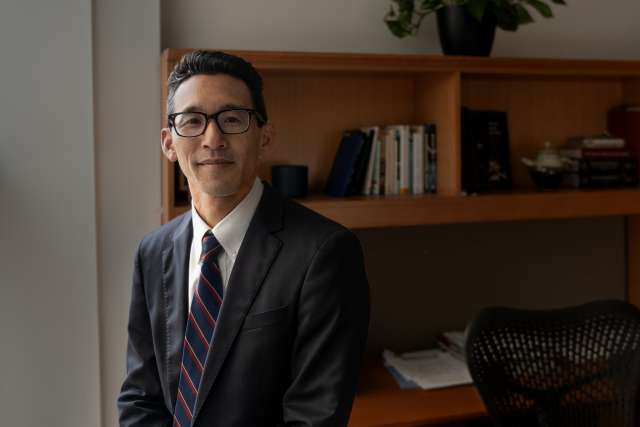
The Stewart and Lynda Resnick Neuropsychiatric Hospital at UCLA treats some of the most complex needs across all ages, including aggressive behavior in autistic children, eating disorders in adolescents and the overlap of psychiatric and medical conditions common in older adults.
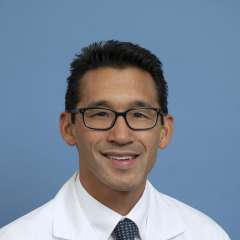
Chief Medical Officer Erick Cheung, MD, said the hospital’s wide-ranging services draw patients from a broad geographic area who, oftentimes, have been turned away from other psychiatric hospitals that lack the resources to treat them.
“The breadth and depth of experience that this hospital is offering is virtually unrivaled – and the commitment to not just delivering care, but training more psychiatrists in all these areas, is critical,” said Dr. Cheung, associate professor of psychiatry at the David Geffen School of Medicine at UCLA. “When there are unique circumstances – the more complex cases, the really ill patients – it’s clear to us that people get referred here for these situations.”
Autism services and research
UCLA Health offers comprehensive autism care, including an intensive partial hospitalization program to develop speech, communication and other early intervention skills for young children.
The KidsConnect Autism Treatment Program is open to children ages 2 to 5 and meets for six hours a day, five days a week. Participants receive individualized, interdisciplinary treatment to reduce maladaptive behaviors and increase communication and social skills.
“Families have told us it is simply life-changing,” Dr. Cheung said.
For inpatient care, Dr. Cheung said many hospitals are not equipped to treat patients with autism, especially those who are minimally verbal and inadvertently use aggressive behaviors to try to get their needs met.
UCLA Health psychiatrists also treat people with bipolar disorder, obsessive compulsive disorder, attention deficit hyperactivity disorder and other psychiatric conditions where autism is a complicating factor.
“Delivering autism specialty care in inpatient psychiatric hospitals is a challenge because autism is not a type of illness where you just give a medicine and things get better,” Dr. Cheung said. “There’s very few medications that are even indicated for the treatment of symptoms and problematic behaviors related to autism.”
Notably, Dr. Cheung said RNPH is among a small handful of programs across the U.S. that have invested in staff who are specially trained in behavior analysis and therapies within a psychiatric hospital, placing it in high demand.
Additionally, nursing staff have received special training to care for patients who show aggression, which dropped the need to restrain a patient to almost zero.
“Nurses have been trained with new skills and approaches and can follow behavioral treatment plans to reduce maladaptive behaviors,” he said. “That’s a sophisticated undertaking given how many different nurses a patient will see during their hospital stay and our need to deliver consistent behavioral modification.”
UCLA Health’s autism research has a long and prominent history, including the development of the UCLA Program for the Education and Enrichment of Relational Skills, or PEERS, which teaches evidence-based concrete social skills for friendship and dating, breaking down complex behaviors into steps.
“The PEERS program was developed here by Dr. Elizabeth Laugeson and is now all over the country, and the world for that matter,” Dr. Cheung said.
In 2025, UCLA Health launched a research study called PEERS for Dating to use evidence-based tools to empower adults to navigate the complex social norms around dating and romance. The curriculum includes insight from focus groups and pilot studies, along with dating coaches to help participants apply what they learned in their social circle.
“Individuals join workshops and training programs to build socialization skills for dating,” Dr. Cheung said. “They use role-play and have homework to continue practicing skills in the real world.”
Eating disorders
RNPH’s eight-bed inpatient eating disorders unit cares for adolescent patients whose health needs are too severe for standard outpatient or residential settings, a rare subspecialty for psychiatric hospitals.
The program closely monitors patients and provides intensive psychotherapy to help them restore necessary eating behavior and weight gain to avoid medical complications. Child and adolescent psychiatrists and psychologists address any co-existing conditions such as post-traumatic stress disorder, anxiety, depression and autism.
“Sometimes they are too dysregulated to be in a less-restrictive setting,” Dr. Cheung said. “They may be suicidal or actively engaging in self-harm.”
The goal is for patients to improve enough that they can complete treatment in an outpatient setting. Dr. Cheung noted that the average patient stay is 40 days and readmissions are rare.
Geriatric care
Board-certified geriatric psychiatrists at RNPH care for older adults who may have significant medical problems in addition to psychiatric conditions. Patients have access to UCLA Health cardiologists, neurologists and other medical specialists who can be at the bedside quickly in an emergency.
Psychiatric units staffed by trained geriatric psychiatrists are uncommon, particularly as some psychiatric hospitals don’t accept patients older than 65.
“If you are a patient who has a significant psychiatric disease and has a significant medical illness, it is hard to find a place where you can receive really integrated high-quality care, but we are one of them,” Dr. Cheung said. “We’re taking care of patients who are challenging to care for in traditional medical or psychiatric hospital settings.”
While Americans 65 and older are expected to comprise 20% of the population by 2030, board-certified geriatric psychiatrics make up only 3% of the psychiatric workforce, according to a recent report in Psychiatric Times. Dr. Cheung said UCLA Health is committed to training the next generation of geriatric psychiatrists through its fellowship training program.
“There has to be a commitment by the institution and the academic department,” he said. “You have to build and maintain the faculty, curriculum and training sites. It’s something that requires a lot of investment and upstart.”
More unique services
UCLA Health offers other hard-to-find care, including electroconvulsive therapy (ECT). As other programs have stopped providing the resource-intensive treatment, demand remains high for people experiencing life-threatening illnesses such as catatonia and treatment-resistant major depressive disorders.
“We get requests from far and wide, people from all over Los Angeles, from desperate families, desperate hospitals,” Dr. Cheung said. “We are among the last providers of ECT in the greater-LA area.”
At all times, personalized treatment plans and family involvement are cornerstones of care.
“Every patient’s unique treatment plan is generated with a multidisciplinary team of psychiatrists, social workers, nurses, occupational therapists, psychologists and behavioralists, and dieticians,” Dr. Cheung said.
The plan is discussed at least weekly with patients to engage them in shared decision-making.
Dr. Cheung said psychiatry staff also include family members as advocates for patients.
“Our team spends hours throughout the hospital stay, in regular contact with family members who are trying to help their loved ones,” he said. “We go out of our way to involve other people, family members and supporting key players in their life, because we know that’s so essential.”