
Becoming a medical student at the David Geffen School of Medicine at UCLA is just the most recent of many challenges Shine Lim has created for herself.
As a little girl and teenager, born and raised in Santa Clarita, she was a competitive dancer and enjoyed the discipline and physical and emotional demands of dance. Then came a bigger challenge: she attended the U.S. Military Academy at West Point right after graduating high school in 2021 and majored in psychology. She was drawn to the physical and academic tests for which West Point is known.
“West Point offered leadership and character development,” says Lim, 22. “I wanted to be a leader, a leader of character. I also wanted to challenge myself, physically, mentally and academically, and I knew that that’s what West Point would have to offer.”
Serving in the U.S. military is a path some in her family had taken.
“I wanted to serve in the Army because I feel a strong sense of responsibility to give back to this country,” Lim says. “My grandparents immigrated from Korea to give my family a better life, and I feel so blessed to be an American because of the opportunities I've had here. A few of my family members were an amazing example of how service could be a meaningful way to carry out that responsibility, so I wanted to do the same.”
An admittedly shy person, Lim says West Point provided opportunities, such as training with the Airborne school, to face her fears and be courageous.
“They train you to be able to jump out of airplanes for combat operations, and so we did a lot of training to make sure we're able to land correctly,” she says.
This involved three phases: first, learning correct techniques on the ground, then practicing landing after zip-lining from a tower and finally completing five combat jumps from a plane, some of which were at night and involved carrying a 50-pound load of equipment. Lim received a diploma for completion of the Airborne Division course.
Lim also underwent what is called survival swimming, where students learn how to swim while wearing combat gear, including boots, a rifle and a weighted vest. “I'm a decent swimmer. I mean, I grew up in California, I know how to swim,” says Lim. “So I wasn't too worried at first.”
But this was a physically demanding experience, unlike any other, she says. Students had to jump into water from a 6-meter high tower with all their gear and then swim through hoops spanning a long pool without taking a breath. Passing this test was a requirement for graduation.
“I was very humbled by that class,” she says. “There was one point when I couldn't come up for air, and my instructor had to jump in and give me a life raft. I was literally fighting for my life.”
Meeting the challenge, she continued to practice these skills and with the help of a friend who’d played water polo, Lim gained courage and confidence, and improved. “It taught me how to overcome my fears, and I'm really thankful for everyone who helped me.”
Her own style of leadership
These and other experiences helped Lim form her own effective leadership style.
“I think I always had an idea that leaders were very confident and always Type A,” she says. Surrounded by high-achieving students at West Point, Lim sometimes suffered from imposter syndrome. “I thought, dang, do I deserve to be here? I'm not anything special.”
Then she was put in charge of training 30 new cadets, pushing her into a leadership position. She decided to define this role on her own terms.
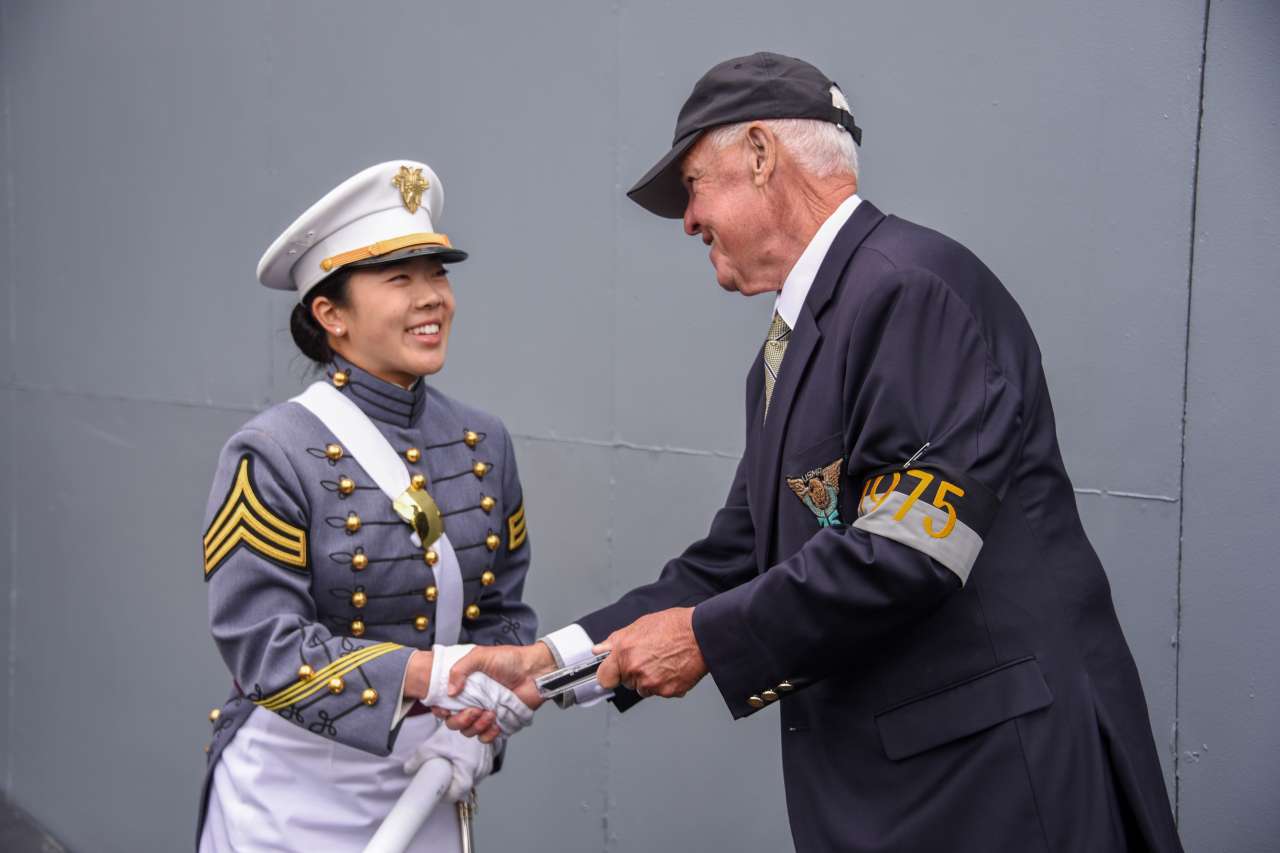
“I had to rise to the challenge, but as I gained a little more experience, I developed my leadership style,” she recalls. “I realized that you can be a leader without being in the front all the time, yelling at people and telling them what to do. I developed my leadership style by just leading by example and by being empathetic and genuinely caring for others, and I think that's something that people value in leadership, more than some other traits that I thought were examples of leadership.”
She also volunteered as a peer counselor at West Point. “That was super meaningful for me,” she says.
As Lim became aware of her strengths of empathy and caring for others, medicine became a natural next step. “The medical field called me more than other types of Army jobs, and it was a way that I could see myself fully serving to the best of my ability,” she says.
Lim was able to shadow physicians at Walter Reed National Military Medical Center, which opened up a new path for her.
“When I saw how the hospital works and people taking care of those who did serve, I felt like that was a really noble job that I wanted to do,” she said. “It was just much more meaningful to be able to help other service members, who I may one day stand beside in some of the most demanding environments. So that's how I came to the decision on medicine.”
Her dream medical school
Lim’s top choice was the David Geffen School of Medicine.
“I was able to talk to another West Point cadet who went to UCLA, and she just kept raving about it,” Lim says. “She said everyone was super supportive, and that definitely drew me in. I wanted a supportive environment with a lot of opportunities, so UCLA was an easy choice.”
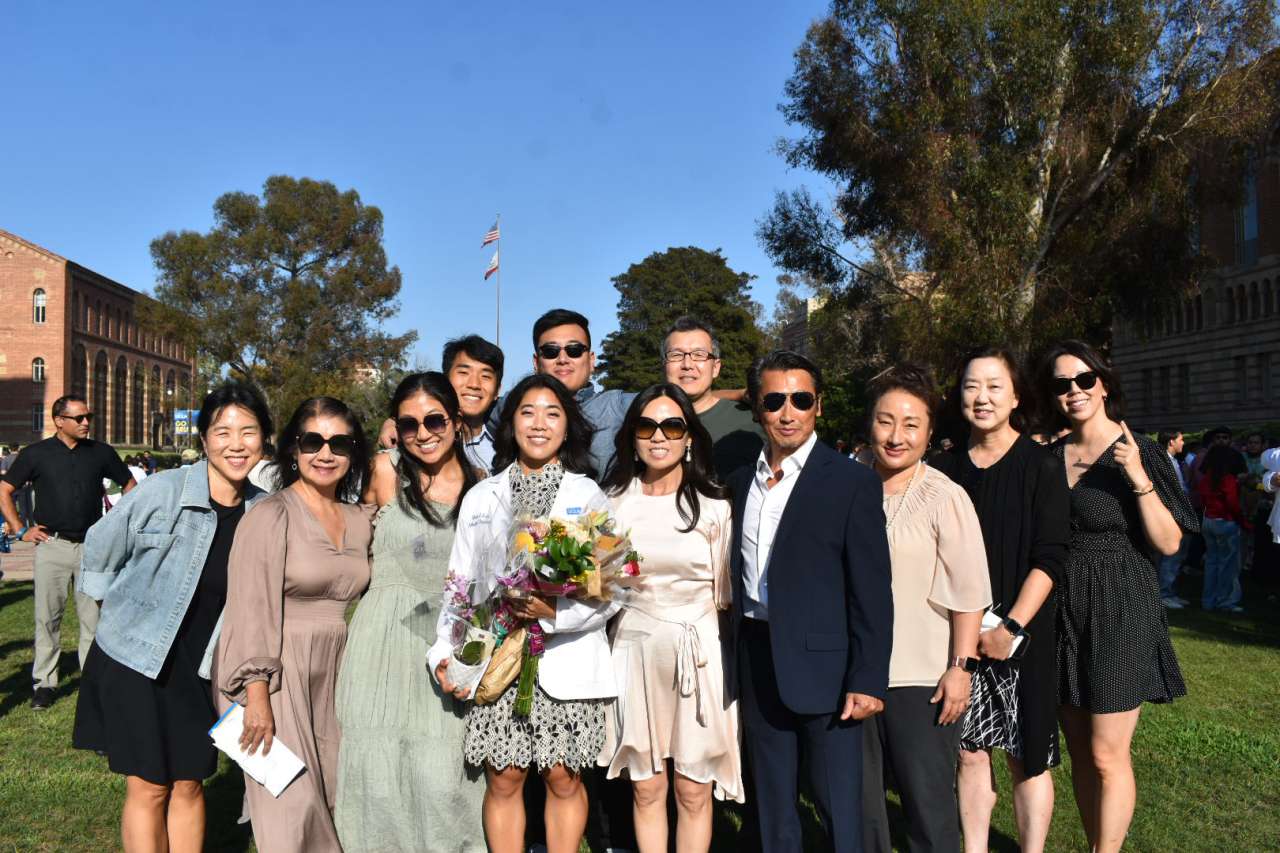
That the school is located near her family, and close to the vibrant Los Angeles dance community, reinforced its No. 1 position on her list.
Now in her first year at the medical school, Lim has been exploring the many opportunities that medicine offers. She is leaning toward a focus on outpatient services, but she knows that when the time comes, she will apply for a military match for a residency at an Army hospital. She hopes she can do her residency at Walter Reed.
In addition to her classes and schoolwork, Lim volunteers for Rosear, a student organization that offers support for medical students who are experiencing emotional difficulties, such as grief. The recent loss of her beloved grandfather, “a light in our lives,” led Lim to get more involved with Rosear.
“We had a panel about how to navigate through grief through medicine, and we brought in physicians who have dealt with that in their life,” she says. “We asked them how they handled it, and what we can do to prepare ourselves for that, because I think all physicians will undergo some sort of grief, whether it's through their patients or in their personal life.”
Lim also continues to dance, taking classes in hip-hop, jazz and contemporary dance. She’s become certified as a teaching assistant for a program called Dancing Through Parkinson’s.
“It's a class where people with Parkinson's disease, or any sort of movement or neurological disorders, are able to work through them and still enjoy exercise, but also artistry through dance,” Lim says. “That's been amazing to see the intersection of two of my passions — dance and the health field.”