
As we get older, it can seem as if multiple body parts no longer work quite as well as they used to. Your knees might feel creaky, your back stiff and your vision less clear.
You also may find it’s getting harder to hear important sounds and conversations. You might find yourself turning the television up a notch or two. Or you might feel like everyone else has forgotten how to speak up.
The good news is that hearing loss is highly treatable. And modern hearing aid options make it easier to adapt.
How common is hearing loss in older adults?
If you are starting to notice that your hearing isn’t quite as sharp as it once was, you are definitely not alone. Some degree of hearing loss becomes increasingly common with age.
An estimated 30%-35% of people between 65 and 75 have hearing loss. Older than 75, that number increases to about 40%-50%.
It’s also incredibly common for older adults to ignore hearing loss and put off getting treatment. Many wait until their hearing loss starts causing other problems (such as social isolation) before addressing it. But experts recommend seeking help earlier for the best results.
What causes hearing loss?
Some decline in hearing can be part of the natural aging process. As you get older, there are physical changes to the inner ear (its shape and amount of blood flow it receives) that can affect hearing.
There are also changes to the nerves involved in hearing and in how quickly the brain processes sound. All of these add up to a gradual reduction in how well you can hear.
Certain health conditions can increase your risk of hearing loss, including:
- Diabetes
- Ear infections
- Ear wax buildup
- High blood pressure
- Stroke
The health risks of hearing loss
Not being able to clearly hear the world around you is challenging enough. But impaired hearing can also have negative ripple effects. Hearing loss can impact aspects of both your physical and mental health.
Some of the not-so-obvious ways hearing loss can affect you include increased risk of:
- Cognitive decline and dementia: People with untreated hearing loss are more likely to experience difficulties with thinking, focus and memory. They are also at increased risk of developing dementia and Alzheimer’s disease.
- Falling: Hearing loss can affect your inner ear, which, in turn, impacts your balance. Hearing loss can also make you less aware of your surroundings. Both factors increase the risk of falling.
- Social isolation: Not being able to hear well enough to follow conversations and enjoy time with others can lead to loneliness and isolation. This also increases the risk of depression and anxiety and can hasten cognitive decline.
Tips for navigating hearing loss
Even before getting treatment, you can take steps to help maintain the ability to interact with others. Don’t be embarrassed to tell friends and family that you’re having difficulty hearing. Together, you can use strategies to improve communication, such as:
- Asking people to speak up and speak more clearly
- Maintaining face-to-face contact when speaking and listening to others
- Seeking out quieter spots for social interactions
How to treat hearing loss
The first step in treating hearing loss is to meet with an audiologist. They can test your hearing, diagnose the problem and recommend the best type of treatment.
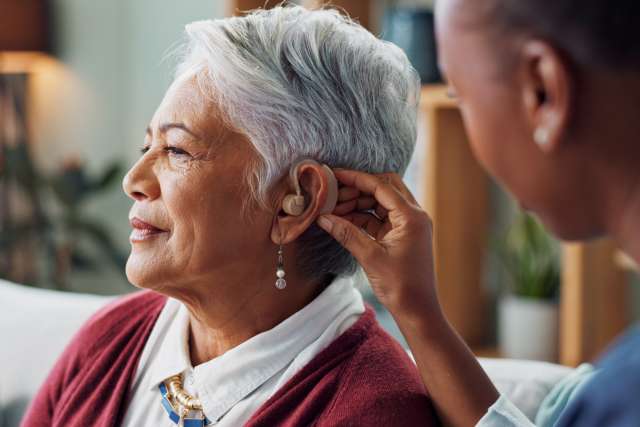
For most older adults with mild to moderate hearing loss, hearing aids offer an effective solution. And the new, modern versions bear little resemblance to the clunky things your parents may have worn.
Hearing aids today are high-tech gadgets packed into tiny, barely noticeable packages. Some may have a small receiver that tucks behind the ear. But most insert directly into the ear and can hardly be seen. They look more like earbuds than a medical device.
Hearing aids are available both by prescription and over the counter. Your audiologist can help you determine the best option for your specific needs.
If you do get a hearing aid, remember to be patient. Adjusting to the device can take time — and some tweaking by a professional.
Wear your new hearing aid as often as possible to help get used to it. Soon, you’ll be able to hear better and have more enjoyable, and less frustrating, interactions with friends and family.