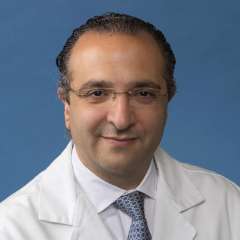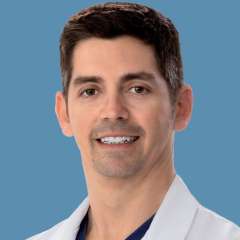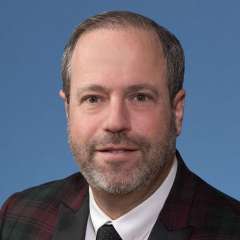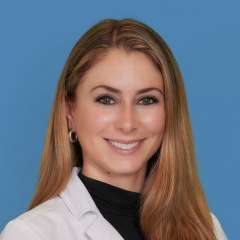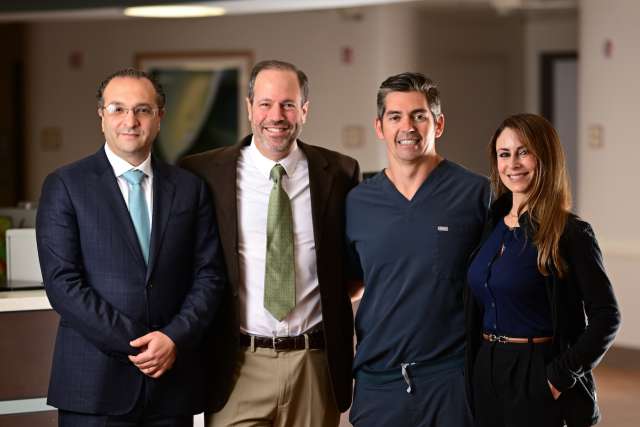
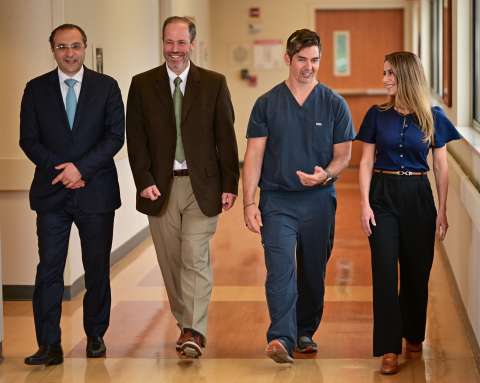
UCLA Health’s acquisition of a 260-bed hospital in West Hills has expanded access to leading-edge care throughout the San Fernando Valley, bringing specialized services closer to home for communities along the 101 corridor. Among the newest additions is the UCLA Health Spine Center at West Valley, which offers comprehensive treatment for chronic neck and back pain, including minimally invasive and robot-assisted surgical procedures, pain management, rehabilitation and nonsurgical therapies. To learn more, we spoke with Samer Ghostine, MD, and Michael Dorsi, MD, neurosurgeons and medical co-directors, Darren Freeman, DO, physiatrist and Jenna Abeloe, nurse practitioner.
You all were the first to bring a robotics program in spinal surgery to the greater LA area. What role does robotic surgery play in your practice?
Dr. Dorsi: We brought the program in early to be on the forefront. Innovation will happen quickly with robotics for spinal disorders. It’s a great tool for both minimally invasive and complex spine surgery, because it basically eliminates the human error component of placing spinal hardware.
A mispositioned screw in the spine can cause devastating neurologic complications for patients. The robot has significantly reduced that human risk. It’s resulted in fewer complications and shorter hospital stays. In the 500-plus cases I have done, there has not been a single readmission.
What is the overall approach to treating patients at the West Valley Spine Center?
Dr. Dorsi: The third most-common reason that someone goes to a doctor in the United States is back pain. Many painful conditions are caused by the degenerative processes that occur in our spine — but the truth is that most patients do not need surgery. It’s very important to consider getting a second opinion if a patient has been recommended to have an aggressive surgical procedure.
Dr. Ghostine: Conservative management is the first step of all our treatments. If that fails, we will consider surgical intervention if the patient is a good candidate. We adapt the surgery to the needs of each patient, and what would best work for them.
What are some unique aspects of offering spinal care in a community setting?
Dr. Dorsi: There’s a level of accountability in the community that’s different than at a location hours away. We put extra weight on that responsibility in many of our decisions and treatment plans, knowing that often these are our neighbors and our friends we’re treating. You’re going to get personalized care every step of the way, through hospitalization and postoperative care.
What can a patient expect during an appointment at the spine center?
NP Abeloe: Most new patients see me first to determine whether they need immediate surgery, or if they need more workup or if there’s nonoperative care to offer them.
To give patients the most efficient level of care, I’m like a quarterback. I take as much information from the history as I can, and I do a comprehensive physical assessment. That tends to be extremely telling in terms of the nature of their pain and helps me to independently review their imaging and interpret the MRIs, X-rays and CT scans.
One of my unofficial roles is debunking myths. I tell patients that as we age, spine care providers can usually find multiple imperfections with everybody’s imaging. MRIs are very good at capturing every abnormality — but many of the things they catch are essentially aging in the spine.
Having all this information helps to whittle down a correct diagnosis. It provides patients a sense of relief to know where they stand in terms of their symptoms and their MRI findings. There’s not a blanket statement that applies to everybody, but for the most part, how you feel and how you function dictates what we should do next.
Dr. Dorsi: We all share patients and discuss cases together. We often refer patients back and forth between the four of us to really match them with the provider that best suits their needs.
Often, NP Abeloe is the first and only resource that patients need. She’s done a great service to our community, because she has spared many patients from surgeries that they didn’t need and given them other options for improving their symptoms.
Tell us more about pain management as a critical component of the treatments offered.
Dr. Freeman: Pain is not something we can easily see on exam. It’s abnormalities that only patients can interpret. As pain physicians, it’s our challenge to extract that information.
The psychological component is also a huge factor — so when physicians fail to understand the what and the why, it can do psychological damage as well. This can unnecessarily exacerbate the level of their pain further. To me, that’s important to keep in mind.
The more patients understand their conditions, the better they can communicate with their providers, especially their pain doctors and neurosurgeons, to figure out what we need to do. We have very specific types of procedures in the pain interventional world — physical therapy, assistive devices, injections, kyphoplasty, peripheral stimulators, spinal decompression devices — that all give patients the opportunity to restore a level of function and quality of life.
For patients who need surgery, how do you treat spinal conditions with minimally invasive procedures?
Dr. Dorsi: The most common condition that I treat, several times a week, is a herniated disc, either in the cervical or lumbar spine. Patients typically present with symptoms radiating down either their arms or their legs, which could consist of pain, numbness, weakness or loss of function.
Minimally invasive surgery accomplishes the goals of surgery through much smaller, tissue-sparing procedures, allowing patients to have outpatient care, quicker recoveries, less blood loss and less complications.
What is the outlook for the future of the West Valley Spine Center?
Dr. Ghostine: I’m extremely optimistic about the future, being part of UCLA Health and a much bigger family. The infrastructure is one of the best in the world, and second to none in California.
As we grow with our community, we will be able to improve further on our infrastructure and improve on our access and our reach to all patients who may benefit from our care.