
Antipsychotic medications can be effective in treating severe behavioral symptoms in dementia patients, but they are associated with serious risks and are generally recommended only after non-drug approaches have been tried. Some physicians, though, prescribe the meds more often than necessary.
UCLA Health researchers may have found a targeted way to curb over-prescribing of antipsychotic medications to dementia patients, a new study shows.
The research published in the Journal of the American Geriatrics Society found that an electronic health record (EHR) digital alert may be effective in curbing heavy prescribers. And the more a provider usually prescribed antipsychotics, the more effective the alert turned out to be.
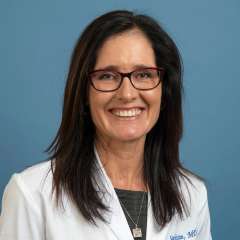
At the same time, researchers found that the digital nudge didn’t significantly reduce prescribing overall. The results suggest that a single, one-size-fits-all digital alert is not enough to drive down antipsychotic pill-days across all providers. But it may be more effective when aimed at clinicians who prescribe these medications more often, said lead author Dr. Catherine Sarkisian, professor of medicine at the David Geffen School of Medicine at UCLA.
“Reducing potentially harmful antipsychotic use in dementia remains an important goal, but this study suggests that broad alerts may be too blunt an instrument,” she said. “Future efforts may work better if they focus on higher prescribers and preserve clinical workflow for everyone else.”
The study enrolled 146 randomized providers and 139 patients over 19 months in a large academic health system. The study team built an EHR alert to prompt clinicians at the point of care with information about mortality risk and a link to non-pharmacologic resources for caregivers.
Antipsychotic medications are often used inappropriately as sedatives – as a way to manage challenging behavioral symptoms in dementia patients, Sarkisian said. In the study, if a physician pursued the medication after receiving the alert, the system defaulted to a lower dose with a shorter duration.
The intervention was not associated with increases in emergency department visits, hospitalizations, death or substitute sedating medications, the study noted.
One unexpected finding was how rarely the non-pharmacologic caregiver handout was used, highlighting the challenge of building supportive tools into clinical workflow.
Authors: Study co-authors include Dr. John Mafi, Dr. Noah Goldstein, Chad Wes Villaflores, Dr. Anne M. Walling, Sitaram S. Vangala and Dr. Eric M. Cheng.
Sources of Funding: National Institute of Health, National Institute on Aging, National Center for Advancing Translational Sciences, UCLA Clinical and Translational Science Institute