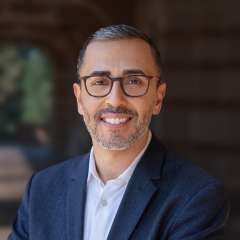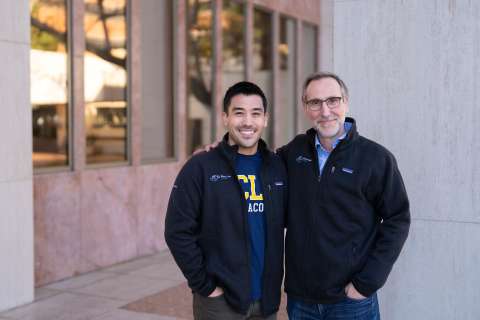
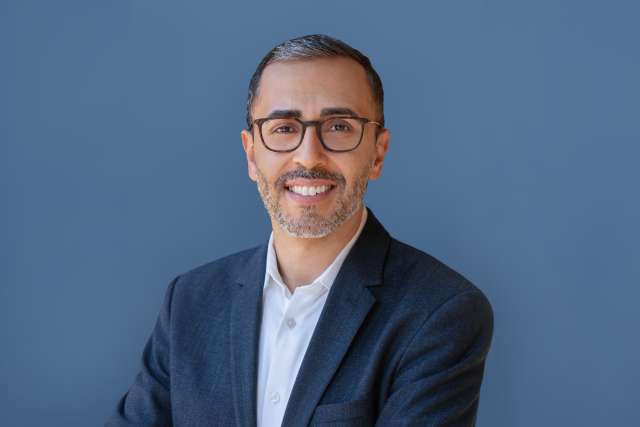
Dr. Mina Sedrak, director of the UCLA Center for Cancer and Aging and co-director of Cancer Control and Survivorship Research at the UCLA Health Jonsson Comprehensive Cancer Center, has received a five-year, $3.6 million grant from the National Institutes of Health to develop strategies to improve physical recovery and reduce frailty in older adults following hematopoietic cell transplantation, commonly known as a bone marrow or stem cell transplant.
Hematopoietic cell transplantation can be a potentially curative treatment for people with blood cancers, but the treatment can be particularly challenging for older adults. The effects of cancer, transplantation and other health conditions can significantly reduce the body's physiologic reserve, or its ability to withstand stress and recover from illness. Sedrak and his team — including co-PIs Dr. Saro Armenian from City of Hope and Dr. Kirsten Ness from St. Jude — previously found that about one in three transplant survivors experienced a substantial decline in physiologic reserve within six months of transplantation, equivalent to more than 40 years of normal aging. Older transplant survivors also were five times more likely to develop frailty than age- and sex-matched siblings.
The grant will support a multisite randomized clinical trial called SEN-ENERGY that will test whether combining remotely delivered exercise training with a senolytic therapy can improve physical function and reduce frailty after transplantation in adults 60 and older. Senolytic therapies are designed to target senescent cells, sometimes called “zombie cells,” that can remain in the body after becoming damaged or dysfunctional and contribute to inflammation and other processes associated with aging.
"This study could provide a new approach to helping older transplant survivors recover their physical function and maintain their independence," said Sedrak, who is also an associate professor of medicine at the David Geffen School of Medicine and a member of the UCLA Broad Stem Cell Research Center. "By combining exercise with a therapy that targets the biological processes associated with accelerated aging, we hope to develop a more effective way to address frailty after transplantation, an important problem for which there are currently no evidence-based treatments."