UCLA researchers have uncovered a hidden weakness in some of the deadliest cancers, revealing a potential new strategy for targeting tumors that have long resisted treatment.
Small cell neuroendocrine cancers, aggressive tumors that can arise in the lung, prostate and ovary, grow rapidly, spread early and remain extremely difficult to treat. A defining feature of these cancers is the loss of a protective gene called RB, which normally acts as a brake on cell growth. Without RB, cancer cells multiply rapidly and resist many targeted therapies.
But the new research, published in the journal Proceedings of the National Academy of Sciences, shows that this genetic loss may also create an unexpected vulnerability.
The team found that when RB is missing, cancer cells become highly dependent on a protein called E2F3 to survive. Blocking E2F3 in laboratory studies effectively halted tumor growth, a vulnerability scientists describe as “synthetic lethality.” In other words, while cancer cells can tolerate the loss of RB alone, removing E2F3 at the same time creates a critical weakness that could be exploited for treatment.
“Discovering a vulnerability like this opens the door to thinking about entirely new treatment strategies,” said study senior author Dr. Owen N. Witte, who holds the Presidential Chair in Developmental Immunology in the Department of Microbiology, Immunology, and Molecular Genetics and is a member of the UCLA Health Jonsson Comprehensive Cancer Center. “That’s especially important because there has not been a major change in how we treat these cancers for decades. When I first encountered these tumors as a medical student more than 50 years ago, the survival statistics were essentially the same as they are today.”
Finding new treatments for these cancers, particularly small cell prostate cancer, has been difficult because reliable laboratory models have been lacking. Without these models, it is challenging to map the genes that these tumors rely on to survive and to pinpoint their genetic vulnerabilities.
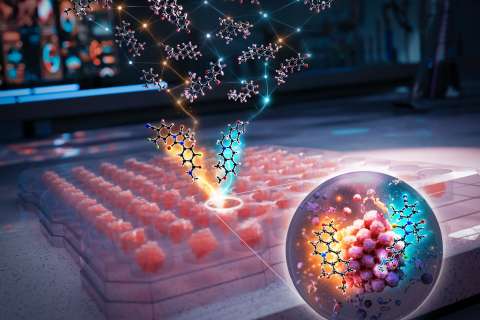
To address this issue, the UCLA team developed new lab models by genetically altering normal human prostate cells, introducing five key cancer-driving changes, including loss of RB and TP53. The cells were grown as organoids and then used to form tumors in mice, creating models that closely resemble human small cell prostate cancer. This work builds on more than a decade of work by Witte’s team developing these specialized laboratory models of small cell neuroendocrine prostate cancer.
Using these models, the researchers performed genome-wide CRISPR screens, testing thousands of genes to identify which ones the cancer cells depend on most for survival. They found nearly 1,400 genes that were important for cancer cell survival, but found small cell cancers from different organs share a strong dependence on E2F3.
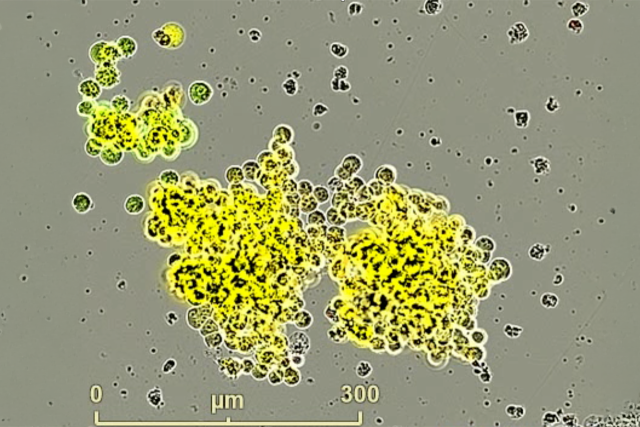
The researchers then used laboratory experiments to block E2F3 and found that when they reduced E2F3 levels in RB-deficient cancer cells, the tumors stopped dividing, failed to form clusters, and in some cases, died. This vulnerability means the cancer can survive the loss of RB alone but collapses when E2F3 is also blocked.
“It’s not that the two genes do the same thing,” said Witte, who is also the founding director emeritus of the UCLA Broad Stem Cell Research Center and co-director of the Parker Institute of Cancer Immunotherapy Center at UCLA. “But the combination of what they do together becomes essential for the cancer cell. Losing one gene may not matter much, but losing both has a dramatic effect on tumor growth.”
“These new model systems allowed us to uncover a genetic vulnerability that would have been very difficult to find otherwise,” added first author Dr. Evan Abt, an assistant professor of Molecular and Medical Pharmacology at the David Geffen School of Medicine at UCLA.
Because no drugs currently target E2F3 directly, the researchers explored an alternative approach. They found that blocking a metabolic pathway used to make DNA building blocks by inhibiting the enzyme DHODH lowered E2F3 levels and slowed tumor growth. Notably, DHODH inhibitors such as leflunomide and teriflunomide are already FDA-approved for autoimmune diseases, which could potentially accelerate their use in cancer therapy.
“What’s exciting is that our findings open the door to applying existing drugs in a new way,” Abt said. “By understanding how these cancers depend on E2F3, we can start to think about strategies that might work much more quickly in patients.”
While the research is still in early stages, it provides an important new insight into how these cancers operate, the researchers noted.
Other UCLA authors are Liang Wang, Grigor Varuzhanyan, Jack Freeland, Tian He, Guadalupe M. Peña-Garcia, Lauryn Ruegg, Jami McLaughlin, Donghui Cheng, Nikolas G. Balanis, Chia-Chun Chen, Sanaz Memarzadeh, Caius G. Radu and Thomas G. Graeber.