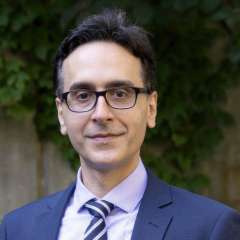
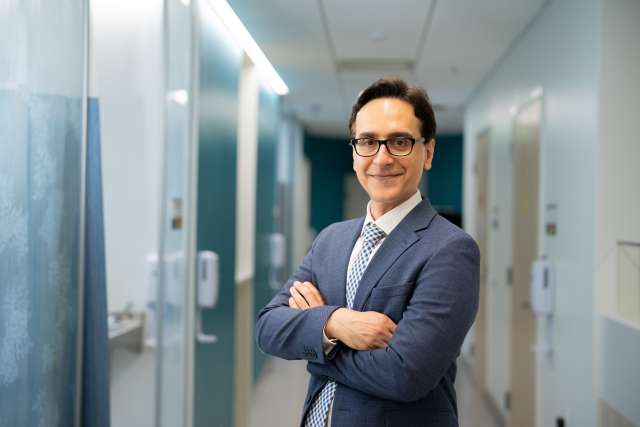
Dr. Amir Iravani, a nationally recognized nuclear medicine physician-scientist specializing in molecular imaging and targeted radiopharmaceutical therapies for patients with cancer, has joined UCLA Health where he will serve as director of the Theranostics Program and vice chair of clinical research in the department of nuclear medicine and theranostics.
In his new roles, Iravani will work with colleagues across the health system, including the David Geffen School of Medicine at UCLA and the UCLA Health Jonsson Comprehensive Cancer Center, to advance the integration of theranostics into cancer care, expand clinical trials and research opportunities and develop new collaborations in precision health.
“I have followed UCLA’s leadership in radiopharmaceutical therapy and molecular imaging for many years, so this opportunity was very consistent with what I wanted to do at the next stage of my career,” said Iravani. “The establishment of an independent department of nuclear medicine and theranostics makes this an especially exciting time to join UCLA and help advance the field.”
Iravani brings extensive experience in theranostics, having trained at the Peter MacCallum Cancer Centre in Melbourne, Australia, a world-leading center in the field. More recently, he served as theranostics clinical director at Fred Hutchinson Cancer Center in Seattle and was an associate professor of radiology at the University of Washington School of Medicine, where he helped advance clinical care and research in molecular imaging and theranostics.
Iravani has a distinguished record of research in molecular imaging and radiopharmaceutical therapy, with a focus on developing more personalized approaches to cancer treatment. His work spans across various malignancies, including neuroendocrine tumors, prostate cancer, and thyroid cancer. He studies how imaging biomarkers can be used to identify patients most likely to benefit from targeted therapies, optimize treatment schedules and monitor how tumors respond to treatment.
His research has included the use of prostate-specific membrane antigen, or PSMA, imaging to guide radiopharmaceutical therapy for prostate cancer. PSMA PET imaging allows physicians to visualize the presence and distribution of PSMA-expressing prostate cancer throughout the body and can help identify patients who may benefit from PSMA-targeted therapies.
More recently, Iravani has focused on further personalizing radiopharmaceutical therapy by using quantitative information from imaging, along with other biomarkers such as liquid biopsies, to determine the most appropriate dose and timing of treatment for individual patients.
Iravani's vision for the UCLA program includes expanding theranostics beyond its current applications in prostate cancer and neuroendocrine tumors. He plans to help bring novel radiopharmaceutical therapies into clinical trials at UCLA and explore opportunities to develop treatment options for patients with additional solid tumors and hematologic malignancies.
“The next step is integrating theranostics more fully into cancer care and expanding it beyond the diseases where we currently have approved treatments,” said Iravani. “There are many novel agents in development, and I hope we can bring more of these early clinical trials to UCLA and give patients access to promising new treatments.”
The expansion will build on UCLA's longstanding leadership in molecular imaging and radiopharmaceutical therapy. The department of nuclear medicine and theranostics, which became an independent department in 2026, brings together clinical care, translational research, radiochemistry, preclinical research and clinical trials to accelerate the development of new diagnostic and therapeutic approaches.
“Dr. Iravani brings a unique combination of clinical expertise and research innovation that will further strengthen UCLA’s leadership in theranostics,” said Dr. Johannes Czernin, acting chair of the department of nuclear medicine and theranostics. “His experience in developing personalized treatment strategies and conducting clinical research will help us expand the impact of this field and bring new options to our patients.”
UCLA has been a leader in advancing theranostics from discovery to patient care. Over the past decade, UCLA physician-scientists have pioneered advances in PSMA PET imaging and radiopharmaceutical therapy, including research that helped establish PSMA PET as an important tool for detecting prostate cancer throughout the body and supported the development of targeted radiopharmaceutical therapies now used to treat patients with advanced disease.
For Iravani, the ultimate goal of advancing theranostics is to improve the lives of patients.
“My major motivation is seeing patients benefit from the interventions we develop — improving their quality of life and, hopefully, their longevity,” said Iravani. “I’m excited to work in a vibrant, collaborative environment where we can bring together people with the same goal of improving outcomes for patients.”