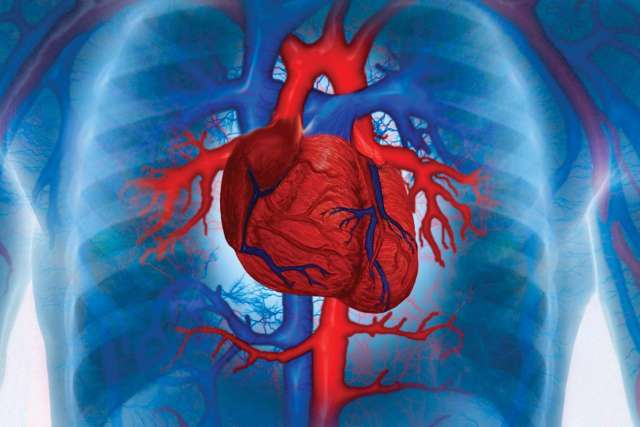
A new study led by UCLA Health physician-scientists suggests that subtle changes in heart structure and function may signal an increased risk for developing certain cancers years later.
The findings, appearing in the Journal of the American Heart Association, could eventually help physicians identify patients who may benefit from earlier prevention strategies aimed at both cardiovascular disease and cancer.
“This study suggests that structural and functional changes in the heart may occur alongside – or even before – biological processes linked to cancer development,” said Dr. Xinjiang Cai, UCLA Health cardiologist and physician-scientist, and lead author of the study. “It adds to mounting evidence that these two diseases share underlying biological pathways and are intertwined.”
Cai and collaborators analyzed data from the Multi-Ethnic Study of Atherosclerosis (MESA), a long-term U.S. study of more than 6,000 adults ages 45 to 84 without known cardiovascular disease who were recruited from six urban center between 2000 and 2002. The cohort included participants from four racial and ethnic groups: non-Hispanic White, Black, Hispanic/Latino and Chinese Americans.
The researchers assessed baseline cardiac structure and function using cardiac MRI imaging at enrollment and participants were followed for cancer incidence over an average of 18 years. They also used multivariable statistical models to investigate the association of cardiac MRI measurements with the risk of all cancers, including prostate, breast, female-specific, colorectal and lung cancers.
Their findings included several key takeaways:
- People with small, early changes in the structure and function of their heart – a process known as “cardiac remodeling” – may be at increased future cancer risk.
- Increased heart muscle mass was associated with an increased risk of breast cancer.
- Reduced left atrial function was associated with an increased risk of colorectal cancer.
The strongest association involved left ventricular mass and breast cancer. After adjusting for traditional cardiovascular and cancer risk factors, the researchers found that higher left ventricular mass index was associated with an increase in breast-cancer risk.
They also found that reduced peak left atrial strain, a measure of the left atrium’s ability to contract and function, was strongly predictive of colorectal cancer risk. Participants with better left atrial strain measurements had substantially lower colorectal cancer incidence.
During the follow-up period, 790 new cancer cases were identified, including breast, colorectal, lung and prostate cancers. Among participants with available cardiac MRI data, cancer incidence increased as measures of their cardiac remodeling worsened.
The researchers emphasized that the study does not prove cardiac remodeling causes cancer, noting the limitations of cohort observational studies. “These findings represent associations and do not establish causation,” Cai explained. “The results do not mean higher left ventricular mass directly promotes breast cancer or better atrial function directly prevents colorectal cancer.”
He added that although researchers accounted for many traditional risk factors, other unknown or unmeasured factors still may have influenced the findings. There might be detection bias in the study. The results should be confirmed in additional large population studies with cardiac imaging data.
Nevertheless, this study builds on previous research from Cai and collaborators, as well as other researchers, showing that elevated cardiac biomarkers and coronary artery calcium scores were also associated with future cancer risk. Unlike previous studies, however, the new analysis used advanced cardiac MRI to directly measure subtle structural and functional changes in the heart before disease became clinically apparent.
Researchers said the findings support a broader, more integrated approach to prevention. They note the findings could eventually influence how clinicians think about prevention strategies for both cardiovascular disease and cancer. Current heart failure prevention guidelines already recommend aggressive management of blood pressure, obesity, diabetes and other risk factors in people with early cardiac disease. The new findings suggest those same interventions may also have implications for cancer prevention.
“Early cardiac remodeling may serve as an early marker to identify individuals at risk for both cardiovascular disease and cancer,” said Cai, who is also a member of the UCLA Health Jonsson Comprehensive Cancer Center. “Our study suggests that imaging markers already used to identify people at risk for cardiovascular disease, including heart failure, may also help identify people at elevated risk for cancer.”
The authors cautioned that additional research is needed to validate the findings in other large population cohorts and to better understand the biological mechanisms linking early heart disease and cancer development.
Co-authors of the study were experts from several organizations besides UCLA Health, including the University of Washington, Johns Hopkins University and Kyoto University. The project stems from a collaborative research effort involving scientists from UCLA and the University of Washington. Quinn White from UW is the co-first author and Dr. Robyn McClelland serves as her mentor for this MESA project.