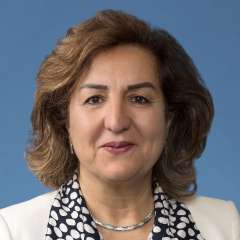
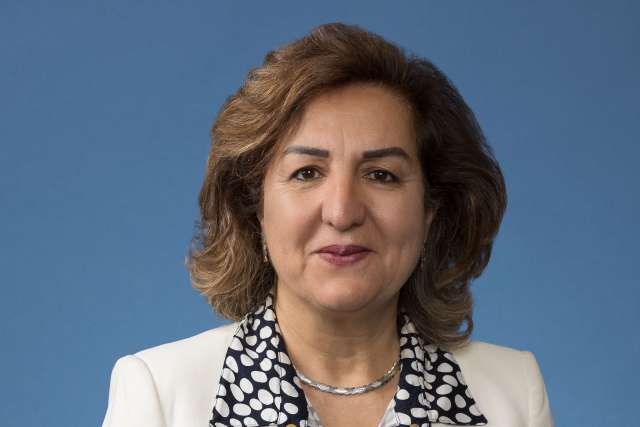
Mansoureh Eghbali, professor in the department of anesthesiology and perioperative medicine at UCLA, has received a four-year R01 grant of $2,127,176 from the National Institutes of Health to investigate the role of the miR98 molecule in myocardial ischemia reperfusion injury during pregnancy. Eghbali also directs the department's physician-scientist training program and its basic science training environment. Her application received an exceptional rank in the 5th percentile.
Pregnancy places significant strain on the cardiovascular system, and some women develop ischemic complications. During the third trimester, the heart is particularly vulnerable to reduced blood flow and potential injury when blood flow is restored. Despite the seriousness of these complications, the biological mechanisms underlying them have remained poorly understood, in part due to a lack of research models that accurately reflect what occurs in pregnant patients.
“I am incredibly excited about this award,” Eghbali said. “It started nearly 15 years ago when I developed the first animal model of pregnancy that mimics the cardiac ischemic complications observed in pregnant women during the third trimester. It took many years of persistence and many submissions to bring this project to where it is now, and I am thrilled that my perseverance has finally paid off.”
The project brings together obstetrician-gynecologists and cardiologists from six leading programs across the country that care for pregnant women with cardiovascular complications: UCLA, New York University, UC Irvine, Cedars-Sinai Medical Center, Baylor College of Medicine, and the University of Missouri.
Co-investigator Yalda Afshar, MD, and associate professor of obstetrics and gynecology in the division of maternal fetal medicine at UCLA, and co-director of the UCLA cardio-obstetrics program. Afshar is a physician-scientist whose clinical and research interests center on high-risk pregnancy, prenatal ultrasound, genetic testing, placentation, and cardiovascular disease. Her translational laboratory integrates cutting-edge prenatal maternal-fetal imaging, underlying genetic predispositions, and environmental clues to elucidate congenital heart disease and the placenta-heart axis.
Eghbali also credited Lejla Medzikovic, a project scientist in the Eghbali Lab, for playing a major role in developing the project and securing the award. “Her contributions were instrumental to the success of this proposal,” she said.
With this funding, Eghbali and her collaborators will build on the animal model to further define how miR98 contributes to myocardial ischemia reperfusion injury in pregnancy, with the goal of informing future strategies to protect the health of pregnant women with cardiovascular disease.