Research Pathway
Program Overview
Description
The Internal Medicine Research Pathway (IMRP) is a two-year longitudinal experience for residents who desire the protected time, mentorship, and enabling environment to intensively explore a career in research during residency training. The pathway provides expanded protected research time in the PGY-2 and PGY-3 years, monthly evening seminars designed to improve research skills and support career development, a structured one-on-one mentorship relationship with an IMRP faculty member, a community of peers learning the craft together, and targeted funding for the supplies, equipment, and conference travel residents need to achieve their research goals. Through this multimodal structure, the pathway helps residents to develop strong research skills, produce meaningful scholarship, and build a foundation for a research career that extends beyond residency.
Pathway Objectives
The Research Pathway is designed for residents with a serious commitment to developing as investigators during residency and is open to individuals with diverse scholarly interests, ranging from basic to clinical research, implementation science, socio-behavioral research, and quality improvement. Its objectives are to:
- Enable residents to develop research skills in a closely mentored and supportive environment
- Provide expanded protected time for research in the PGY-2 and PGY-3 years
- Create an environment for peer-to-peer learning about research
- Develop a network of early-career researchers, including research fellows and junior faculty, who engage with residents and provide career advising and inspiration to pursue research beyond residency
- Facilitate research through targeted funding of supplies, conferences, and the critical equipment required to achieve research goals
Curriculum Overview
- Protected research time: Residents receive expanded protected time for research across the PGY-2 and PGY-3 years (one half-day during ambulatory blocks), so scholarship is built into training rather than squeezed into the margins.
- Monthly seminars: Residents participate in the pathway's own monthly evening seminars, held in person or via Zoom, that build practical research skills, expand knowledge of research methods, and cover key career development topics.
- Mentorship: Each resident is paired with an IMRP faculty mentor for one-on-one guidance. Residents meet with that mentor regularly (or a minimum of twice yearly) to discuss research project progress and challenges and review career plans. The pathway also connects residents to a network of early-career researchers for advising.
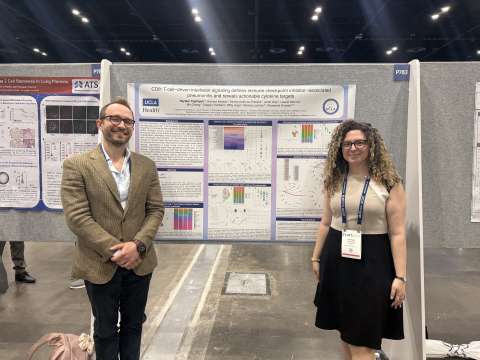
- Scholarly project: As part of the pathway, residents define a focused research project with their mentor. By graduation, residents are expected to have presented their work at one or more conferences (including Solomon Scholars Research Day at UCLA and one external conference) and submitted a manuscript to a peer-reviewed journal.
- Targeted research funding: The pathway provides funding for supplies, equipment, and conference travel needed to reach research goals.
- Peer community: Residents learn research alongside a cohort at the same stage of training with a shared commitment to gaining research skills, sharing progress and setbacks and building the habits of collaborative science.
Expectations
The pathway has an established and transparent set of requirements that include:
- Attendance at least 75% of the monthly IMRP seminars
- Submission of a brief research progress report twice yearly by the requested due date
- Completion of a one-on-one meeting with the resident’s IMRP faculty mentor every six months
- Scholarly outputs including (1) submission of one lead-author abstract to Solomon Scholars Day as well as to an external conference and (2) submission of a lead-author manuscript to a peer-reviewed journal.
- Promotion to the second and final year of the pathway is contingent on meeting expectations during the first year of the pathway.
How to Apply
PGY1 Internal Medicine and PGY2 Med/Peds residents are eligible to apply. The applications are released each winter with notification of acceptance by early spring. Residents are not required or expected to have a mentor at the time of application but are encouraged to meet with potential mentors and provide thoughts on mentorship and projects as part of the application.
Contact
For questions or further information about the IMRP, please contact Drs. Hoffman ([email protected]) or Buhr ([email protected])
Research Pathway Faculty Leadership
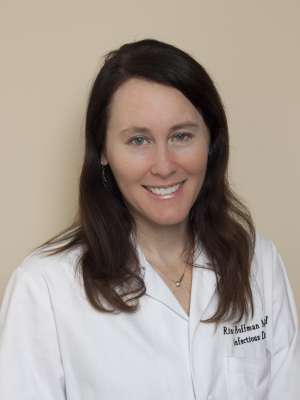
Risa Hoffman, MD, MPH, Director
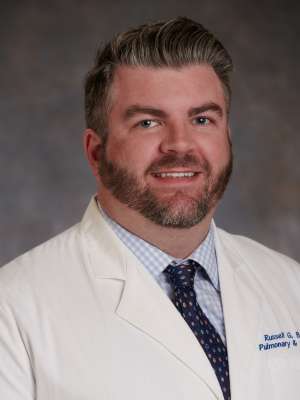
Russell G. Buhr, MD, PhD, Associate Director
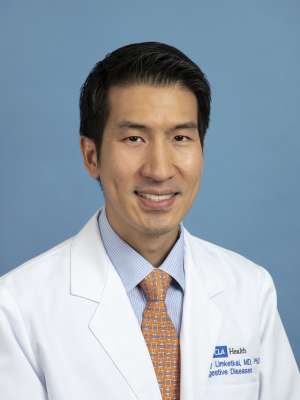
Berkeley N. Limketkai, MD, PhD, Associate Director
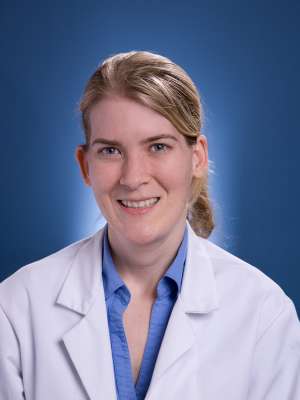
Wendy Simon MD, Internal Medicine Residency Associate Program Director and IMRP Liaison