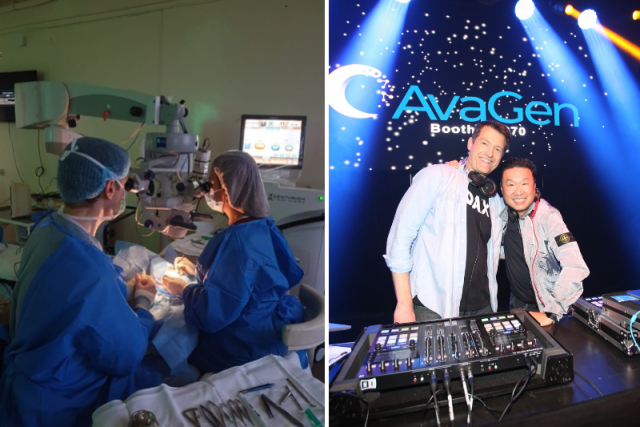
When Anthony Aldave, MD, is in the operating room, the music shifts with the clock. In the mornings, he likes to keep it mellow — ambient, piano-tinged house music drifting through the speakers while he works. By afternoon, as the surgeries stack up, the tempo climbs. Drum and bass. Big room. If the patient is awake, he dials it back a little.
A corneal surgeon and translational scientist, Dr. Aldave has spent his career trying to understand — and ultimately cure — the genetic disorders that cloud the cornea and steal people's sight. He leads the UCLA Cornea Genetics Laboratory, where his team maps the genetic roots of inherited corneal diseases and works to develop the gene- and cell-based therapies needed to treat them. He has performed more than 2,500 corneal transplants, and what he sees in the operating room drives every experiment in his lab.
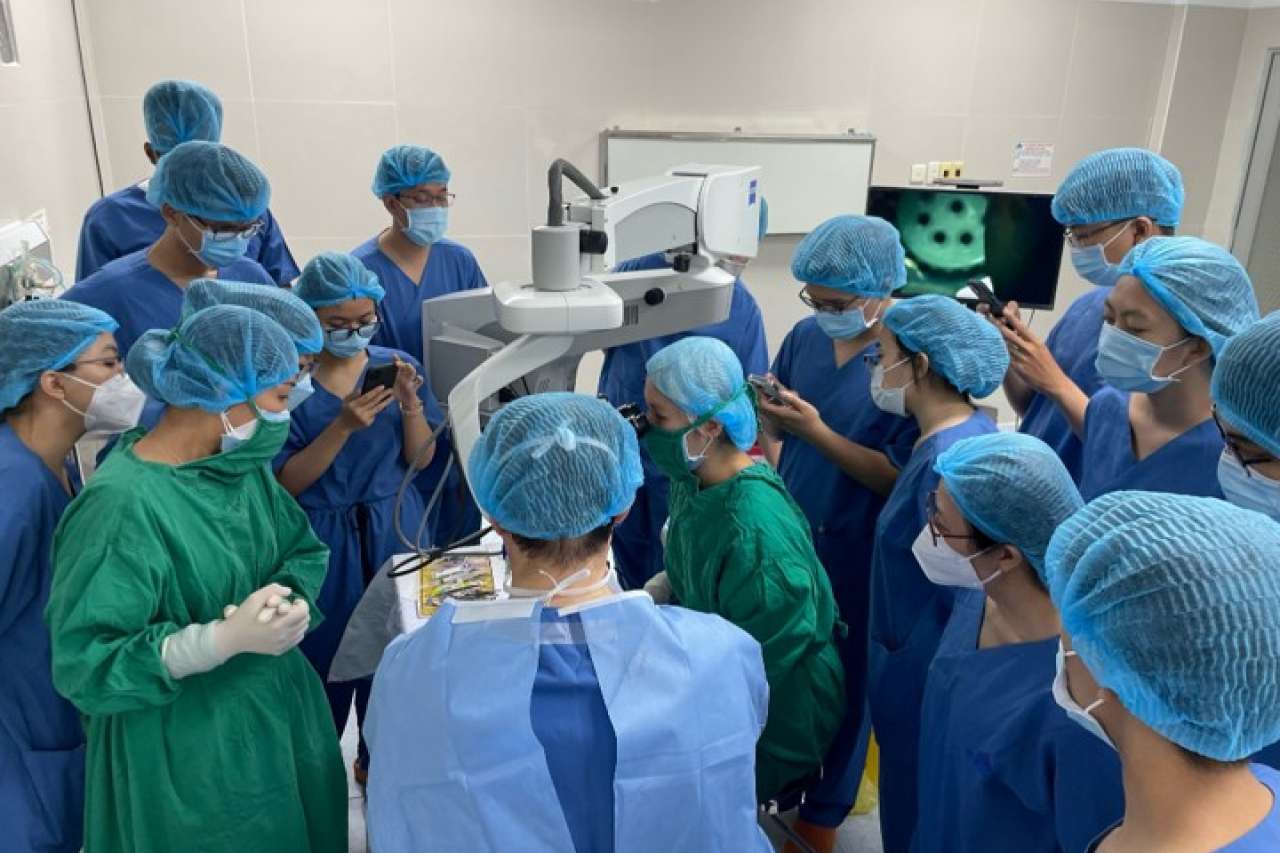
And Dr. Aldave's work extends well beyond Westwood. Through Visionaries International, the nonprofit he founded in 2008, he has conducted more than 70 corneal transplant skills-transfer courses across Southeast Asia, Armenia and beyond — training surgeons in places where donor tissue is scarce and transplantation has historically been out of reach.
Here, he shares the serendipitous story of how he ended up in ophthalmology, the unexpected puzzle keeping his lab busy and why — when he's not in the OR or the lecture hall — you might find him spinning EDM in a DJ booth.
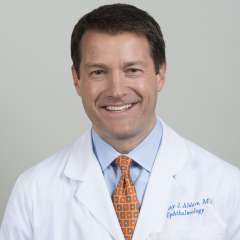
Dr. Aldave is a professor of ophthalmology at the UCLA Stein Eye Institute and holds the Bartly J. Mondino, M.D., Endowed Chair in Ophthalmology. He is also Vice Chair for Academics in the Department of Ophthalmology.
Tell us about your research.
My lab is focused on identifying the genetic basis of the corneal dystrophies — a group of about two dozen inherited disorders that cause the cornea to lose its clarity. Some cause vision loss at birth or in early childhood. Others bring painful erosions or light sensitivity in a person’s 20s or 30s. And others, like Fuchs corneal dystrophy — the most common indication for corneal transplantation in the United States — don't typically present until the sixth or seventh decade of life. For all of these conditions, corneal transplantation is currently the only definitive treatment.
The discovery and characterization of the genetic basis of the corneal dystrophies is what makes the next step possible: developing gene- and cell-based therapies to treat these conditions. Our primary focus right now is on congenital hereditary endothelial dystrophy, or CHED, in which a gene mutation prevents the cornea from producing a critical protein. We've been using a viral vector to deliver a working copy of that gene to the cornea — essentially replacing what's missing — and our goal is to conduct the first-ever gene therapy clinical trial for an inherited corneal disorder.
Have you always wanted to be a scientist?
My path to medicine was shaped by my mother — a law professor who told me the world had enough lawyers and needed more physicians. Watching her find joy in the teaching and scholarship aspect of being a law professor steered me toward academic medicine specifically.
How I ended up in ophthalmology, though, was genuinely accidental. As a medical student, I went to the gym at the medical center every afternoon and noticed a group of people in scrubs who turned out to be ophthalmology residents. Getting to know them and learning more about the field eventually led me to research opportunities in vision science.
The reason I chose cornea specifically comes down to personality. I wanted to be a surgeon, and I am — fortunately and unfortunately — an extremely compulsive person. The exacting nature of placing corneal transplant sutures, the very small margins associated with anterior segment surgery: it fit.
Becoming a clinician-scientist was also fortuitous: I completed my residency and fellowship right around the time the first genes associated with the corneal dystrophies were being identified. The majority of dystrophies still had no identified genetic basis, and I saw that as an opportunity I wanted to be part of — even without a PhD or formal basic science training. I had to play a bit of catch-up, taking courses in molecular genetics, and always leaning on collaborators.
What motivates you to pursue your research?
Part of what keeps me motivated is the fact that what we're doing is, in many ways, unique. There aren't many groups globally working in this space. While CHED isn’t as common in the U.S., I’ve seen its outsized impact in other parts of the world. In more than 90% of countries, corneal transplantation simply isn't an option because donor tissue isn't available. That reality is what drives both the research and the international work.
I witnessed this firsthand early in my career. A colleague I trained alongside who went on to practice in Yerevan, Armenia told me about patients injured by war who had no good treatment options. When I traveled there to see her patients, I recognized that many of them could benefit from artificial corneal transplantation.
In 2004, I began performing these procedures at UCLA using a prosthesis made of clear, biocompatible plastic rather than donated human tissue. Because it doesn't require a viable donor cornea, it can be performed in places where poor quality donor corneal tissue is the only tissue that is available. Sharing this skillset and training other surgeons to do the same became the foundation for Visionaries International.
Where and when are you the happiest?
Indian Wells — at the tennis tournament. There is nothing better than being outside on a nice sunny day watching world-class athletes who have really honed their craft playing high-level tennis. I think that is my happiest place.
I love tennis so much that I actually make an effort not to play — I’m so bad that I feel like it disrespects the sport when I pick up a racquet.
What's something most people might not know about you?
I’ve been DJing since around 2008. DJed a Halloween party and enjoyed it so much I bought professional gear (my wife went out of town and wasn't around to tell me not to). My main genre is EDM — deep house, techno, big room, progressive house. I grew up in Austin in the '80s and fell in love with new wave and electronica.

I've even DJed abroad. Once I taught artificial corneal transplant surgery in Chile on a Friday and that same night spun at a club in the city. When I'm behind the decks, I prefer people not know who I am — I'd rather be judged as a DJ and not have anyone say I'm pretty good ‘for a doctor.’ In the OR, music is always on, and often one of the fellows will be on Shazam duty for me. The tempo just depends on the time of day — and whether the patient is awake.
What's one thing you wish more people knew about science?
I wish there was more cross-pollination between clinical meetings and research conferences. I think clinicians would benefit enormously from hearing more presentations on research, to appreciate the importance of basic research and how it underlies many of the treatments we have in clinical practice today. Some discoveries that may not have had obvious translational relevance at the time of discovery later turn out to be fundamental to therapeutics that were subsequently developed.
The reverse matters too. One thing that has held back gene therapy for inherited disorders of the cornea, I think, is the belief among vision scientists that it isn't needed — that we already have treatments — we have corneal transplants. I can say without hesitation, having done thousands of transplants, that there are myriad problems with corneal transplantation. If vision scientists had that clinical perspective, I believe there would have been a much greater emphasis, much sooner, on developing alternative treatments.
Do you have a 'white whale' — a big dream for your career?
Well, I think I'm too old now to achieve anything significant. But if I could make an impact in the research realm, it would be to lead the first-in-human gene therapy trial for an inherited corneal disorder. Even if CHED isn't that common domestically, showing that we can effectively treat CHED with a single intracorneal injection would increase interest in the development of gene therapies for other inherited corneal disorders that are more prevalent globally.
With our international work, I would like to build at least one sustainable hospital-based corneal transplant program — where surgeons are trained locally and train their colleagues, with an adequate supply of donor tissue and artificial corneas. This could serve as a model for other hospitals and other areas of the world to follow. If I were successful in this endeavor, it would mean that I had become obsolete — which is fine with me.