
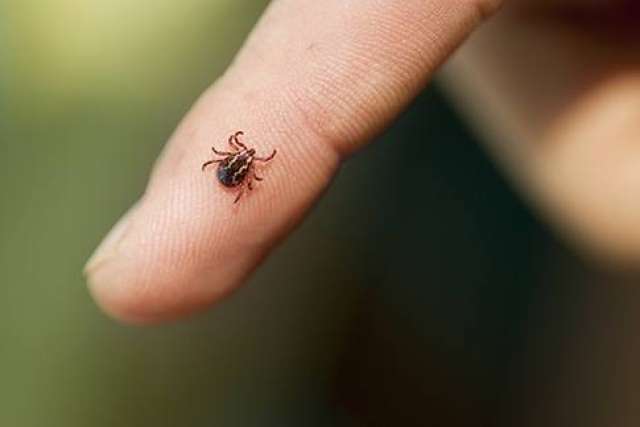
Dear Doctors: I got bitten by a tick in April. That's earlier than our tick season here usually starts. I went to urgent care, and the doctor said that because I was sure it had been attached for less than an hour, a Lyme infection wasn't likely. Is that true? Should I have done anything else?
Dear Reader: To say it is unsettling to find a tick attached to your skin is probably an understatement. To the tick, you represent the blood meal it needs to advance through its next stage of life. But to the mammal that has become its host -- in this case, you -- the tick represents the risk of a serious bacterial or viral illness. The most common of these in the United States is Lyme disease.
For those who are not familiar, Lyme disease is a bacterial infection that can affect the skin, joints, nervous system and heart. It is transmitted by the bite of a black-legged tick infected with a bacterium known as Borrelia burgdorferi. An early symptom of infection can be an expanding rash that forms a bullseye near the site of the bite. However, this does not always happen. Additional symptoms can include headache, fever, fatigue and muscle and joint aches. When caught early, Lyme disease can be successfully treated with antibiotics. If left untreated, it can progress to a multisystem illness.
The timing of your tick bite played a role in your doctor's actions. A mosquito bite or a bee sting delivers biologically active compounds almost instantly. But the mechanics of a tick bite are a bit more complex. This leads to a time lag between attachment and the transmission of the bacteria that cause Lyme disease. The Food and Drug Administration reports that for the Lyme bacterium to be transmitted, in most cases a tick must be attached for 36 to 48 hours or longer. Because your bite was just one hour, the urgent care doctor concluded that transmission was unlikely.
While the tick you found was large enough to see, this is not always the case. Even nymphs, which can be as small as a poppy seed, can transmit Lyme disease. That makes taking precautions when spending time outdoors very important -- especially when, as you have noted, tick season starts earlier in many areas.
In a wooded or brushy area, protect yourself by wearing long pants and a long-sleeved shirt and tucking them in. Wearing light colors makes ticks easier to spot. Use insect repellent with 20% to 30% DEET on clothes and exposed skin. Be sure to read and follow the product instructions. At the end of any outdoor activities, do a thorough tick check.
Anyone who gets bitten by a tick and develops symptoms should always seek medical care. In your case, with a one-hour bite, the urgent care doctor's assessment appears reasonable. The prompt removal of the tick was the most important action.
(Send your questions to [email protected], or write: Ask the Doctors, c/o UCLA Health Sciences Media Relations, 10960 Wilshire Blvd., Suite 1955, Los Angeles, CA, 90024. Owing to the volume of mail, personal replies cannot be provided.)