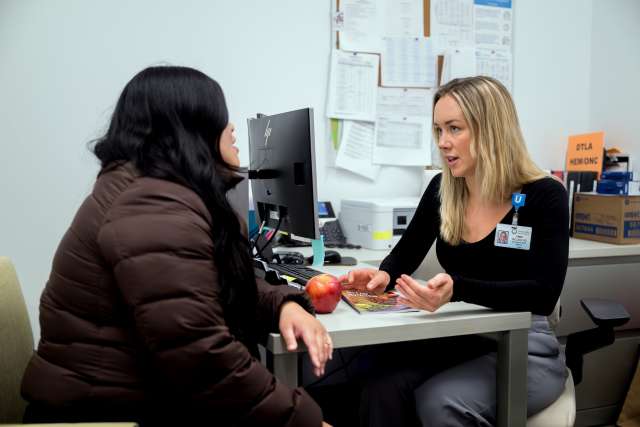
About 60% of people with breast cancer gain weight within the first year after their diagnosis. This isn’t some kind of personal failing, says Emma Veilleux, RDN, senior dietitian for the Simms/Mann UCLA Center for Integrative Oncology. Metabolic changes, side effects of hormone therapy treatment and other factors are to blame, she says.
Veilleux recently hosted a webinar, Weight Concerns After Breast Cancer, for the Simms/Mann Center that can be viewed on its website.
How breast cancer treatment affects weight
Medications frequently used to treat hormone-sensitive breast cancers — which account for more than 70% of all breast cancers — can cause estrogen levels to drop, as they do naturally during the menopause transition. Some women are diagnosed with breast cancer during this transition, so the drugs can accelerate or compound the natural decrease in estrogen.
This matters because the drop in estrogen can impact metabolic rate — how quickly (or slowly) the body burns energy.
“This can result in weight gain happening more easily, as well as weight loss becoming more difficult,” Veilleux says. “This means that even though you might not have changed anything about your eating habits, you may still find yourself gaining weight, which is obviously really frustrating.”
Lower estrogen also results in decreased muscle mass and increased fat storage. Because muscle is metabolically active, having less of it reduces metabolic rate.
Other factors that make weight management more difficult after a breast cancer diagnosis include fatigue, appetite changes and “a very understandable increase in stress levels, which can contribute to poor sleep and less healthy food choices,” Veilleux says.
Addressing post-diagnosis weight gain
She suggests taking focus off the scale and instead building a foundation to support weight management and overall good health. This includes nutrition centered on protein and fiber, maintaining and building muscle mass, and regularly practicing stress reduction techniques that support good sleep.
Muscle tissue is easily lost if we’re not working to maintain it, Veilleux says.
“Strength training should be considered as important, or even arguably more important, than cardio for any sustainable weight loss program,” she says.
Build muscle
Strength training, or resistance training, is a type of exercise that builds muscle and physical strength by having your muscles work against an external force, such as weights, resistance bands or your own body weight.
Building muscle supports bone health, which can also be affected by breast cancer treatment, Veilleux says.
She advises checking with your doctor before beginning a strength-training program. Once cleared, make it a non-negotiable part of your week.
“It really needs to be seen as an important part of treatment,” she says.
Staying active is also a key component of weight management. Veilleux says 30 minutes of moderate exercise a day is a good goal — and walking counts.
Taking a short walk after eating improves blood sugar regulation, which can help with weight management, she says.
Exercise also helps alleviate cancer-related fatigue.
“Fatigue is the most frequently reported side effect of breast cancer treatment,” Veilleux says, adding that the most evidence-based remedy is exercise.
Put plants on your plate
Eating 25 grams a day of soy protein — edamame, tofu, tempeh — is associated with lower fatigue in people with breast cancer, Veilleux says.
And there’s no need to fear the phytoestrogens in soy.
“Phytoestrogens in soy and other phytoestrogen-rich foods, including flax seeds, have a similar chemical structure to estrogen, but human studies have not shown that whole soy food intake influences our body's hormone levels or increases the risk of hormone-sensitive cancers,” she says. “In fact, there is some limited evidence to suggest that intake of whole soy products actually reduces the risk of breast cancer recurrence.”
Furthermore, research shows that plant-heavy diets offer more nutrition and are better at reducing the risk of disease recurrence than diets that center on animal-based foods, she says.
Plant-forward diets can also help support weight loss and protect against other chronic diseases such as diabetes and heart disease. But it’s not necessary to eat a 100% plant-based diet, she adds: “I don't think that a 100% whole foods, plant-based diet is healthier than a diet that revolves around mostly plants, but that might also include smaller amounts of animal products.”
Veilleux recommends using a visual guide: Fill half your plate with non-starchy vegetables, one quarter with lean protein, and one quarter with complex carbohydrates such as whole grains, beans, or starchy vegetables like potatoes.
Know your protein and fiber needs
Individual daily energy needs vary. Lower estrogen levels and a resulting lower metabolic rate also affect energy needs. But eating too few calories stalls weight loss, Veilleux says: “It can accelerate muscle breakdown and further slow your metabolism.”
She advises working with a dietitian who can help you determine your individual needs. The Simms/Mann Center provides free nutritional support for people receiving cancer treatment at UCLA Health.
A good rule of thumb, however, is to aim for about 20 grams of protein and 10 grams of fiber at each meal, she says.
Veilleux considers beans and legumes to be super foods because they contain both fiber and protein. A cup of lentils, for example, has 18 grams of protein and 16 grams of fiber.
What to cut back on
While Veilleux emphasizes adding healthy foods rather than focusing on restriction, she recommends limiting alcohol and added sugars.
"Any amount of alcohol contributes to an increased cancer risk," she says. “Alcohol contains empty calories and increases the likelihood that you'll consume additional calories while you're drinking than you would have otherwise. Alcohol decreases the quality of your sleep.”
For those who want to lose weight, she suggests eliminating alcohol or significantly cutting back, “because I think that can only lead to good things.”
She also advises limiting added sugar and ultra-processed foods, such as sweet or savory packaged snacks; foods made with refined flours such as white bread, bagels, tortillas, cakes and pastries; hot dogs and other processed meats including deli meats, bacon and sausage; frozen pizzas; and other foods containing ingredients not found in ordinary home kitchens.
Prioritize sleep and manage stress
Restorative sleep is essential to healing and weight management, Veilleux says: “If you’re not sleeping well, it makes any lifestyle change harder.
“When we’re not getting good sleep, we’re less likely to exercise and more likely to make unhealthy food choices,” she says.
If menopause symptoms such as hot flashes or night sweats interfere with sleep, talk with your doctor about treatment options, including non-hormonal medications that can help.
Other strategies to improve sleep include keeping the bedroom cool, dark and quiet; getting natural light exposure in the morning to help set circadian rhythm; reducing caffeine intake; maintaining consistent sleep and wake times; maintaining a relatively consistent eating schedule; and creating a calming nighttime routine.
“I need white noise. I need an eye mask. And I have to have my room very cold,” Veilleux says of her sleep needs.
The increase in stress that comes with a cancer diagnosis can also interfere with sleep and healthy habits. Incorporate stress-reduction techniques into your everyday life as much as possible, Veilleux suggests, such as going for walks or taking a few deep breaths.