Investigators at the UCLA Health Jonsson Comprehensive Cancer Center are testing a promising new treatment strategy that can both detect and attack cancer at the same time. Known as radiotheranostic therapy, the approach first lights up tumors at the molecular level and then delivers targeted radiation directly to the same cancer cells. By combining imaging and therapy in one targeted approach, researchers hope to select patients who will benefit from the targeted radiation and strike tumors more accurately, while overcoming the hidden defenses that often make cancers resistant to conventional therapies.
The approach is now being tested in a first-in-human clinical trial, where UCLA investigators have treated the first patient with the experimental radiotheranostic therapy for metastatic osteosarcoma, a rare and aggressive bone cancer that primarily affects children, adolescents and young adults. The phase 1 study is designed to evaluate whether a radioactive antibody can safely locate and destroy tumors that no longer respond to standard treatments.
Preclinical research suggests the therapy could offer an effective new way to attack some of the most treatment-resistant cancers by precisely targeting tumors while also reshaping their immune-suppressive environment.
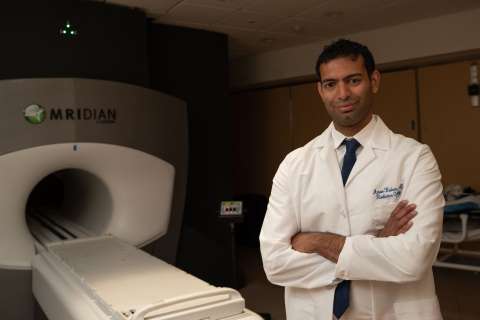
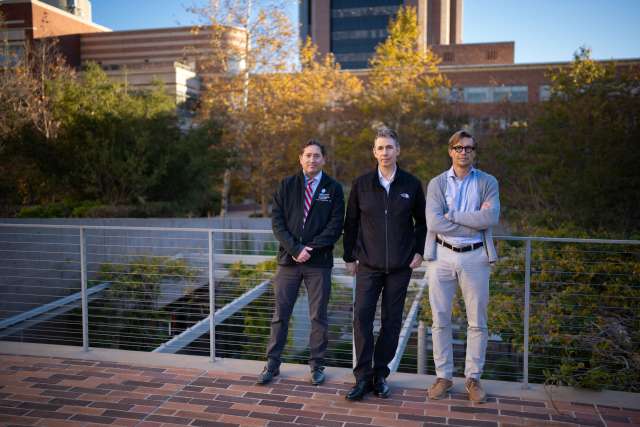
In collaboration with the department of Nuclear Medicine, the trial is led by Noah Federman, MD, the Glaser Family Endowed Chair and director of the Pediatric Bone and Soft Tissue Sarcoma Program at UCLA, and is based on discoveries from a UCLA-led research team headed by David Ulmert, MD, PhD, associate professor of molecular and medical pharmacology at the David Geffen School of Medicine at UCLA and Robert Damoiseaux, PhD, a professor of molecular and medical pharmacology and bioengineering at UCLA. The development of this technology is not only a result of collaboration between different departments at UCLA, but also of important international collaborations with institutions in the U.S. and Europe, specifically Washington University in St. Louis, Essen University in Germany, and Lund University in Sweden. The clinical translation of the technology is sponsored by Lantheus, a company specializing in this type of pharmaceuticals.
“While outcomes for patients with localized disease have improved, survival rates for those with metastatic or recurrent osteosarcoma have remained largely unchanged for decades,” said Dr. Federman. “This trial gives us a chance to test a therapy that is far more precise than anything we’ve had before.”
A dual-purpose approach: imaging and therapy
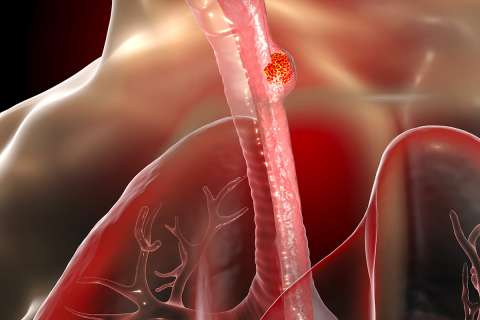
Osteosarcomas are fueled not only by malignant tumor cells but also by a dense, fibrous tumor microenvironment that shields them from immune attack and helps them resist therapy. A hallmark of many of these tumors is the expression of LRRC15, a protein activated by the growth factor TGFβ, which is known to drive tumor growth, spread and resistance to immunotherapy. While largely absent from healthy tissues, LRRC15 is abundant in the fibrous compartment in several aggressive and currently untreatable cancers. In certain malignant diseases, such as osteosarcoma and glioblastoma, LRRC15 is produced by both cancer cells and the supportive tumor stroma, which is a key reason researchers see it as an attractive target.
This new approach uses a specially engineered monoclonal antibody developed at UCLA, called DUNP19, that binds tightly to LRRC15 on both cancer cells and tumor-supporting stromal cells. Unlike many antibodies that act mainly on the cell surface, DUNP19 is rapidly absorbed by tumor cells, allowing it to deliver its payload from within.
“We are extremely optimistic about the applicability of DUNP19 to not only osteosarcoma, but to many different cancers, including difficult to treat cancer like pancreatic cancer and potentially glioblastoma,” said Dr. Damoiseaux, director of the UCLA Health Jonsson Comprehensive Cancer Center’s Molecular Screening Shared Resource, located in the California NanoSystems Institute at UCLA.
The antibody is then paired with the radioactive isotope lutetium-177, causing DUNP19 to function like a guided missile that can both provide images and kill cancer cells and the stromal cells that shield them by delivering targeted radiation that ablates LRRC15-expressing cells while minimizing damage to surrounding tissue.
“Using the same molecule for imaging and treatment allows us to be extremely precise,” Dr. Ulmert said. “We can see exactly where the drug goes, confirm it’s hitting the tumor and then deliver radiation in a way that minimizes damage to healthy organs.”
Promising preclinical results
The trial builds on several years of preclinical research. In both cellular and mouse models of osteosarcoma, glioblastoma, triple-negative breast cancer and aggressive colorectal cancer, the LRRC15-targeted radionuclide therapy effectively slowed tumor growth, extended survival and altered the tumor microenvironment to make it more receptive to an immune attack.
In the study, recently published in Signal Transduction and Targeted Therapy, the team found that in osteosarcoma models, nearly all treated mice showed no signs of disease after therapy, while untreated animals succumbed to their tumors. In models resembling metastatic disease, tumor growth stopped, allowing collaboration in the labs of UCLA’s Xia Yang, PhD, and Thomas Graeber, PhD, to computationally analyze genomic changes induced by targeted LRRC15 radionuclide treatment.
Beyond directly killing tumor cells, the therapy dismantled the tumor’s immune defenses. By eliminating LRRC15-producing stromal cells, the treatment reduced fibrosis, allowed immune cells such as CD8+ T cells and natural killer cells to infiltrate tumors, and shifted gene activity away from immune suppression and toward immune activation.
“This therapy doesn’t just attack the cancer, it breaks down protective shield around it,” Dr. Ulmert said. “Ablating the LRRC15-producing tumor cells reprograms the tumor microenvironment, making tumors substantially more vulnerable to the immune system and to other treatments.”
In additional studies, even a single low dose of the LRRC15-targeted radiation therapy significantly enhanced the effectiveness of immunotherapy, leading to strong and durable responses in animal models.
Moving from bench to bedside
Those findings have paved the way for the newly opened phase 1 trial at UCLA, which is enrolling patients with metastatic osteosarcoma to evaluate the safety, imaging capability and early signs of effectiveness of the LRRC15-targeted radiotheranostic therapy. Participants will undergo diagnostic imaging to confirm presence of LRRC15-producing tumors, followed by treatment with the therapeutic radioactive antibody.
“This trial is an essential first step,” Dr. Federman said. “Our primary goal is to ensure safety and understand how the therapy behaves in patients, while also looking for early signals that it can help control this devastating disease.”
The approach could eventually be expanded to other LRRC15-expressing cancers. In parallel with the osteosarcoma phase 1 trial at UCLA, the technology is being evaluated in a multi-center trial assessing the targeting of LRRC15 in a range of aggressive and currently untreatable cancers, which has opened in Australia.
“My hope is that this trial will open the door to a new class of targeted radiotheranostic treatments,” Dr. Ulmert said. “For patients with cancers that resist existing therapies, that could make a meaningful difference.”
The research was funded in part by the National Cancer Institute, the UCLA Eli and Edythe Broad Center of Regenerative Medicine and Stem Cell Research, and the Outsmarting Osteosarcoma Hero Award (Because of Sydney) from MIB Agents.
To learn more about this clinical trial, visit ClinicalTrials.gov.