Paola Schulte clearly remembers the moments before the cesarean to deliver her son. Lying on the operating table, she heard the surgical team pause to verbally confirm key details about the procedure – a standard safeguard before surgery.
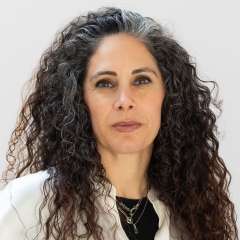
Schulte had total confidence in her maternal fetal medicine surgeon, Yalda Afshar, MD, PhD, associate professor of obstetrics and gynecology in the Division of Maternal Fetal Medicine at the David Geffen School of Medicine at UCLA and co-director of UCLA Health’s Advanced Maternal Hemorrhage and Accreta Care Program.
For several weeks, the 47-year-old resident of Hawaii had been under Dr. Afshar’s care for placenta previa – in which the placenta sits on top of the cervix, making the blood vessels near the cervix vulnerable to rupture – and placenta accreta – a potentially serious condition in which the placenta adheres to the uterus and does not separate from it naturally at birth. In Schulte’s case, the placenta adhered to the uterine muscle wall through her prior cesarean scar.
She knew the skill set the physician-scientist brought to the table as well as her reputation as a reproductive scientist and the founder of The Afshar Lab at UCLA Health.
Still, she was terrified.
Schulte heard a surgical team member say, “This is Paola Schulte, high risk for hemorrhage. We have six units of platelets and six units of fresh frozen plasma on hold.”
As a gastroenterology acute care nurse practitioner at the largest Level 1 trauma hospital in Hawaii and a former ICU and cardiac catheterization lab nurse at Ronald Reagan UCLA Medical Center, Schulte knew how quickly things could go wrong, how quickly she could lose a massive amount of blood.
“As I lay on the OR table, tears started streaming down my face, thinking about my unborn son and my 9-year-old daughter, wondering if I was going to make it because I knew what the risks were,” Schulte recalls.
Then, Schulte says, Dr. Afshar did something completely unexpected.
“She saw my face; she saw how scared I was, and she came over and hugged me,” Schulte says.
That simple, spontaneous gesture of compassion put her at ease, and the surgery proceeded.
Growing numbers
Placenta accreta is a leading cause of preventable maternal hemorrhage, which, in turn, is the leading cause of maternal death. Severe bleeding also can result in inflammation and infection, and lead to extensive surgery and the need for a blood transfusion.
While the exact incidence of placenta accreta is hard to pinpoint because it often goes undiagnosed or misdiagnosed, what is known is that the number parallels the rising rate of cesarean births. As the placenta grows, delivering oxygen and essential nutrients to the fetus, it can be embedded on the scar tissue of previous Caesarean surgeries.
“Historically, we used to think that placenta accreta was a placental disease very similar to cancer, where the placenta invades through the uterus,” Dr. Afshar says. “However, our understanding really has been elevated, and we realized it's kind of a lack of a stop signal at the uterus. And so it doesn't detach. And that's where we get into problems.”
Diagnosis is based on the patient’s clinical history – including a history of cesarean births or uterine surgeries – and ultrasound imaging.
Schulte was diagnosed with placenta accreta by her high-risk OB/GYN in Hawaii about four months into her pregnancy. At 34, she decided to freeze her eggs, and, at 47, she fertilized her eggs with her husband through in vitro fertilization. That, and a cesarean nine years earlier, meant she had to be closely monitored by her IVF clinics in Los Angeles and Hawaii.
She knew her options were limited. Standard procedure for placenta accreta was hysterectomy immediately after birth. She also knew that her hospital in Hawaii had limited resources if something were to go wrong during surgery. Her experienced obstetrician in Hawaii said that in the 30-plus years he had been doing cesarean births, he had only encountered an accreta a handful of times.
In her research, Schulte found that UCLA was designated as an Accreta Center of Excellence and offered the groundbreaking procedure being done by Dr. Afshar and Megan Brenner, MD, co-director of the Advanced Maternal Hemorrhage and Accreta Care Program and professor of surgery and OBGYN, that had been successful in preserving women's uteruses after birth.
Preserving her uterus was important, Schulte noted, not only for the opportunity it gave her to have more children but also to minimize future health issues.
She had her images transferred from her OB/GYN in Hawaii to Dr. Afshar, and the two physicians co-managed her until she transferred to UCLA Health 30 weeks into her pregnancy.
“Initially, looking at the scans that we sent from Hawaii, Dr. Afshar was like, ‘OK. I think we might be able to salvage your uterus.’ I flew with my husband to Los Angeles at 30 weeks, and she scanned me in person and told me, ‘I definitely think we can do this, but safety first,’ and if things got too complicated, there would be a life-saving hysterectomy. There was great optimism in her careful evaluation of the images that the standard of care would be to try and save my uterus,” Schulte recalls.
Advanced paradigm
The procedure, called REBOA (resuscitative endovascular balloon occlusion of the aorta), features a small balloon that is inserted into the distal abdominal aorta through a thin tube in the femoral artery. As soon as the baby is out and the umbilical cord is cut, the balloon is inflated to temporarily reduce blood flow to the pelvis.
“These patients don't go into shock or get a lot of blood products, which avoids the usual systemic inflammatory response to these physiologic changes,” says Dr. Brenner. “So those are just some of the more devastating clinical sequelae that we are able to reduce or avoid using REBOA for cesarean births in placenta accreta.”
Its use marks the first time it has been implemented in the delivery room at UCLA Health.
“When we first started doing these cases, all patients received a hysterectomy after the cesarean birth. REBOA has allowed us to say, hey, we really have bleeding under control, which allows us to offer uterine preservation to patients who Dr. Afshar deems potential candidates,” Dr. Brenner explained.
Since launching the accreta care program in 2024, the duo has performed 18 cesarean births using REBOA – in the last nine they have been able to offer uterine salvage and have saved the mother’s uterus, says Dr. Brenner. It’s not just the reduction in bleeding that’s transformative, Dr. Brenner says. “It's allowed us to create an advanced clinical paradigm, really, and to provide some cutting-edge options for women.”
Safety first
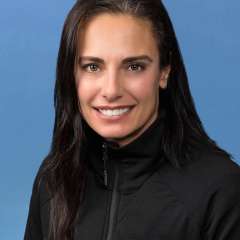
Sara Abbadi was two weeks away from giving birth when she found Dr. Afshar’s program online. Abbadi, who was 45 at the time, had been admitted to another hospital at 30 weeks gestation after a diagnosis of accreta, which had attached to a fibroid scar. At the other hospital, she was told hysterectomy was her only option.
Abbadi couldn’t believe there was no other way.
“I was not accepting the status quo,” says Abbadi, whose situation was complicated by an additional diagnosis of vasa previa, a potentially life-threatening complication as a result of a fibroid removal, making the blood vessels near the cervix vulnerable to rupture.
“I’m like, this can’t be in 2026. They were planning to remove my entire organ (including) my fallopian tubes and my cervix,” she adds.
During a monthlong stay in the hospital awaiting her cesarean, planned for 34-weeks gestation, Abbadi and her husband began researching other options and came across UCLA Health’s accreta care program and the research Dr. Afshar was doing. As a scientist herself, Abbadi says everything clicked.
She and her husband, a physician, met virtually with Dr. Afshar, and she explained the clinical trial, the tenet of uterine preservation for placenta accreta, and the role of REBOA, among other surgical modifications.
She explained that immediately after birth, the balloon would be inflated to reduce blood flow, then deflated, removed, and the insertion area in the groin patched with a small Band-Aid.
“It made sense to my husband and me that this was a good plan for us,” Abbadi recalls. “And if things were complicated, if my accreta was more extensive, we were OK with the hysterectomy.”
In the days before the surgery, Dr. Afshar did an in-depth ultrasound and mapped Abbadi’s accreta, telling her she felt she could salvage her uterus. On the day of the surgery, she remembers Dr. Afshar asking her if she would be OK if things changed.
“I said, ‘Dr. Afshar, I’m at peace right now’ ” Abbadi says. “ ‘Just do whatever is safe for the baby and for me.’ ”
Improved technology, improved care
REBOA has been in use by trauma surgeons since about 2013. Because of its rapid implementation, manufacturers have progressed the technology, decreasing the size of the balloon. UCLA Health is among a handful of institutions to use the smallest and newest device on the market.
Dr. Brenner says the smaller size has been a game changer for patients with placenta accreta.
“It’s honestly the reason why all of this is working,” Dr. Afshar concurs. “The safety profile is now something where I’m happy saying, ‘OK, we can do this up front. We can do it prophylactically, before disaster strikes.’ ”
She credits not only Dr. Brenner’s skill in the operating room but also the lessons learned in the OR, which feed directly into better care for the next patient.
“It’s about … patients asking questions, asking for it, then asking the questions in the laboratory, doing the molecular studies that match it, and saying, ‘Oh, the data shows that it’s not a placental issue, it’s a uterine issue, so this makes biological sense.’ … And having that dialogue with patients and together pushing the boundaries academically has been what’s really elevated this," Dr. Afshar says. "And I think what’s been wonderful is that it’s iterative and we continue to improve care.”
Dr. Afshar’s research focuses on how accreta care can be improved and detecting the condition earlier. This is done through biomarker research, early detection research in the first trimester, and studying what ultrasound markers can improve pick up.
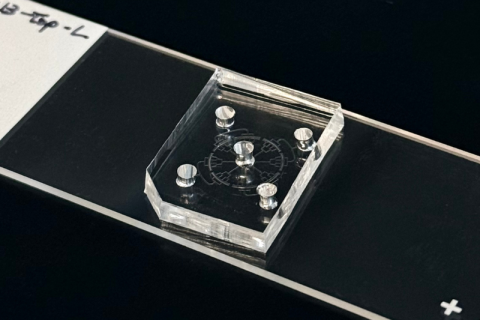
Using human tissue, mouse models and lab models such as in vitro cells, Dr. Afshar is seeking to better understand what sets the stage for accreta, which will open the door for prevention and improved care.
Dr. Brenner notes that The Afshar Lab sets UCLA’s accreta care program apart. “This is about as comprehensive a program as you can find,” she says.
Empowering women
Dr. Afshar notes that at UCLA Health, placenta accreta is not just a diagnosis delivered to a patient.
“We empower them with a plan, a team and clear choices,” Dr. Afshar says. “We acknowledge the incredible burden. We are very descriptive that it's nothing they did or could have done differently. But we also are very real, and we provide information so they make the right decision for them. The entire care is patient-centered.”
She credits Dr. Brenner and her work in trauma-informed care for elevating the program.
“A lot of patients, as soon as they hear the word accreta, it’s devastating,” Dr. Brenner says. “And we know that they’re at high risk of having traumatic experiences before, during and/or after hospitalization. So, during their brief post-operative stay, we’ll bring in our trauma PTSD experts to evaluate and treat them, arranging outpatient follow-up if needed.”
Life-changing procedure
Schulte’s cesarean was planned for 36 weeks; however, at 35 weeks and four days she started bleeding lightly at home. She was told to come to the hospital and was put on a monitor.
She thought she’d be sent home, but Dr. Afshar told her that because she was dilating and contractions had started, they would need to do the cesarean within 24 hours.
Schulte was amazed how quickly the physician was able to assemble her multidisciplinary team – including anesthesiology, neonatology and labor and delivery – to be ready and in the operating room the following morning.
“At UCLA, the way the entire team works together and communicates with each other makes you feel at ease and makes you comfortable with the plan,” Schulte says. “They come and they explain the plan to you, and the alternatives, and they answer your questions before the procedure, so you know going in what to expect.”
“Careful pre-procedure planning, close prenatal monitoring, weekly ultrasounds tracking the advancement of the accreta into the uterine muscle" made every difference in the outcome, she says.
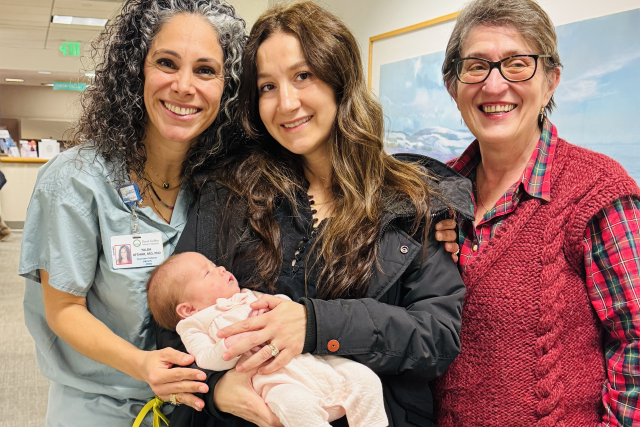
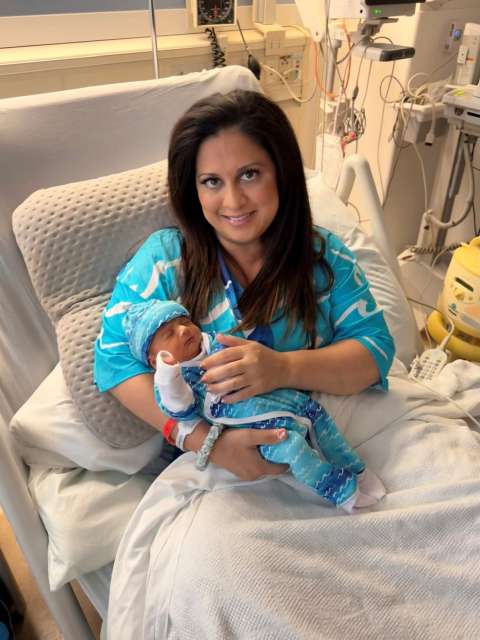
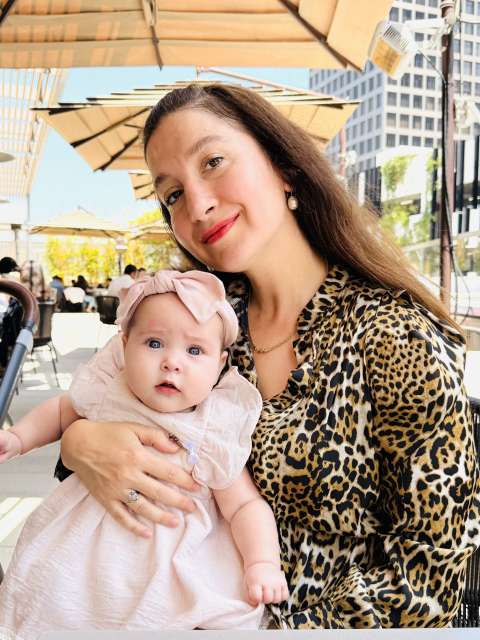
On Oct. 24, 2025, Schulte gave birth to her son, Carter, at Ronald Reagan UCLA Medical Center, where, exactly one month earlier, Abbadi delivered her daughter, Sloane, without complications. Dr. Afshar was able to salvage both women’s uteruses with minimal blood loss, and neither required a blood transfusion.
Carter was born at 35 1/2 weeks and weighed 6 pounds. He did not require time in the neonatal intensive care unit and stayed in a bassinet next to his mom in her room the entire time. Sloane went home after a two-week stay in the NICU.
Abbadi says she is grateful for the care she received at UCLA Health and that she knew where to look for a second opinion.
“Oftentimes, I think patients just say, ‘Whatever the doctor says, that’s it, and that’s fine.’ But we have to have more options in 2026. Women in their 20s can’t lose fertility just because this is the only option,” Abbadi says.
Schulte shares a similar sentiment: “The common fear is, am I going to be around for my other kids. I also have six more embryos in storage, and I didn’t want my choice of giving birth to another child in the future taken away from me. So to be able to salvage the uterus and to have minimal blood loss, it was really the best outcome possible.”