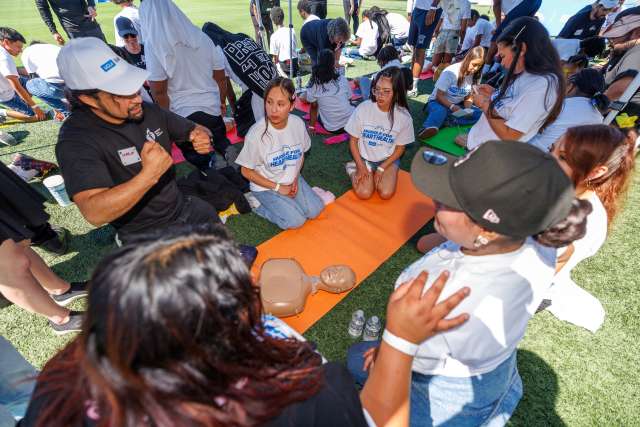
More than 250 high school student-athletes from across the Los Angeles Unified School District spent a day learning about heart health alongside Los Angeles Chargers players.
Students learned hands-only CPR, met Chargers players Elijah Molden and RJ Mickens, participated in UCLA Health Sports Performance Training, Powered by Exos, and enjoyed lunch on the patio at Huddle for Heart Health, held March 19 at The Bolt, the Chargers’ official practice facility in El Segundo.
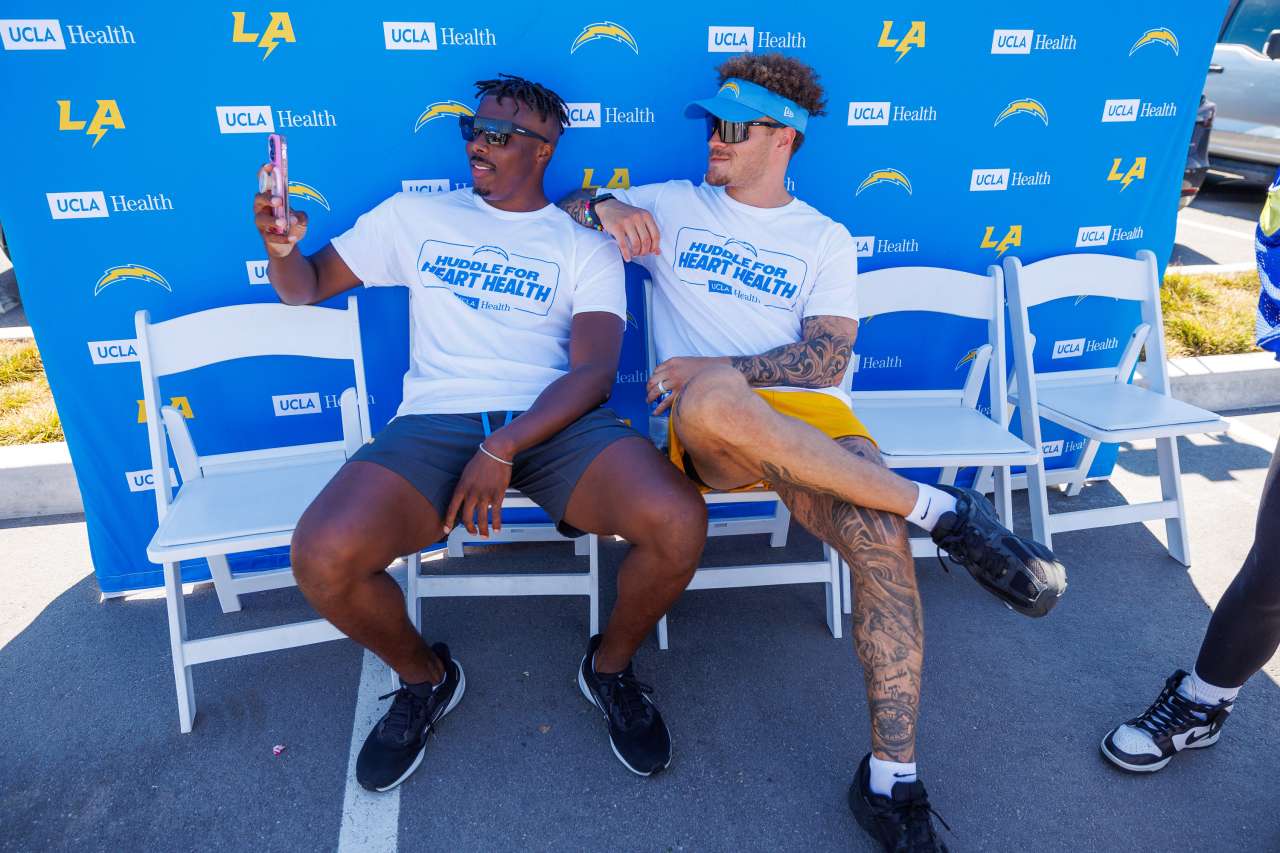
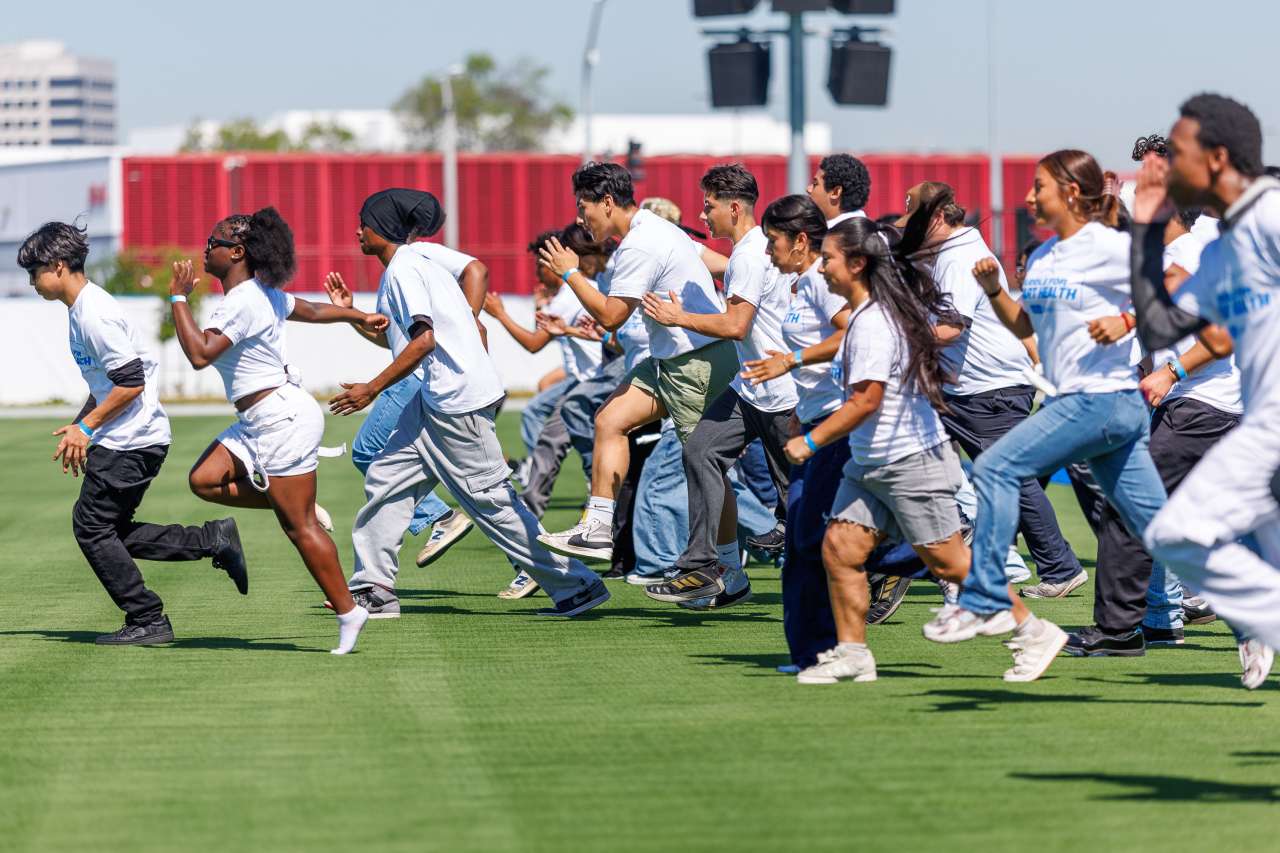
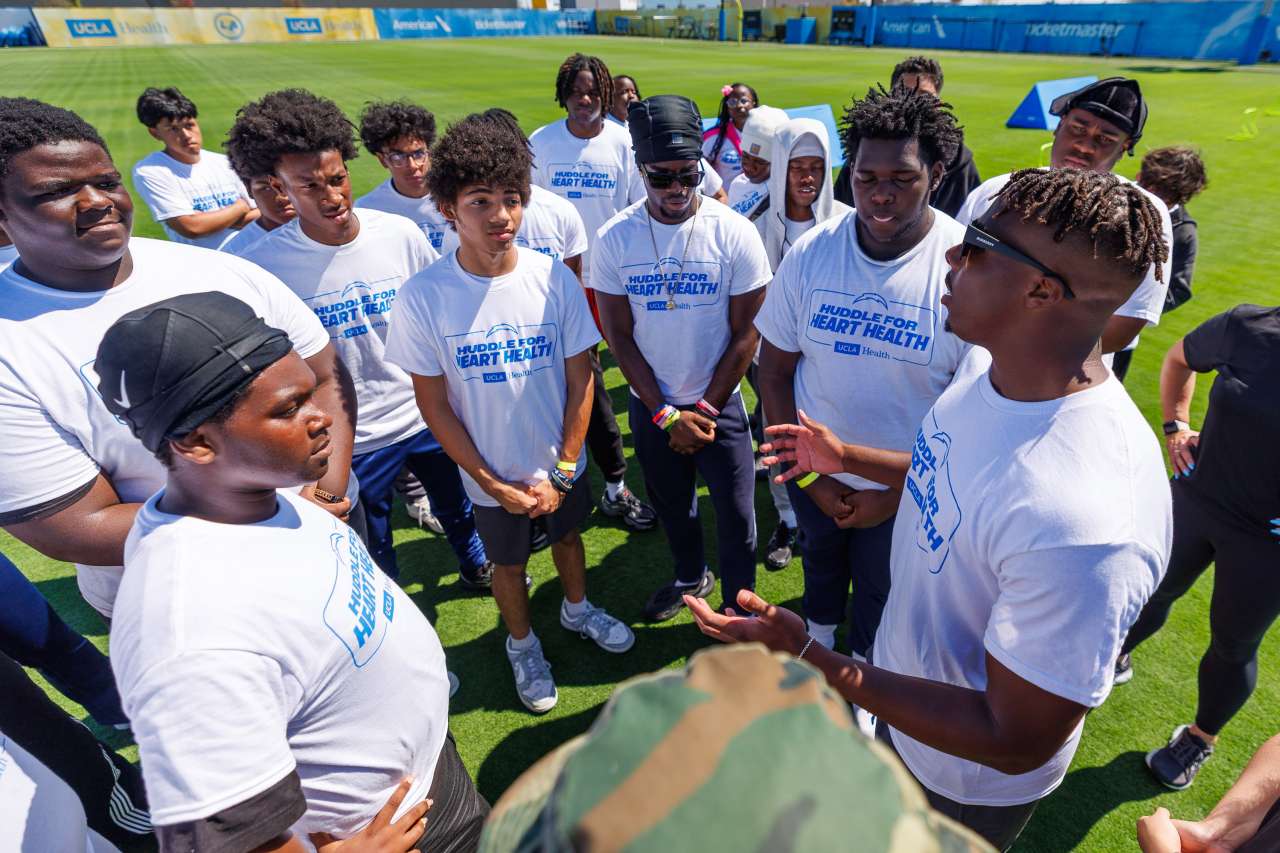
The event was presented by UCLA Health, the American Heart Association, the Los Angeles Chargers and LAUSD.
“We are so proud to partner with the LA Chargers and UCLA Health to launch this event that culminated with hundreds of students from Washington Prep, Crenshaw High School and Fremont High School getting trained in hands-only CPR, participate in fitness activities, and meet current NFL players from the Chargers,” said Ron Tanimura, director of Student Medical Services for LAUSD.
Hands-only CPR is a lifesaving skill, said David Sato, MD, board president of the American Heart Association Los Angeles.
“We save more lives when we work together,” said Dr. Sato. “This collaboration with UCLA Health and the Los Angeles Chargers to teach students how to perform hands-only CPR helps ensure more families in Los Angeles have someone ready to act in a cardiac emergency when seconds count.”
Hands-only CPR is a lifesaving procedure for cardiac emergencies that doesn’t involve rescue breaths. It involves pressing hard and fast in the center of the chest of a teen or adult who has collapsed. Pressing can be done to the beat of the Bee Gee’s hit “Stayin' Alive, which, at 100 beats per minute, is the minimum rate at which to push during hands-only CPR, according to the American Heart Association.
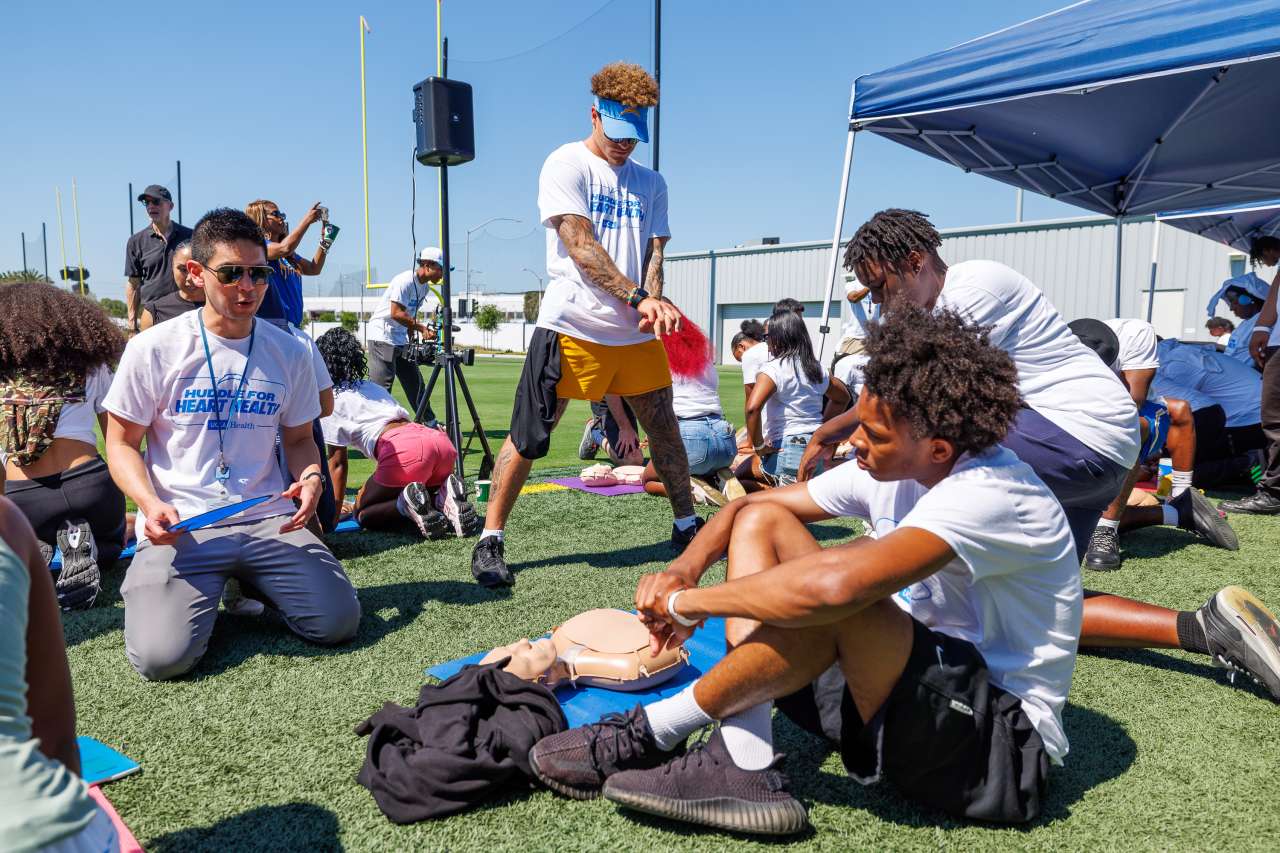
Most cardiac arrests that don’t happen in the hospital happen at home, and hands-only CPR is as effective as CPR with breaths in the first minutes following a cardiac emergency.
"Stories of young athletes experiencing sudden cardiac arrest on the playing field often make headlines, and the best way to maximize their chances of surviving such an event is to educate the people most likely to be nearby – their teammates and friends," said UCLA Health cardiologist Jeffrey Hsu, MD, PhD, who worked with students at the Huddle for Heart Health. "We are teaching students how to recognize sudden cardiac arrest and giving them the confidence to know how to respond to such an event."