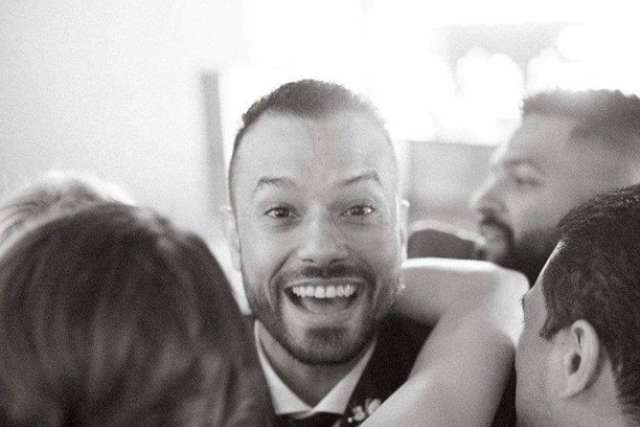
“Live in the moment. It sounds so stupid and so ‘Eat, Pray, Love,’ but I think that's the one thing that is true out of all that. If you're regretting the past, that's a lot of wasted time. You should learn from the past. If you're worried about the future, that’s a waste of time. You should be planning for the future. And if you're lamenting your lot in life right this minute, that's wasted time. You need to be looking for how you can change, what lever to pull.”
– Raul Hernandez
On Dec. 4, 2024, 10 days before he died, Raul Hernandez recorded messages for loved ones.
Knowing that he didn’t have long, the 45-year-old husband and father, an emergency medicine doctor, addressed his friends, parents and siblings, his wife, Catie, and their young son, Miles.
He reflected on his life to find the most meaningful moments, the lessons learned, his most significant accomplishments, and to express his hopes and dreams for those he was soon to leave behind.
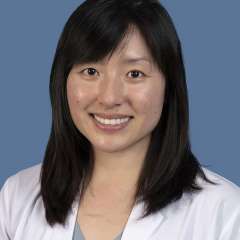
Guiding the experience and taking notes was Angela Yeh, DO, a palliative medicine physician at UCLA Health. Dr. Yeh was conducting the interview as part of the Dignity Therapy process, a form of psychotherapy offered by the UCLA Health Palliative Care Program.
Dignity Therapy is an evidence-based, validated palliative care intervention centered on a structured discussion between a patient and clinician designed to ease patient distress, demoralization and anxiety near end-of-life, while fostering meaning, purpose and dignity.
“Dignity Therapy helps patients navigate their existential anxiety,” said Dr. Yeh, program director for the Integrated Geriatric and Palliative Medicine Fellowship and associate clinical professor in the Department of Medicine at the David Geffen School of Medicine at UCLA.
“For some, it’s peace with their illness, for some it’s making peace that they’re dying, that they’ve left behind something,” she said. “Some patients have already accepted where they are, that they’re dying, and this project gives them something to do that is not about their illness.”
Dr. Yeh originally was drawn to Dignity Therapy as a first-year attending physician at a loss for how to fully comfort her patients.
“I found that I reached a limit as to what I could do as a physician to alleviate someone’s suffering,” she said.
Specifically, Dr. Yeh had a patient in her 30s with cancer. After treating her and giving her all the medication she could to alleviate the pain, the patient was still suffering.
“I just didn’t know what to do,” Dr. Yeh said. “I found Dignity Therapy and took a moment to sit at her bedside with her brother and we went through the questions. I wish I could say she got off all of her meds – she didn’t. But at the end, her brother had this recording that he would listen to and think of her. The brother said, ‘My sister seemed more calm and at peace.’”
The experience encouraged Dr. Yeh to get additional training in this psychotherapeutic approach and to later establish Dignity Therapy at UCLA Health.
A treasure for survivors
Raul’s wife, Catie, becomes emotional listening to and reading the words shared by her husband. Along with a recording, the palliative care team compiled a 50-page Dignity Therapy book, with photos of family and friends throughout, titled “live in the moment.”
Catie said Raul, who was diagnosed with an advanced form of cancer in July 2023, was deeply interested in leaving something for his survivors when he was presented with the idea by Dr. Yeh, his palliative medicine physician.
“Raul was an incredible writer, an amazing orator,” Catie said of her husband, whom she met in medical school. “My sister-in-law always referred to him as ‘The Professor,’ because he could weave poetry out of thin air.”
Catie said everyone who reads or hears Raul’s words is “struck by the mental clarity and strength it took to do this at the end and really home in and focus, to leave that legacy.” For her, she said, the book provides some closure.
“What I love about it is it really captures his voice,” she said. “There’s the occasional cussword. … I think because he was so comfortable with Dr. Yeh, he was able to expand and express things. I think because he was an emergency medicine doctor and had to bear witness to terrible times, times that he had to break news, that impacted his ability to say what was important at the end, to focus on love and forgiveness.
“We both very early on knew what was happening, we spoke about it,” Catie said. “Because we knew, he was able to prepare for it mentally the way others couldn’t have. Because he accepted it, he was able to do this, ready to leave those messages with us, specifically with Miles.”
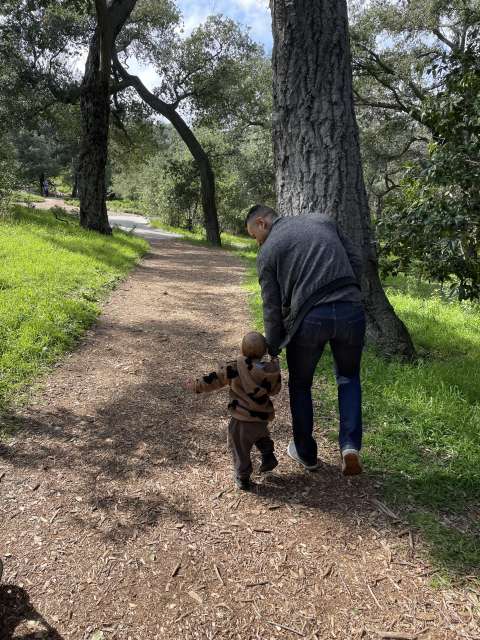
“You're always in my mind. You're always in my heart. I'm always going to keep you. God is willing, I’m always going to be by your side. But if He wants me to inhabit some other realm, I mean, okay, that’s fine, but I'll still be thinking about you there. I don't know what else to say, Milesy. … I'm sorry life is unfair to you and has decided that your pops, me, has to go, but just know if it were my choice, I'd be a constant presence in your life – giving you advice, eating ice cream maybe, even though I'm pretty lactose intolerant. Lactose versus a good conversation with my son? We'll take some lactase.”
– Raul Hernandez
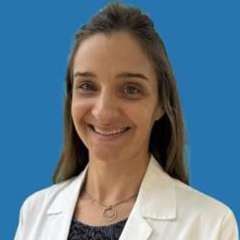
Rabbi Dena Trugman, a UCLA Health palliative care chaplain, said different patients have different goals as they work through the Dignity Therapy process.
“For some, they have done a lot in their life and are proud of that and want to have it documented and legitimized,” she said. “For others, it’s coming to terms with death, coming to terms with existential distress. My hope is it helps them work through their anxiety and come to somewhat more of a sense of peace around their dying.”
Most patients do show some emotional and spiritual progress toward acceptance, Trugman said, and she finds that personally impactful.
“Because I work with palliative care patients … I struggle with feeling like I don’t have tangible outcomes of feeling I’m helping,” she said. ”This has been a very rare tangible expression of doing good that I can immediately see the benefit of, helping people tell their stories.”
How it works
The Dignity Therapy conversation is centered around nine questions designed to generate thought and discussion, beginning with: “Tell me a little about your life history, particularly the parts that you either remember most, or think are the most important. When did you feel most alive?”
From there, the interview moves on to:
- “Are there specific things that you would want your family to know about you, and are there particular things you would want them to remember?”
- “What are the most important roles you have played in life (family roles, vocational roles, community service roles, etc.)?
- Why were they so important to you, and what do you think you accomplished in those roles?”
After an interview is conducted, it is transcribed, edited so the text flows smoothly, and then read back to the patient with an opportunity for further editing.
“The questions are designed and researched – there’s a reason behind each one of these questions, about what aspect of Dignity Therapy it’s going to target,” Dr. Yeh said.
“Everyone is going to have their own individual preference,” she said. “Depending on the individual, it will either check those boxes, or allow them to unlock or springboard off into something that is very meaningful for them. At the end of Dignity Therapy, when presented with the final document, they feel an overwhelming sense of gratitude.”
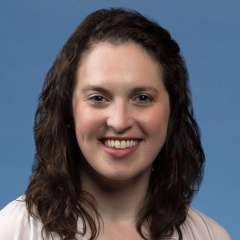
Emily Martin, MD, a palliative medicine physician and director of the Palliative Care Program, said, “Dignity Therapy is far more than a structured interview. While the questions provide a framework, the process itself is a powerful psychotherapeutic intervention that requires clinical skill, experience and sensitivity to navigate the complex emotions that may emerge.”
As with any form of psychotherapy, she said, some patients are more likely than others to benefit, and there are important considerations and potential risks, particularly within this vulnerable population. Palliative care specialists are positioned to identify patients experiencing existential distress who would benefit from Dignity Therapy and to facilitate this intervention, she said.
“We are fortunate to have Dr. Yeh leading the integration and advancement of this work at UCLA Health," Dr. Martin said. "These efforts reflect our program’s commitment to compassionate, person-centered, evidence-informed care for patients living with serious illness.”