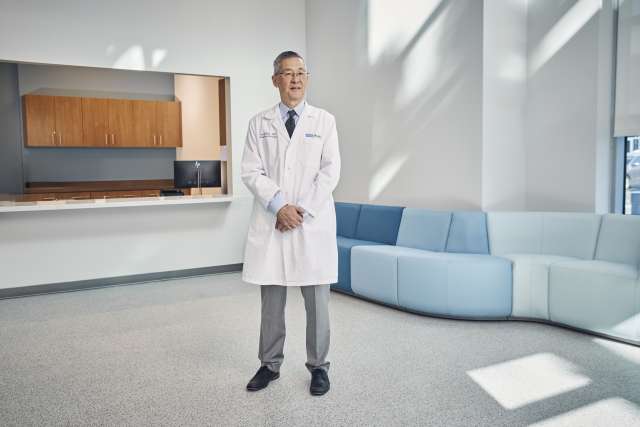
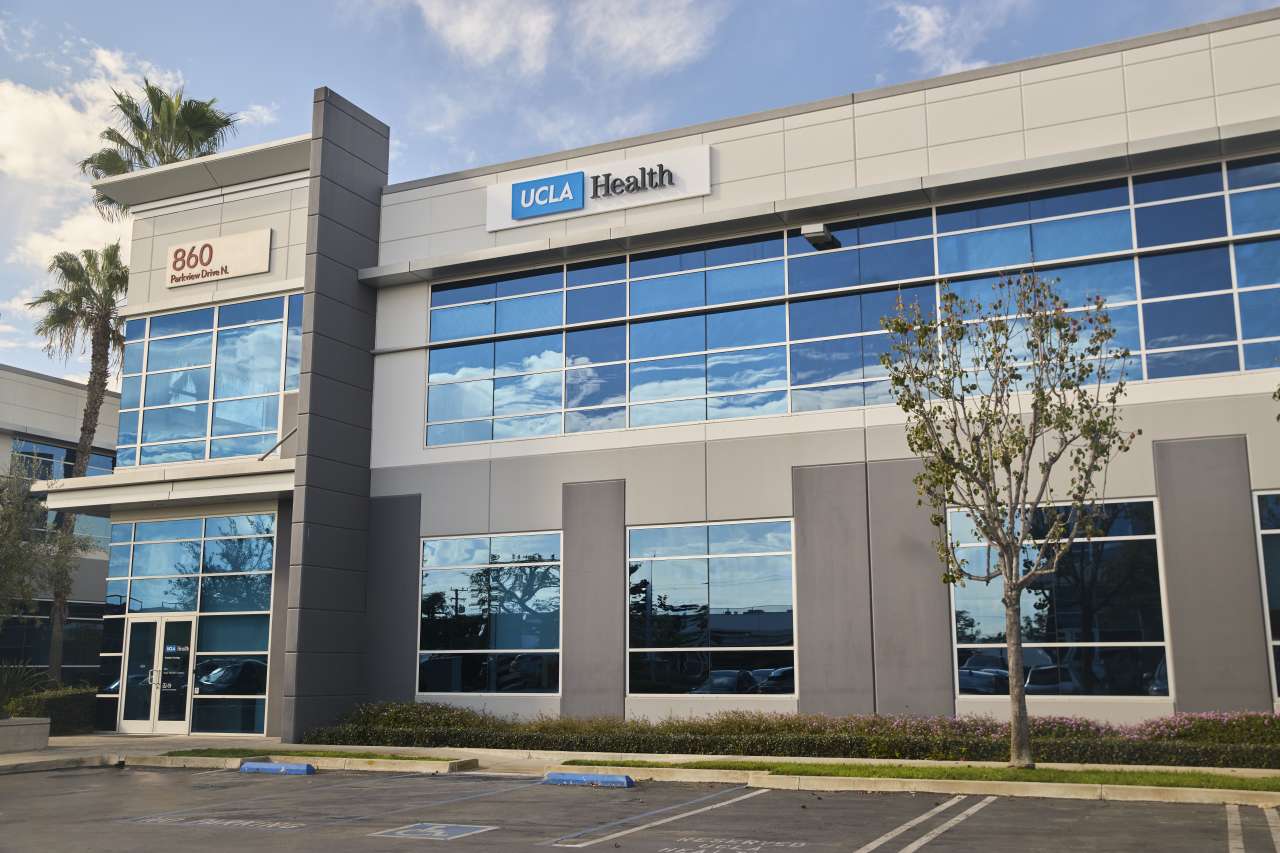
UCLA Health is expanding access to comprehensive cancer care through the opening of its new radiation oncology facility in El Segundo.
The UCLA Health El Segundo Radiation Oncology clinic welcomed its first patients Jan. 13, bringing advanced technology and multidisciplinary services to the South Bay.
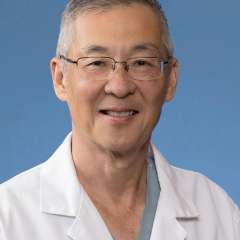
“This clinic allows patients to access UCLA radiation therapy services without having to travel outside their own community,” says David C. Khan, MD, clinical associate professor at the David Geffen School of Medicine at UCLA and vice chair of the UCLA Radiation Oncology Network. “They can receive the same cutting-edge treatment in their own neighborhood without having to travel a long distance.”
For patients, this means seamless access to UCLA Health’s world-class specialists without having to leave their local community.
“I see this facility as an extension of the main campus of Westwood,” says Dr. Khan. “Patients have access to the same clinical trials available at the main campus, as well as an expert team that is necessary to deliver high-quality radiation therapy safely.”
Innovative technology
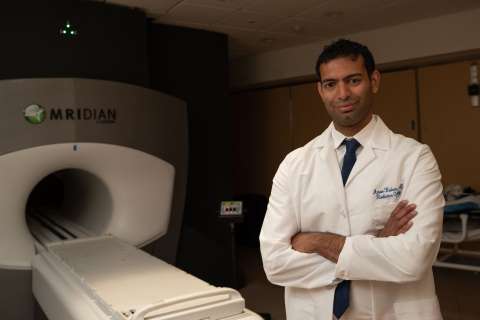
At the core of the El Segundo clinic is innovative technology designed to improve patient outcomes. The clinic’s adaptive radiation therapy linear accelerator — the first of its kind in the area — delivers radiation therapy with enhanced precision.
“Our machine allows us to deliver adaptive radiation therapy,” says Dr. Khan. “In addition to providing standard radiation therapy such as IMRT and SBRT, this machine enables us to tailor treatment to a patient’s anatomy on that very day, at that moment.
“The machine is equipped with an improved cone beam CT which allows enhanced imaging necessary to accurately delineate the target and normal tissues and a powerful treatment-planning computer,” he says. “This allows the radiation therapy team to modify the treatment plan in real time to account for changes in the target or anatomy at time of treatment.”
The first step of treatment is the simulation, where a custom device is fabricated for the patient to facilitate consistent and reproducible positioning on a daily basis. A CT scan is then performed to map out the normal tissue and the target. The physician then works with a medical physicist to generate a computerized plan to deliver the treatment safely and accurately. Typically, this process takes place over several days.
“We know that positioning will not be exactly the same and the shape of internal organs may have changed from filling or emptying secondary to normal bodily functions,” Dr. Khan explains. “So, to account for these daily variations, we create a plan which delivers radiation to the target plus a margin to ensure the tumor is always covered.”
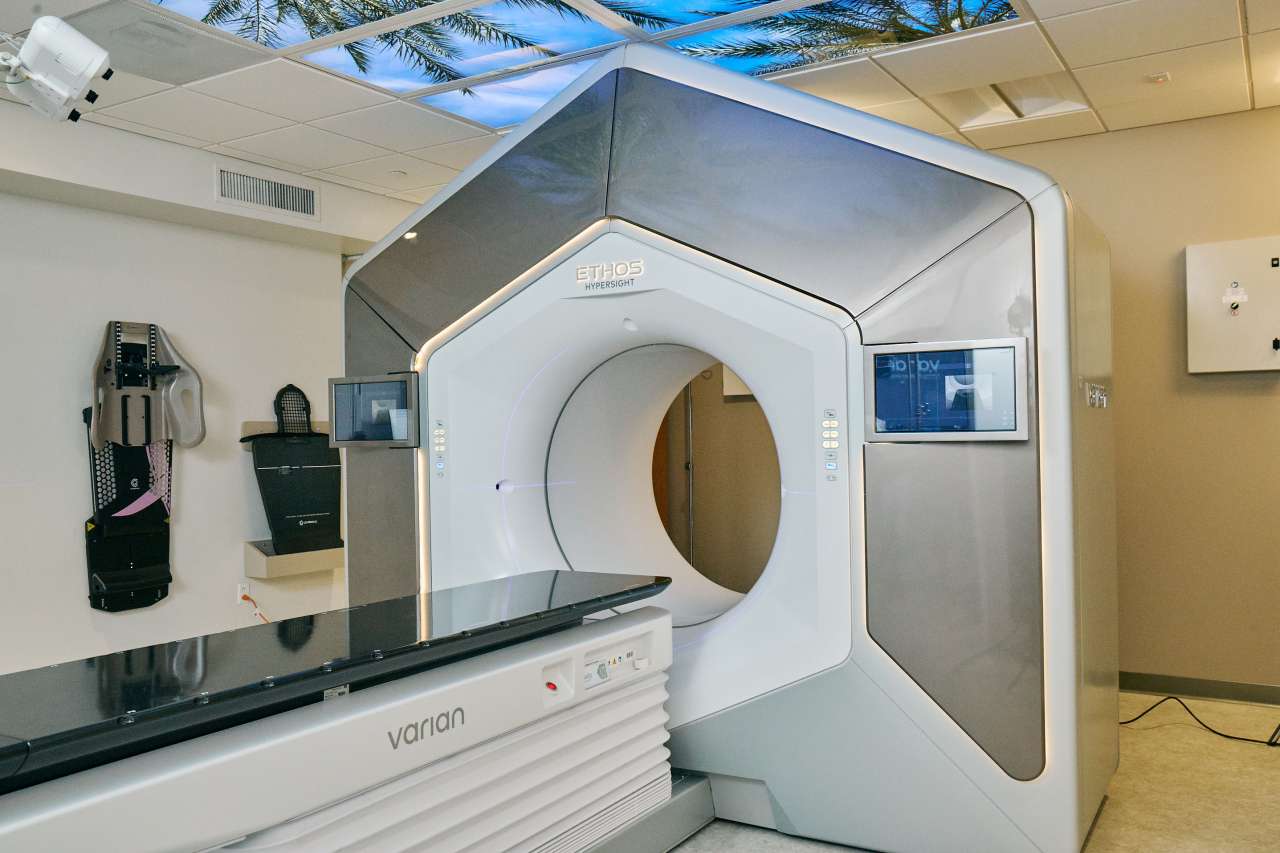
To address these limitations and reduce radiation to normal tissue, the clinic’s advanced linear accelerator personalizes radiation delivery. Patients are re-imaged on the machine immediately prior to treatment, allowing the radiation therapy team to adjust the plan based on the patient’s anatomy at time of treatment. The medical physicist and physician can then replan and adapt the treatment delivery in a matter of minutes instead of hours or days. Adaptive radiation therapy ensures that the target is receiving the maximal dose while minimizing radiation to normal tissues.
This innovative technology, combined with the expertise of the clinic’s providers, sets the El Segundo clinic apart. UCLA Health patients now have access to a level of care previously unavailable locally.
“This precision allows us to safely deliver higher doses of radiation to the tumor while reducing exposure to healthy organs,” Dr. Khan explains. “As a result, patients have a higher chance of overcoming cancer with fewer side effects.”
Access to clinical trials
The facility is also making clinical trials more accessible. South Bay patients can now participate in leading-edge UCLA Health clinical trials — which evaluate new treatments before they become widely available — while receiving care closer to home.
“Clinical trials are important because they serve as the cornerstones for developing optimal treatment for cancers,” says Dr. Khan. “Many patients want to participate in clinical trials but cannot because they don’t have the resources to travel to Westwood or Santa Monica. This new center gives patients the opportunity to participate in clinical trials and provides access to cutting-edge treatment that they normally would not have.”
Clinical trials may explore different ways of delivering radiation therapy, including higher-dose treatments or new techniques that minimize radiation exposure to nearby healthy tissue. By participating in these studies, patients may gain early access to treatment options beyond standard care, while advancing understanding of the disease and helping future patients.
Comprehensive and multidisciplinary care
At the community level, the El Segundo clinic is bringing UCLA Health’s comprehensive care model into patients’ treatment plans. A strong, multidisciplinary team is at the heart of what makes this clinic unique.
“One thing that distinguishes UCLA from other community centers is that all specialists collaborate under one umbrella,” says Dr. Khan. “There is a huge team of people that work together to ensure treatments are delivered safely and accurately.”
In addition to radiation oncologists, patients’ care teams include medical oncologists, imaging specialists, surgical subspecialists and nurses. The radiation therapy team also includes dosimetrists — who develop and perform the initial treatment plans in collaboration with physicians — as well as medical physicists, who maintain the equipment, verify treatment calculations, generate computer plans and oversee quality assurance.
This close collaboration allows specialists to communicate across disciplines. Coordinated care also ensures precise timing of treatments, minimizing risks and optimizing patient outcomes.
“Typically, cancers are treated with a combination of chemotherapy, radiation, or surgery,” says Dr. Khan. “Those three disciplines need to be aligned to coordinate treatment plans, and that’s really only possible in a system where all the specialties are integrated. When we can ensure that the treatment is delivered as intended, patients are going to have the best outcomes — and that involves having good communication between all the specialists.”
Looking ahead, Dr. Khan envisions the clinic continuing to advance UCLA Health’s expertise and comprehensive care in the South Bay, making high-quality treatment more accessible than ever.
“UCLA does a great job addressing the needs of patients,” says Dr. Khan. “This office has all the resources of UCLA and addresses every aspect of care through its comprehensive model and multidisciplinary care team. It’s not just one person responsible for care — a whole team supports the patient’s treatment.”