
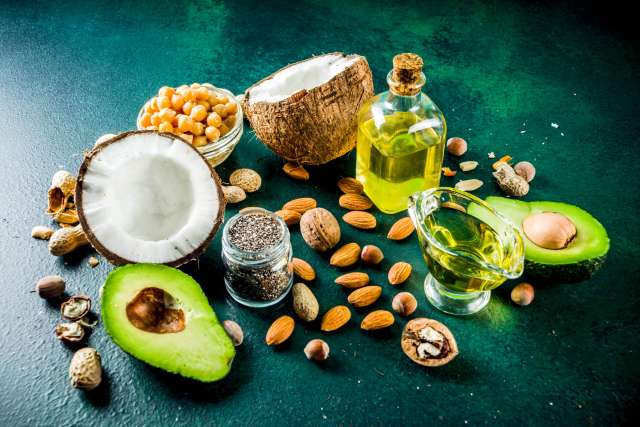
Few things cause as much nutrition controversy as dietary fats. For all those who recommend only olive and avocado oil, there’s an opposite camp promoting coconut oil and beef tallow. It can be very tricky to know whom — and what — to believe.
“There’s a lot of confusion around which fats are healthy and how much fat to include in your diet,” says Yasi Ansari, RDN, senior dietitian at UCLA Health.
Here, we help sort out fat facts from myths.
Why do we need fat in our diets?
There was a time not too long ago when fat in general was considered evil. “All types of fat were grouped together and labeled ‘bad,’” says Ansari. “Food companies emphasized low-fat foods as a healthier option.”
That nutritional advice has changed, and we now know that fat plays an important role in a healthy diet. “Dietary fat helps our bodies absorb key nutrients, including vitamins A, D, E and K, which support essential body functions,” says Ansari.
Eating a healthy amount of fat provides your body with sustained energy. It also increases feelings of satiety, helping you feel fuller longer after eating.
Should I avoid saturated fats?
“Saturated fats are solid at room temperature,” says Ansari. They include sources such as coconut oil, beef tallow, lard, butter and palm oil.
There’s nothing wrong with eating saturated fats — in moderation. The Dietary Guidelines for Americans recommend that less than 10% of your daily calories come from saturated fat. For someone eating 2,000 calories a day, that comes out to 200 calories or about 22 grams of saturated fat per day.
Despite what you might be hearing from social media influencers, these saturated fat sources (even if the beef tallow comes from organic, grass-fed cows) are unhealthy in high amounts. “Beef tallow is high in saturated fats,” says Ansari. “High intakes of saturated fat contribute to elevated LDL cholesterol levels and increase risk of heart disease.”
Why are unsaturated fats healthier?
There’s a good reason why certain types of fat have a reputation for being heart-healthy. Unsaturated fats fall into two main categories: monounsaturated and polyunsaturated.
Monounsaturated fat sources include olives and olive oil, avocados and avocado oil, nuts and nut oil. They can help reduce inflammation and improve cholesterol levels.
Polyunsaturated fats include both omega-3 and omega-6 fatty acids. “These are essential for brain function, cell membrane health and protecting organs,” says Ansari. And since our bodies can’t make these essential fatty acids, we need to get them in our diet.
Omega-3 sources include fatty fish, canola oil, flaxseed and flaxseed oil, walnuts and walnut oil. Omega-6 sources include corn oil, soybean oil, sesame seeds and sesame seed oil, sunflower seeds and sunflower seed oil.
Are seed oils toxic?
“There are a lot of conflicting messages painting seed oils as toxic or inflammatory,” says Ansari. “But these messages do not include the whole picture and fuel unnecessary fear among consumers.”
Many seed oils include higher amounts of omega-6 fatty acids compared to omega-3s. “Omega-6s are precursors to pro-inflammatory compounds when consumed in excess,” says Ansari. “But in moderate amounts, they do not cause chronic inflammation.”
The true concern with seed oils isn’t really about the oils themselves. “These oils are used in many ultraprocessed foods,” says Ansari. “And we know that eating a diet high in ultraprocessed foods can lead to increased risk of chronic disease. It also increases the likelihood of not getting enough of the beneficial nutrients that can come from whole food sources.”
Finding the right balance of fats in your diet
A well-balanced approach should include a variety of sources of poly- and monounsaturated fats — plus saturated fats in moderate amounts. “I like to emphasize a whole foods approach when it comes to nutrition,” says Ansari.
It’s OK to use foods such as coconut oil, butter or beef tallow in cooking, but use just enough to provide the flavor you want without adding too much saturated fat.
It’s important not to demonize any one food or type of fat. “Ultimately, the goal is a well-balanced, nourishing approach to eating that supports both health and enjoyment,” says Ansari.