
When symptoms such as dry skin, brittle nails, hair loss, or fatigue don’t have an obvious cause, you may need to look to your diet. These symptoms (and others) can be signs of a nutritional void you’re not filling through food alone.
“Even when you think you’re eating a healthy, well-rounded diet, it can be possible to fall short on a few key nutrients,” says Dana Hunnes, PhD, MPH, RD, a senior clinical dietitian at UCLA Health. “And changing your diet, trying to lose weight, or restricting certain foods can increase that risk.”
If you are experiencing symptoms of possible nutrient deficiency, it’s important to talk to your doctor about them. They can test your nutrient levels and recommend supplements if needed.
Common signs of nutrient deficiencies can include:
Bleeding gums
The most common cause of bleeding gums is poor dental hygiene. Not brushing thoroughly or flossing daily can lead to swollen gums and gum disease. “But if you’re taking good care of your teeth and gums and suddenly experience bleeding, you should look at your diet,” says Dr. Hunnes.
Bleeding gums can be the result of a vitamin C deficiency. “If your diet isn’t rich in fruits and vegetables, this could be the cause,” she says. Vitamin C is a water-soluble vitamin that your body can’t store much of. Once you have a surplus, your body gets rid of the excess in urine. “That can make it easy to end up with a deficiency if you’re not regularly consuming enough vitamin C rich foods,” explains Dr. Hunnes.
Dry skin and scalp
Dry, itchy skin and scalp are most often due to stripping away natural oils and not replacing enough moisture back into the skin. But in some cases, dry skin and dandruff can be related to low levels of riboflavin (vitamin B2).
This deficiency is rare in the U.S. But those who eat a vegan diet that isn’t based in nutrient-rich plant foods can be at a higher risk.
Hair loss
Poor diet can often play a role in hair loss. Severely restricting calories on a crash diet can often lead to an increase in hair loss. Being deficient in important micronutrients also can be a factor.
Low levels of iron, vitamin C, zinc, and vitamin D are the most likely culprits. Together, they are responsible for producing hair follicles and bringing oxygen and other nutrients to those follicles so that the hair can grow.
Brittle nails
Nails that are dry, brittle and break or split easily can sometimes be the result of a biotin (vitamin B7) deficiency. “But more commonly, it’s because you’re not getting enough zinc,” says Dr. Hunnes. “Low zinc levels can also be a contributing factor in hair loss.”
Fatigue
If you’re deficient in one nutrient, especially B-vitamins, it’s likely you’re lacking in others. “If you’re suddenly feeling tired all the time, it may be because you’re not getting enough overall calories or ample amounts of several important micronutrients,” explains Dr. Hunnes.
Fatigue can be related to low levels of vitamin D, iron, and several of the B vitamins. “Vitamin D deficiency is quite common — especially in the winter when people aren’t exposed to as much sunlight,” says Dr. Hunnes. “And low iron is one of the most common nutrient deficiencies.” Both can lead to fatigue and weakness.
GLP-1s and nutrient deficiencies
Whenever you’re restricting calories, you risk not getting all the essential nutrients you need. Dieting using GLP-1 medications has the potential to further increase that risk. “These medications lower appetite significantly,” says Dr. Hunnes. “You may not be eating enough variety and enough calories in general, which can lead to a number of deficiencies.”
Talk to your doctor about whether you should be supplementing your diet with a daily multivitamin. Or, if you’ve tested low in specific nutrients, they may recommend specific supplements for nutrients such as iron, vitamin D, or B vitamins.
Eating for better nutrition
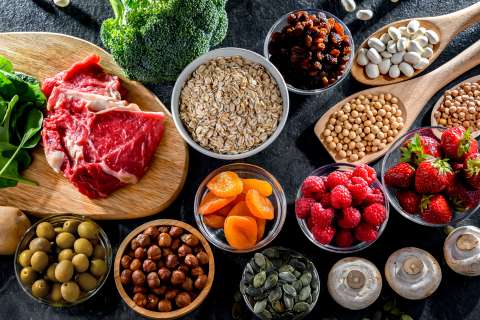
Dr. Hunnes recommends using the Mediterranean diet as a starting point, then tweaking for your specific needs. “It’s one of the healthiest, most studied diets that exist, and one that provides a vast array of vitamins and other nutrients.” Hallmarks of the diet include lots of fruits and vegetables, whole grains, legumes, olive oil, salmon, and other lean proteins.
“If you’re thoughtful about the foods you’re eating, you can easily meet all your nutrient needs through diet alone,” says Dr. Hunnes. “And whenever possible, it is best to get the nutrients you need through food.”