Maybe you’ve heard of acupressure, but don’t know exactly what it is or how it works. Or maybe you think it sounds too “out there” to be an effective treatment.
“Acupressure is essentially a form of massage that you can do on yourself or have done by someone else,” explains Lawrence Taw, MD, an internal medicine physician and director of the UCLA Center for East-West Medicine at Torrance. “And there is good research that supports its use for a variety of medical conditions.”
What is acupressure?
Like its slightly more invasive cousin, acupuncture, acupressure has its roots in Traditional Chinese Medicine. Both practices focus on stimulating specific points on the body. “You’re stimulating a point on a meridian or energy pathway,” says Dr. Taw. “By doing so, you help the energy flow through locally and travel to corresponding areas of the body.”
From a more Western medical perspective, massaging those pressure points is thought to stimulate nerves and help reduce pain sensations. It may also impact the nervous system and influence levels of stress hormones and neurotransmitters.
Acupressure points typically correspond to other, sometimes distant, body parts. For instance, various points on the hand can relate to headaches or stomach upset.
How effective is acupressure?
“Acupressure can have a calming, relaxing effect on the body,” says Dr. Taw. “We also know that it can improve local circulation and help decrease stress hormones.”
Chinese medicine practitioners have long understood the benefits of acupressure. And increasingly, studies done in a Western medicine context have confirmed and quantified these benefits.
A 2025 study found that using acupuncture or acupressure (combined with antinausea medication) significantly reduced post-operative nausea and vomiting. A 2021 study found that using acupressure could be more effective than physical therapy for treating low back pain.
Other research has found that acupressure can help enhance sleep quality, reduce headache pain and relieve nausea caused by pregnancy, motion sickness or chemotherapy.
What are some key acupressure points?
Acupressure points are located all over the body, but there are a few key points that are easy to reach for self-massage. If you’re doing acupressure on yourself, you can stimulate pressure points using your hands, a massage gun, foam roller or golf ball.
- Wrist: Line up three fingers directly below the crease of your wrist. That spot (in between the two wrist tendons) is the acupressure point. Use your thumb to massage this point. It can help relieve nausea and calm feelings of anxiety.
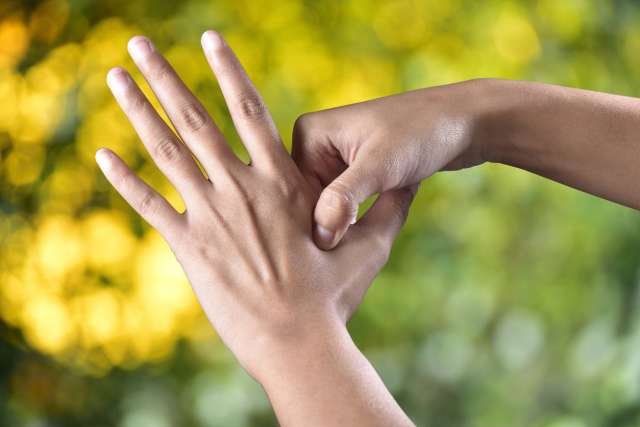
- Hand: Use your thumb and index finger to grab onto the meaty portion of your opposite hand that lies between your thumb and first finger. Applying pressure to that spot can help with stress, neck pain and headaches.
- Feet: “There are grounding points on the bottom of the foot that help bring energy from the head down,” says Dr. Taw. He recommends working those points before bed to help anchor the excess energy in the head and help you sleep. You can use your thumb to apply pressure to the spot in the sole just under the ball of the foot. Or you can use a golf ball, rolling it under your foot to stimulate multiple pressure points.
- Forehead: Use your index fingers to press into the outer corners of the eyebrows. This can help relieve eye strain and tension headaches.
Acupressure safety
It’s true that if you dig in too deeply while doing acupressure, you could potentially cause soreness or even mild bruising. But practicing acupressure is unlikely to result in any true injury. The only true contraindication is that you should avoid applying pressure to areas where the skin is broken or there’s a rash. Certain acupressure points can induce labor, so talk to your doctor first if you’re pregnant.
“The great thing about acupressure is that it’s generally safe, there are lots of ways to use it and anyone can do it,” says Dr. Taw. “Plus, it’s effective, portable and free.”