The kidneys are vital organs, and we can’t survive without them. Yet most people with chronic kidney disease are unaware of their condition because, in the majority of cases, the disease is largely asymptomatic.
More than one in seven U.S. adults – about 35.5 million people – are estimated to have chronic kidney disease (CKD), according to the Centers for Disease Control and Prevention, but 90% do not know they have it.
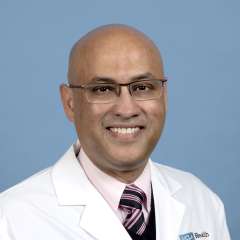
As March is National Kidney Month, Anjay Rastogi, MD, PhD, founding director of CORE Kidney, and professor and clinical chief of nephrology at the David Geffen School of Medicine at UCLA, answers frequently asked questions about kidney health and disease.
Q: What functions do the kidneys perform?
Dr. Rastogi: Kidneys get rid of waste products. They basically clean your blood and body. They maintain the acid-base, electrolyte and fluid balance. They play a very important role in blood pressure control, bone health, vitamin D activation and the prevention of anemia. They also have a significant role in eliminating drugs and toxins from your body. When your kidneys stop working, it leads to many complications based on these functions.
Q: What is chronic kidney disease?
Dr. Rastogi: We divide kidney damage into two groups: acute kidney injury and chronic kidney disease. Chronic kidney disease is defined as having any evidence of kidney damage for three months or more.
Q: What are the stages of kidney disease?
Dr. Rastogi: There are five stages of chronic kidney disease (CKD) which is based on estimated glomerular filtration rate (eGFR), a commonly reported lab in your blood work. Stage 1 is the earliest, and stage 5 is the most advanced. Stage 5 is also called kidney failure. Patients in stage 5 will most likely need dialysis or a transplant to survive. I would also like to point out the three categories of albuminuria, that is, albumin in your urine. That’s A1, A2 and A3, depending upon the amount of albumin you are spilling in your urine – A1 being the lowest level and A3 being the highest level.
Q: How do you screen for kidney health?
Dr. Rastogi: All it takes is a simple blood test for eGFR and a urine test for albumin/protein to diagnose the majority of cases. This was the theme of our CORE Kidney float at the Pasadena Tournament of Roses Parade in 2025 – It Takes Two!
Q: What are the leading causes, risk factors of kidney disease?
Dr. Rastogi:
- Diabetes (40%)
- High blood pressure (40%)
- Glomerulo-nephritis like IgAN, lupus
- Genetic causes such as PKD (polycystic kidney disease), Alport syndrome, Fabry disease and APOL1
- Obesity and other metabolic factors
- Heart disease
- Kidney stones
- Obstruction such as prostate enlargement, cancer, etc.
- Infections
- Medications like NSAIDs and some herbal supplements
- Cancer
- Aging
- Race and ethnicity: Black, Latino and Native American
- Smoking
- Family history
Q: Is kidney disease hereditary?
Dr. Rastogi: It definitely can be. What we’re seeing is that up to 20% of patients with kidney disease might have a monogenic genetic cause of kidney disease. And this has implications not just for the patient but for the family. There are several reputable guidelines that emphasize the importance of genetic testing for kidney disease. UCLA Health has been at the forefront with one of the very first Center of Excellence in PKD being here. This was followed by establishment of comprehensive Fabry, Alport, APOL1 programs and finally the all-inclusive Nephro-Genetics Program at UCLA Health in 2020. This is part of the rare kidney disease (RKD) program, which also includes immunological causes of kidney disease, such as IgAN and lupus nephritis.
Q: What can people do to maintain healthy kidneys?
Dr. Rastogi: There is age-related physiological decline in kidney function, so it is very important to pay attention to preserving our kidneys. I always say what's good for the heart is good for the kidneys. Maintain a healthy lifestyle!
- Eat well
- Exercise regularly
- Don’t smoke
- Stay hydrated
- Regular checkups
- Monitor and address any modifiable risk factors for kidney disease such as high blood pressure, diabetes, obesity and heart disease
- Mental health
- Limit over-the-counter painkillers such as ibuprofen and Motrin; be cautious of herbal supplements
Q: Who should be screened for kidney disease?
Dr. Rastogi: Everybody who has the risk factors I mentioned should be screened annually. Ideally, everyone should be tested for kidney health during their annual physicals. It is simple and straight forward. If abnormalities are detected, they should be followed up and get guideline-directed management.
Q: Does early intervention play a role in slowing or stopping the progression of kidney disease?
Dr. Rastogi: Absolutely! By implementing guideline-directed medical therapies (GDMT), we can slow down or even halt the progression of some of the more common causes of kidney disease including diabetes and high blood pressure, and some not so common causes like IgAN, lupus nephritis, PKD, Fabry disease and Alport syndrome. CORE Kidney is at the forefront of this!
Q: What are the symptoms of kidney disease?
Dr. Rastogi: Kidney disease often is asymptomatic or may show subtle symptoms. The following are some of the signs and symptoms that should alert one to get their kidneys checked.
Urinary changes:
- Decrease or increase in the amount of urination
- Increase in urination at night
- Bood in the urine
- Increased foaminess of urine that might indicate increased protein spilling
Fluid Retention:
- Puffiness around the eyes, leg swelling, shortness of breath
- High blood pressure and symptoms related to it
Fatigue, loss of appetite, wasting, brain fog, itching, cramps, nausea and vomiting are some of the other symptoms that might be seen with advanced kidney disease. Anemia, bone disease and heart disease might be manifesting, as well, as these tend to be common with advanced kidney disease.
Q: When should somebody seek medical attention?
Dr. Rastogi: If you have any abnormal labs detected on routine testing or show any signs or symptoms mentioned above, you should seek medical attention and proper follow-up. Keep in mind, kidney disease tends to be asymptomatic in a majority of cases and early intervention is key!
Q: Can kidney disease be reversed or cured?
Dr. Rastogi: It depends upon the chronicity. If it's acute, we can potentially reverse it depending on the cause and how soon it is detected, among other things. But once chronicity sets in, scarring follows, and once scars form, we can't reverse them, at least as of now. Our goal is to slow down the progression and hopefully halt it by implementing guideline-directed therapies. So once again, early diagnosis and intervention are critical.
Q: What are some of the most exciting recent developments in our understanding of kidney health?
Dr. Rastogi: Nephrology is a very exciting field with major advances being made in various fields but specially immunology and genetics. From having no FDA-approved medications for IgAN, we now have five and soon to be six approved medications, with many more in the pipeline. These same medications can get expanded indications for other conditions including non-renal. FSGS kidney disease and membranous nephropathy are other areas where significant advances are being made. Significant advancements are also being made in the genetic space, with a major focus on ADPKD, Alport, Fabry and APOL1. Xenotransplantation from pigs and regenerative medicine are some of the other exciting areas. UCLA Health is also doing immuno-tolerance studies for transplanted patients, and the results look promising.
Tell us more about CORE Kidney at UCLA Health.
Dr. Rastogi: We established the CORE Kidney Program at UCLA Health in 2016 with the aim of providing comprehensive integrated care to our kidney patients by implementing our CORE principles of Clinical excellence, Outreach, Research and Education. Our goal is to empower patients so they can become their own best advocates. Besides our clinical services, there is a major focus on mental health, diet and nutrition, and healthy lifestyles. We have a patient advocacy and support group called Circle of CORE that helps patients and their families navigate this complex and often daunting journey each step of the way. We have a very strong community presence and engagement both nationally and globally!
Tell us more about CORE Kidney Care.
Dr. Rastogi: CORE Kidney Care, in collaboration with Population Health at UCLA Health, has launched the following, among other initiatives.
- Cardiovascular-Kidney-Metabolic (CKM) program
- Kidney education program
- Complex care management program
- ESKD program
- Rare kidney disease (RKD) program that includes both genetics and glomerulo-nephritis
We will soon launch a pre-emptive kidney transplant program. CORE Kidney Care comprises nephrologists, nurses, social workers, patient advocates, and management and leadership.
What is Bruin Beans?
Dr. Rastogi: Bruin Beans is an undergraduate health club at UCLA that was also established in 2016 with the goal of mentoring future leaders in health care. They participate in all the activities under CORE Kidney and have a very strong community and campus presence. Graduates from this club are now in medical, nursing, pharmacy, dental and graduate schools, among other things.
Final comments.
Dr. Rastogi: We need to be proactive about kidney health. It is time to put all our knowledge into action and make sure we get the guideline-directed testing and treatment for all our patients at risk for kidney disease!