The women’s eyes widened as Eve Lahijani, RDN, held up a full-sized dinner plate.
“You use an adult-sized plate,” she told participants in her “Eat with Purpose” workshop at the 2026 Women’s Cancer Survivors Conference, held in April on the UCLA campus.
During the hourlong session, Lahijani set out to combat women’s fear of carbs, remind them that soy foods are safe for cancer survivors and help them navigate eating to support good health.
“So many women have been on a diet and taught that they should use small plates,” Lahijani said, adding that they’ve also learned to avoid carbohydrates and fats, which are essential for good nutrition.
Here are the top takeaways from the session:
Anti-inflammatory eating is good for everyone
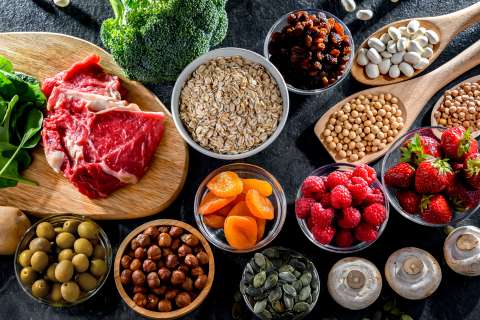
Also known as the Mediterranean diet, anti-inflammatory eating emphasizes whole foods, including fruits and vegetables, lean protein, complex carbohydrates and healthy fats.
“I don’t like to call it the Mediterranean diet because you can eat Asian food or Mexican food or Persian food and still eat in an anti-inflammatory way,” Lahijani said.
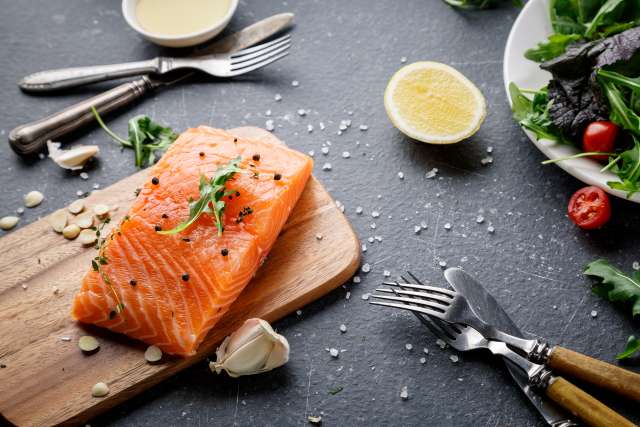
Aim for a palm-sized serving of protein – chicken, beef, fish, lentils, tofu – at each meal. Protein helps promote satiety, maintain muscle mass, keep bones healthy, boost energy and support the immune system, she said.
Go for a similar-sized serving of complex carbohydrates, such as potatoes, rice, corn, peas, quinoa or sweet potato. Then load up on non-starchy vegetables, such as broccoli, cauliflower, asparagus, kale, Brussels sprouts – whatever you like, she said.
“Variety is good,” Lahijani said. “Each different vegetable has a different property that helps keep us healthier.”
Finally, add some healthy fat, such as avocado, olive oil, seeds or nuts.
A healthy plate is a quarter protein, a quarter whole grains or starchy veggies, and half non-starchy vegetables, she said.
Different ingredients are inflammatory in different bodies, but it’s generally a good idea to avoid processed foods, artificial sweeteners, preservatives and emulsifiers, Lahijani said. She also recommended limiting red meat to 12 ounces a week and dairy to one or two servings a day.
Soy foods are safe for cancer survivors
Lahijani, who works with the Simms/Mann UCLA Center for Integrative Oncology, said cancer survivors often question whether it’s safe to eat soy foods, such as tofu and edamame, because compounds in these foods can mimic estrogen in the body.
They’re not only safe, but beneficial, she said: “In populations where they eat more soy foods, they have less cancer and cancer recurrence.”
Both the American Cancer Society and the American Institute for Cancer Research say soy foods present no danger to women who have been diagnosed with cancer, including breast cancer.
Diets rich in fruits and vegetables help support the immune system
The fiber in plant foods, including whole grains, feeds the gut microbiome, which plays a key role in the immune system.
The immune system is headquartered in the gut, so nutrition affects immune function, according to David Heber, MD, PhD, professor emeritus of medicine at UCLA Health. Dietary diversity leads to microbial diversity in the gut.
“Having a broad range of fibers in your diet helps you have a broad-range immune system,” Lahijani said.
Fiber-rich plant foods – from apples and broccoli to yams and zucchini – support the microbiome and reduce inflammatory responses.
Healthy fats and sufficient protein also support gut health.
Healthy eating doesn’t require hours in the kitchen
When Lahijani’s clients say they have no time to eat healthy, she presents them with plenty of low-effort solutions.
Pop open a can of tuna for instant protein, for example, or heat up a microwaveable meal.
If you have no time for vegetables, reach for a bag of baby carrots, she suggested. If you have a few minutes, whip together a pre-packaged salad – one of Lahijani’s favorite quick-food moves.
“It’s a great option when you don’t have time,” she said. “I do that and I feel like a diva, because there’s lunch that I didn’t have to make.”
Frozen vegetables are another speedy choice.
“They’re just as good as fresh,” Lahijani said.
For many of the women at the “Eat with Purpose” session, the most powerful moment wasn't a nutrition tip — it was permission: to eat carbs, to add fat to their meals, to use the big plates, to grab a pre-packaged salad and call it lunch.
Lahijani said she's seen many cancer survivors develop a fear of food, eating only what they deem perfectly healthy — a condition known as orthorexia. The antidote, she said, is the same advice she gives everyone: eat whole foods, listen to your body, and don't make it harder than it needs to be.