In an international study co-led by UCLA, investigators found an investigational targeted therapy significantly extended overall survival for patients with previously treated metastatic pancreatic cancer and reduced the risk of death by 60% compared with standard chemotherapy in both the RAS G12 and the overall, or intent-to-treat (ITT), population, which included patients with and without identified tumor RAS mutations.
The team found patients who received the drug daraxonrasib, an investigational, first-in-class oral RAS(ON) multi-selective inhibitor designed to block active RAS signaling — one of the primary drivers of pancreatic cancer — lived a median of 13.2 months compared with 6.7 months for those who received investigator’s choice chemotherapy in the RAS G12 population.
The findings suggest a potential investigational treatment option for patients with metastatic pancreatic cancer, a disease that remains among the most lethal cancers and has limited effective therapies.
The results were published in the New England Journal of Medicine and presented today at the annual meeting of the American Society of Clinical Oncology in Chicago.
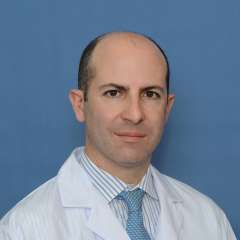
“For years we’ve made incremental gains in treating pancreatic cancer,” said Dr. Zev Wainberg, professor of medicine and investigator at the UCLA Health Jonsson Comprehensive Cancer Center and co-first author of the study. “Now, for the first time, we have demonstrated that targeted inhibition of RAS using an oral inhibitor is changing the landscape of this terrible disease. Seeing this magnitude of benefit in a randomized phase 3 study is very encouraging for all patients with advanced pancreatic cancer and is a paradigm shift in this deadly disease.”
More than 90% of tumors are driven by alterations in the RAS signaling pathway, particularly mutations in KRAS, a gene that helps regulate cell growth. When mutated, the gene can lock cells into a constant growth state, fueling tumor development. Despite decades of research, RAS proteins have proved notoriously difficult to target with drugs.
Unlike earlier targeted therapies that focused on a single mutation subtype, daraxonrasib is part of a new class of therapies designed to inhibit multiple RAS mutations, including G12, G13 and Q61 alterations that dominate pancreatic cancer.
The study involved 500 patients with metastatic pancreatic cancer whose disease had already progressed after one previous treatment from 60 clinical sites across six countries. Participants were randomly assigned to receive either the daraxonrasib orally once daily (248 patients) or standard chemotherapy chosen by their doctor (252 patients). Among those enrolled, about 92% had RAS G12 mutations with or without an identified tumor RAS mutation.
In addition to improved overall survival, patients treated with daraxonrasib experienced significantly longer disease control. Median progression-free survival was 7.2 months compared with 3.6 months for chemotherapy, effectively doubling the time before cancer progression, in the ITT population.
Tumor shrinkage was also more frequent in the daraxonrasib group, with approximately 33% of patients achieving an objective response in the RAS G12 population compared with about 11% in the chemotherapy group. Patients receiving the targeted therapy also experienced slower worsening of pain and better preservation of quality of life over time.
“While most patients had RAS G12 mutations, the benefit appeared generally consistent across different patient groups and mutation types,” said Wainberg, who is also the co-director of the UCLA GI Oncology Program. “These findings support the idea that blocking active RAS signaling will become an important treatment strategy for pancreatic cancer.”
The researchers observed less frequent adverse side effects in the daraxonrasib group than in the chemotherapy group. Common side effects of daraxonrasib included rash, diarrhea, nausea, vomiting, and mouth sores, side effects that require active monitoring and supportive treatments.
The study’s other co-first author is Dr. Eileen O’Reily of Memorial Sloan Kettering. The senior author is Dr. Brian Wolpin of Dana-Farber Cancer Institute.
The study was funded by Revolution Medicines.