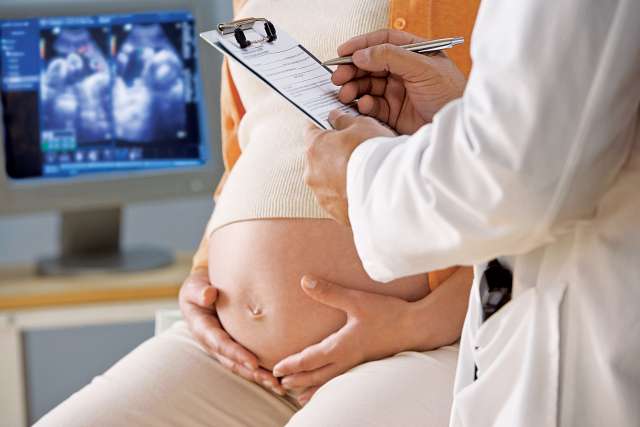
Pregnant women and infants are particularly vulnerable to complications related to measles. With the increasing frequency of measles outbreaks across the U.S, including significant increases in cases in California, it’s important that women who are planning to be or are already pregnant, as well as their loved ones, are protected.
Dr. Neil Silverman, professor of clinical obstetrics and gynecology at the David Geffen School of Medicine at UCLA, and director of the department’s Infections in Pregnancy Program, offers simple steps to protect against possible infections.
Why is measles becoming a growing problem?
Measles is one of the most contagious infectious diseases that exists. It spreads from person to person very easily through the air.
We are seeing some of the highest levels of measles cases in California and across the United States than we have seen in decades. Unfortunately, that rise in outbreaks and cases locally and nationally is due to the fact that our population has become less protected through routine vaccination against measles.
How can pregnant people protect themselves?
Measles is a very preventable disease through vaccination. The vaccination consists of two doses of what is called the MMR vaccine, which contains proteins that result in the body producing long-lasting protective antibodies against measles, mumps, and rubella (German measles).
This is one of the most effective vaccines that we have available. If an individual receives the recommended two doses of the vaccine – whether as a child in the routine childhood vaccination schedule, or as an adult – their level of protection is at least 97%.
Why is measles especially concerning for pregnant people?
Measles during pregnancy – like many other infections – can be much more severe than in a person who is not pregnant. In the mother, it has been associated with an increased risk of hospitalization, as well as higher risks of pneumonia, and the need to be put on a ventilator to assist breathing. For the fetus, measles is associated with an increased risk of miscarriage and stillbirth, as well as premature birth. Measles during pregnancy can also be passed to the developing fetus, resulting in a baby being born with an active measles infection.
This is not just like getting the flu, where you’re sick for a while, you’re miserable, and then you get better. When you’re pregnant, a fetus, or a newborn, you are at increased risk for significant medical complications, as well as a significantly higher risk of hospitalization, and even death.
What do you need to know before you get the vaccine?
People should know their immunity status before getting pregnant so that they have all of the options available to maximally protect themselves, their family, and the baby they’re hoping to carry. The maternal-fetal medicine division at UCLA has recently published a study showing that antibody status isn't always as long-lasting as we would like it to be, though they are still likely protected after being vaccinated through the “memory” in their white blood cells. However, when someone is at risk for measles complications, such as in pregnancy, it is recommended that they get a single booster of the MMR vaccine if their measles antibody results are negative. Screening before pregnancy is very important, since the MMR vaccine is one of the few that cannot be given during pregnancy.
If you’re already pregnant and you find out you don’t have immunity against measles, what can you do?
If a patient is not immune to measles, they should get the measles vaccine after they deliver. During their pregnancy, they should be cautious about potential measles exposures and to try their best to avoid them. If they're in crowded places, like a movie theater or an airplane, they should strongly consider wearing a mask, which will protect them against a number of airborne infectious diseases, including measles.
As noted above, if a pregnant patient who is not immune to measles does have an exposure, it’s important for them to contact their provider as soon as possible. That way, they can receive a safe and effective IV infusion of antibodies, which would give them “passive immunity” against measles, which gives short-term protection and lowers their risk of severe disease. While this isn’t as long-lasting as the protection from the MMR vaccine, it has been shown to be effective short-term, and they should still receive the vaccine after they deliver.
What do you say to those who are worried about the safety of measles vaccines?
We have a strong body of safety data about the MMR vaccine for women planning a pregnancy, for those who are nursing, and for infants.
Vaccination is and remains our best weapon against measles infection for everybody, including pregnant patients and their newborns.