
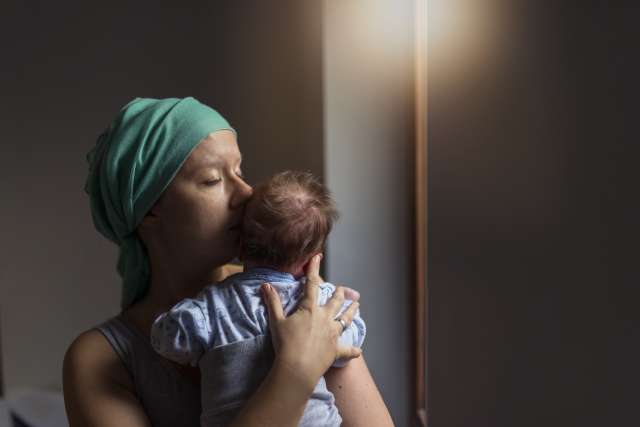
Breast cancers diagnosed during the first three years after childbirth, particularly within the first year, may be biologically more aggressive than similar cancers in women who have never given birth, according to a new study led by investigators at the UCLA Health Jonsson Comprehensive Cancer Center.
The findings, published in the journal npj Breast Cancer, add to growing evidence that postpartum breast cancer may represent a distinct form of the disease and suggest the period of greatest biological risk may occur earlier than previously thought.
“We’ve long recognized that breast cancers diagnosed after pregnancy can behave differently, but we haven’t known when that increased risk is biologically strongest,” said Dr. Nimmi Kapoor, associate professor of surgery at the David Geffen School of Medicine at UCLA and senior author of the study. “Our findings suggest that the first one to three years after childbirth represent an important window when some tumors may have more aggressive characteristics.”
Breast cancer rates among younger women have been increasing, and scientists have been studying whether delayed timing of first pregnancy may help explain some of that trend. Pregnancy causes major changes in breast tissue, and previous studies have shown that cancers diagnosed soon after childbirth are more likely to have aggressive features and worse outcomes.
But researchers have not agreed on how long the postpartum period of increased risk lasts. Some studies have defined postpartum breast cancer as occurring within one or two years after delivery, while others have extended the window to five or even 10 years.
To better define that window of risk, the UCLA team analyzed whether tumor biology varied depending on how long it had been since a woman’s most recent childbirth. They studied 385 women aged 45 or younger with early-stage hormone receptor-positive, HER2-negative breast cancer treated at UCLA between 2011 and 2024.
Each tumor had been tested using the Oncotype DX Breast Recurrence Score, a widely used genomic test that evaluates the activity of 21 genes linked to cancer recurrence risk and potential benefit from chemotherapy.
Researchers grouped patients based on the time between their last childbirth and breast cancer diagnosis, comparing women who had never given birth with those diagnosed at different postpartum intervals. They then examined whether recurrence scores and other tumor features differed across those groups, and whether any patterns persisted after accounting for factors such as age and lymph node status.
They found that breast cancers diagnosed within the first year after childbirth had significantly higher Oncotype DX recurrence scores than cancers in women who had never given birth, suggesting biological features associated with a higher risk of recurrence. Elevated scores were also seen, to a lesser degree, during the second and third years after delivery.
When patients were grouped more broadly, women diagnosed within three years of childbirth were nearly three times more likely to fall into a higher recurrence score category compared with women who had never given birth. These patients were also more likely to have higher-grade tumors, meaning their cancer cells appeared more abnormal and potentially more aggressive under a microscope. By contrast, women diagnosed more than three years after childbirth did not show the same consistent increase in recurrence scores.
The findings also suggest that standard clinical features such as tumor size and lymph node involvement may not fully capture the differences seen in this group. Instead, gene expression testing appeared to reveal biological risk that was not always reflected in routine pathology, raising the possibility that reproductive history could provide additional context when interpreting genomic test results in younger patients.
Despite the more aggressive genetic features, the study did not find that women diagnosed within three years of childbirth had significantly worse short-term outcomes. After about four years of follow-up, rates of recurrence and survival were similar to those of other patients in the study.
Researchers say one possible explanation is that women with higher-risk tumors received more intensive treatment, including chemotherapy, ovarian function suppression and newer targeted therapies. The findings also suggest that aggressive tumor biology does not necessarily translate into worse short-term outcomes when patients receive effective treatment.
While larger, multi-institutional studies with longer follow-up are needed to confirm the findings, the researchers say postpartum status may warrant greater consideration in evaluating and managing breast cancer in younger women.
“Our findings suggest that the years immediately following childbirth represent a unique biological window for some breast cancers," said Kapoor, who is also a member of the UCLA Health Jonsson Comprehensive Cancer Center. “Understanding why these tumors behave differently may help us better identify patients who need closer monitoring or more tailored treatment approaches.”
The study’s co-first authors are Shilian Zhang, a hematology/oncology fellow at UCLA Health, and Katelyn J. Queen, a postdoctoral scholar in the Paul Spellman Research Lab. Other UCLA authors are Marla Lipsyc-Sharf, Aditya Bardia, Niharika Duggirala, Eric Yang, Kaden Hong, Yashila Suresh, Charlotte Hamilton, Meghana Pitta, Nicole Chien and Emily La.