
Giving

Research Made Possible by People Like You
Most of our research is funded by private philanthropy, much of it from former patients and their families. We could not do this work without you.
Why Your Support Matters
We Depend on You, and We Put Every Gift to Work
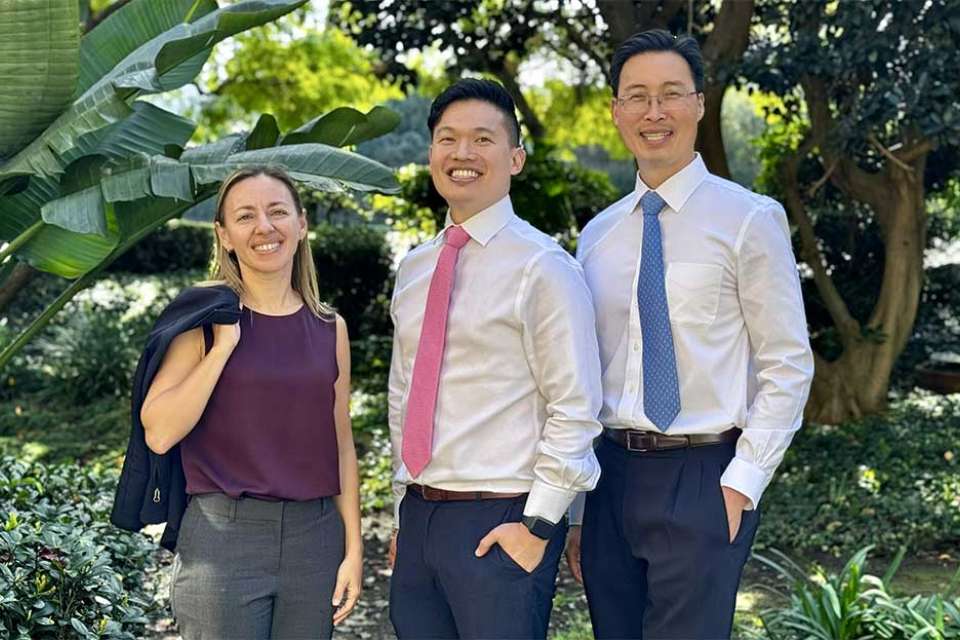
Philanthropy is the foundation of our research program. Most of our studies are funded by private gifts, many from former patients and families who know endocrine surgery firsthand. The questions that matter most to patients, such as how much surgery is truly needed or which cancers are likely to return, are rarely the focus of industry funding. Your support is what allows us to pursue them.
We take that trust seriously, and we have put past gifts to good use. Your support has helped UCLA Endocrine Surgery lead the nation in using genetic testing to guide thyroid surgery, publish findings in leading medical journals, and shape national best-practice guidelines. Gifts at every level start new studies, keep long-term ones running, and turn early findings into better care for patients everywhere.
Research Highlights
| 16 | 1 | Nationwide |
|---|---|---|
| Publications in 2026 | Randomized clinical trial completed and published this year |
Multicenter trial launching for medullary thyroid cancer |
Where Your Gift Goes
Four Research Priorities
Each priority builds on work we have already published, and each needs ongoing support to reach the next step.
#1 Molecular Profiling
Reading a tumor's genetic fingerprint before surgery
Genetic testing of a needle biopsy can tell us how a thyroid cancer is likely to behave. We use this information to match each patient to the right operation, sparing many people surgery they do not need.
What We Have Done
- Completed and published a randomized clinical trial comparing removal of half of the thyroid with removal of the whole gland, guided by a tumor's genetic profile.
- Studied 200 thyroid cancers and found that about 1 in 9 carries a high-risk combination of mutations, which predicted whether cancer would return.
What Is Next
Using a single biopsy to identify the few patients who need more aggressive treatment, while reassuring the majority that a gentler approach is safe.
Selected Publications
- Thyroid Lobectomy vs Total Thyroidectomy in Indeterminate Molecular Risk Thyroid Cancer: A Randomized Clinical Trial. JAMA Otolaryngology Head & Neck Surgery. 2026.
- Afirma Xpression Atlas Alteration Status Is Associated with Malignancy Risk in Indeterminate Thyroid Nodules. Thyroid. 2026.
- Utility of Genomic Sequencing Classifier in Managing Cytologically Indeterminate Oncocytic Thyroid Nodules. Journal of Clinical Endocrinology & Metabolism. 2026.
- Association of BRAF V600E Allele Frequency With Clinicopathologic Outcomes in Papillary Thyroid Cancer. Journal of Clinical Endocrinology & Metabolism. 2025.
- Prognostic Value of Preoperative Molecular Testing and Implications for Initial Surgical Management in Thyroid Nodules Harboring Suspected or Known Papillary Thyroid Cancer. JAMA Otolaryngology Head & Neck Surgery. 2023.
#2 Thyroid Cancer Outcomes
Learning what truly helps patients over the long term
We follow patients for years after treatment to learn which approaches keep cancer away with the fewest side effects. These findings help surgeons nationwide refine the first operation and follow-up care.
What We Have Done
- Mapped where medullary thyroid cancer is most likely to return in the neck.
- Showed that patients with sporadic medullary thyroid cancer rarely have cancer on the opposite side of the thyroid.
- Studied how surgical margins relate to cancer recurrence.
What Is Next
Launching STAGE-MTC, the first prospective trial of its kind, with partner centers across the nation. It will test whether many patients can safely have a smaller first operation.
Selected Publications
- Compartment-Specific Recurrence in Medullary Thyroid Cancer. JAMA Otolaryngology Head & Neck Surgery. 2026.
- The Relationship Between Microscopic Margin Positivity and Disease Recurrence in Differentiated Thyroid Cancer. Surgery. 2026.
- Omitting Radioactive Iodine after Therapeutic Lateral Neck Dissection May Be the Next Step in De-Escalating Initial Treatment of Papillary Thyroid Cancer. Thyroid. 2026.
- Extent of Surgery for Medullary Thyroid Cancer and Prevalence of Occult Contralateral Foci. JAMA Otolaryngology Head & Neck Surgery. 2024.
#3 New Technology in the Health Record
Using Artificial Intelligence to Find Patients Who Are Being Missed
Many endocrine conditions go undiagnosed because the clues are scattered across lab results and doctors' notes. We use natural language processing (NLP), a form of artificial intelligence that reads clinical notes, together with lab values and diagnosis codes to scan the electronic health record and flag patients who may need testing or specialist care.
Automatic alerts, order sets, and dashboards then help doctors act on those flags.
What We Have Done
- Built health record screening for primary aldosteronism across UCLA Health.
- Building an NLP-powered dashboard that finds patients with Graves' disease and makes sure they are checked for thyroid eye disease.
- Created order sets and a care pathway that help doctors evaluate adrenal masses found by chance on imaging.
What Is Next
Extending these tools to other conditions that are often missed, measuring whether they help patients get diagnosed and treated sooner, and sharing them so other health systems can adopt them.
Selected Publications
- EHR-Based Screening for Primary Aldosteronism in a Large Academic System. Endocrine Practice. 2026.
- Genetic Testing Referral Rates for Pheochromocytoma and Paraganglioma in an Academic Tertiary Centre. Clinical Endocrinology. 2025.
#4 Hyperaldosteronism
Finding a Hidden, Often Curable Cause of High Blood Pressure
Primary aldosteronism happens when the adrenal glands make too much of a hormone that raises blood pressure. It is one of the most commonly missed causes of high blood pressure, and it can often be treated, sometimes cured with surgery.
What We Have Done
- Used the electronic health record to identify patients across UCLA Health who should be screened.
What Is Next
Making sure more patients with high blood pressure are tested, so those who can be cured are found and treated.
Selected Publications
- EHR-Based Screening for Primary Aldosteronism in a Large Academic System. Endocrine Practice. 2026.
A Message from Michael W. Yeh, MD
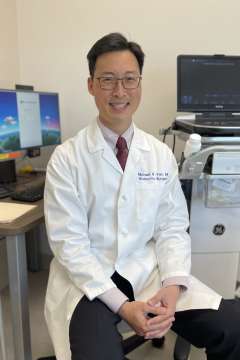
In the past, many of you have graciously asked me how you could give back to UCLA Endocrine Surgery. Research support is what we need the most. I'm grateful for your help and even more grateful just to know that you care.
Michael W. Yeh, MD
Professor of Surgery and Medicine
Chief, Section of Endocrine Surgery
Help Us Reach More People Like You
If our work matters to you, please share this page with a friend or family member who may want to help. Every new supporter brings the next discovery closer.
Your Gift Moves This Research Forward
Every gift, at any level, supports the studies on this page and the patients who will benefit from them.