For patients with early-stage lung cancer, the journey from diagnosis to treatment often involves multiple procedures spread across several weeks or even months. During that time, patients may undergo separate biopsies to confirm a diagnosis, additional tests to determine whether the cancer has spread, procedures to help surgeons locate difficult-to-find tumors and, finally, surgery to remove the cancer. Research suggests that these delays can affect outcomes, with longer intervals between diagnosis and treatment associated with higher rates of recurrence and lower survival.
To address this challenge, UCLA Health's thoracic surgery, interventional pulmonology and pathology teams have adopted a novel, streamlined approach that combines diagnosis, staging, localization and treatment into a single operating room session under one anesthetic event. For select patients with suspected early-stage lung cancer, what traditionally can take weeks or months can potentially be completed in a few hours.
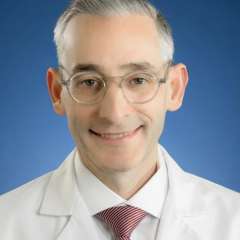
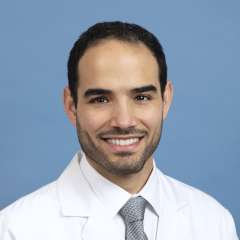
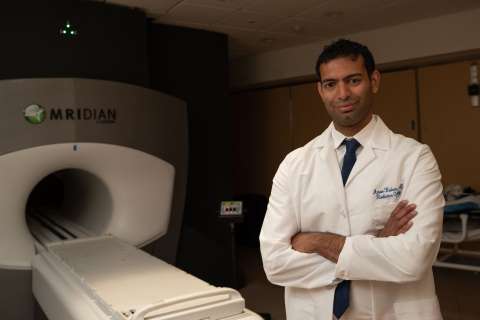
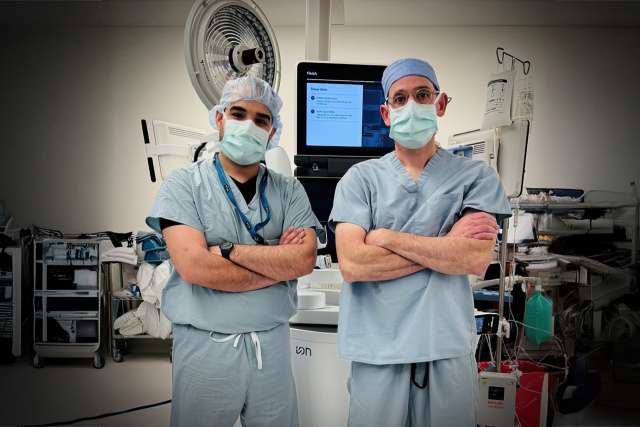
In this Q&A, Bryan Burt, MD, professor and chief of thoracic surgery at UCLA and investigator at the UCLA Health Jonsson Comprehensive Cancer Center, and Reza Ronaghi, MD, an interventional pulmonologist and critical care physician at UCLA Health, discuss how the approach works, why speed matters in lung cancer care and how this new platform could help improve the patient experience and outcomes.
Lung cancer remains the leading cause of cancer-related death. Why is it so important to diagnose and treat early-stage lung cancer as quickly as possible?
Dr. Burt: Among the strongest arguments for this approach are recent studies showing that delays between the identification or diagnosis of early-stage lung cancer and surgery can worsen outcomes. In a recent study led by a UCLA surgery resident, the median time from identification of a suspicious lung nodule to surgery was 57 days, with patients waiting anywhere from 41 to 79 days. The study found that when this interval exceeded eight weeks, patients had lower overall survival and higher rates of cancer recurrence.
A separate, large study of patients in the Veterans Affairs health system found that the average time from lung cancer diagnosis to surgery was about 70 days. When the time to surgery exceeded 12 weeks, patients again had lower overall survival and higher rates of recurrence. These studies show that time matters in early-stage lung cancer. Our goal is to eliminate unnecessary delays and bring those steps together whenever it is appropriate for the patient.
Dr. Ronaghi: From the time a nodule or spot is detected in the lung to the time it is treated, patients can often feel like they are playing “ping pong” between different specialists. They may need to see one physician for a biopsy, another for staging and then another for treatment, with each step potentially taking several weeks. This approach brings those steps together into one episode of care, which can shorten that process to just a few hours. It also helps reduce the anxiety that comes with waiting for a diagnosis and treatment.
UCLA recently performed its first procedure combining diagnosis, staging, tumor localization and surgical treatment in a single operating room session. What exactly does this approach involve?
Dr. Ronaghi: The concept is fairly straightforward. A patient who has been carefully evaluated and determined to be an appropriate candidate comes into the operating room and undergoes the procedures needed to diagnose, stage and treat their lung cancer during the same anesthetic event. Using robotic bronchoscopy and robotic surgery, we can perform the biopsy, determine whether the cancer has spread to the lymph nodes, place a marker to help locate the tumor and then, when appropriate, proceed directly to surgical removal.
Dr. Burt: There are four main steps. First, using robotic bronchoscopy, the suspicious lung nodule is biopsied and evaluated in real time by our pathologists. Second, we use endobronchial ultrasound, or EBUS, to biopsy lymph nodes in the chest to determine, also in real time, whether the cancer has spread to these lymph nodes. Third, we can place a small marker, called a fiducial, into or next to the nodule to help the surgeon precisely locate a small tumor during the operation. Fourth, if the cancer is confirmed to be early stage, the surgeon can proceed with robotic resection to remove the tumor.
How much time can this approach potentially save for patients compared with the traditional pathway from detection to diagnosis, staging and treatment?
Dr. Ronaghi: Traditionally, patients may go through several appointments and procedures over a period of weeks to months. With this approach, that process can potentially be condensed into a single three- to four-hour episode of care.
Dr. Burt: The goal is to reduce the time from diagnosis to treatment and in such a way that reduces the number of separate steps patients have to go through to get from a suspicious nodule to treatment.
Beyond saving time and reducing the number of procedures, how could this approach affect patients' experience?
Dr. Burt: There is a very real patient experience benefit. Waiting between a suspicious scan, a biopsy, staging and treatment can be extremely anxiety-provoking.
Dr. Ronaghi: From the patient's perspective, there's also something powerful about being able to come in without a diagnosis and, several hours later, wake up having been diagnosed and treated, when appropriate. It is a minimally invasive approach, and patients can potentially wake up with only a few small incisions after having gone through what previously could have required several separate procedures. This one-step process can reduce the anxiety and time to diagnosis and treatment for the patient.
Who is eligible for this approach, and what factors do you consider when determining whether a patient is a good candidate?
Dr. Burt: This is not an approach for everyone. Patients are carefully selected based on their imaging and other clinical information, including CT and PET scans, to determine whether they are likely to have early-stage lung cancer and whether they are appropriate candidates for each of the steps described.
Dr. Ronaghi: Patients would first meet with the appropriate specialists, including thoracic surgery and interventional pulmonology, and undergo the necessary imaging and preoperative evaluation. Not every patient needs all four steps; procedures can be combined based on what each patient needs.
It is also important to understand that going into the procedure does not necessarily mean the patient will ultimately undergo surgery. For example, if staging during the procedure shows that the cancer has spread to the lymph nodes, we may decide not to proceed with surgical resection at that time.
How has bringing these procedures together changed the way your teams are able to care for patients with early-stage lung cancer?
Dr. Burt: It allows us to combine procedures that previously would have required separate visits or procedures. For example, placing a fiducial marker and performing the surgical resection can now be combined rather than requiring the patient to have the marker placed during one procedure and return later for surgery. It also helps us use our resources more efficiently and create capacity to care for more patients.
You described this as a “precision” approach to early-stage lung cancer. What makes this a precision surgical approach, and where do you see this type of care going next?
Dr. Burt: Lung cancer is increasingly an example of precision or personalized medicine. We use tumor sequencing and biomarkers to determine the biology of a patient's cancer and identify treatments that are most likely to work for that individual patient. We're applying that same philosophy to the procedural and surgical aspects of care, using advanced technology to precisely diagnose, stage, locate and treat an individual patient's tumor.
What excites you most about what this approach could mean for the future of lung cancer care and for your patients?
Dr. Burt: What is exciting is the tangible impact we can have on patients. Thoughtfully adopting new technologies and treatment approaches allows us to improve care in ways that patients can actually experience.
Dr. Ronaghi: Just a few years ago, doing all of this in one setting was not really possible in the way it is today. Advances in robotic bronchoscopy and robotic surgery have allowed us to combine these procedures while keeping the approach minimally invasive. This is an exciting step forward, but it also feels like just the beginning of what is possible in lung cancer care.