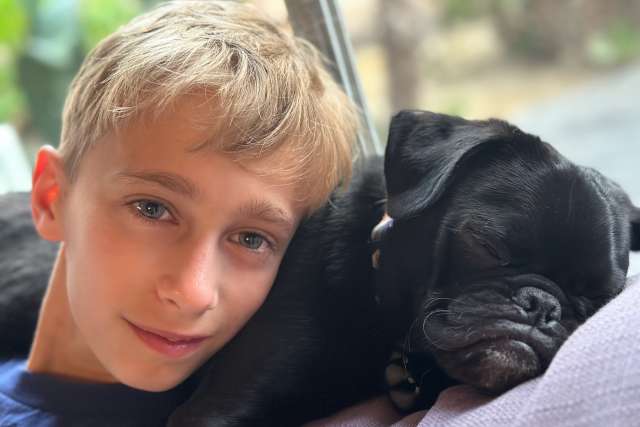
For Mary Beth Campbell, learning that her 20-month-old child had Bloom syndrome – a devastating, extremely rare condition most pediatricians have never seen or even heard of – was like “being run over by a Mack truck.”
Campbell’s son Calvin, now 11, lives with the recessive genetic disorder caused by mutations in the BLM gene, which leads to high levels of chromosomal breakage and instability. This in turn causes growth delays, high sun sensitivity and, most alarming, a significantly increased cancer risk.
Calvin and a handful of other patients with the disorder will now have the rare and precious opportunity to participate in UCLA Health’s first-ever Multidisciplinary Bloom Syndrome Clinic on April 15. It will be the first clinic of its kind in the U.S., giving patients the opportunity to consult with multiple specialists under one roof over a period of a few hours.
Creating space for an ‘ultra-rare’ disorder
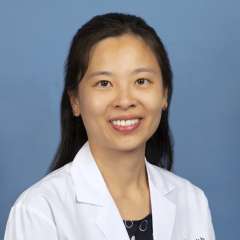
Vivian Chang, MD, a UCLA Health pediatric hematologist-oncologist and cancer genetics specialist who has been a key researcher in the field, said the clinic will serve as a unique space where patients with Bloom syndrome can consult with her and other specialists – all in one place on one day.
While that in itself is invaluable for patients and their families, Dr. Chang says, even rarer is the opportunity for those affected by this condition to meet each other in a safe, supportive environment.
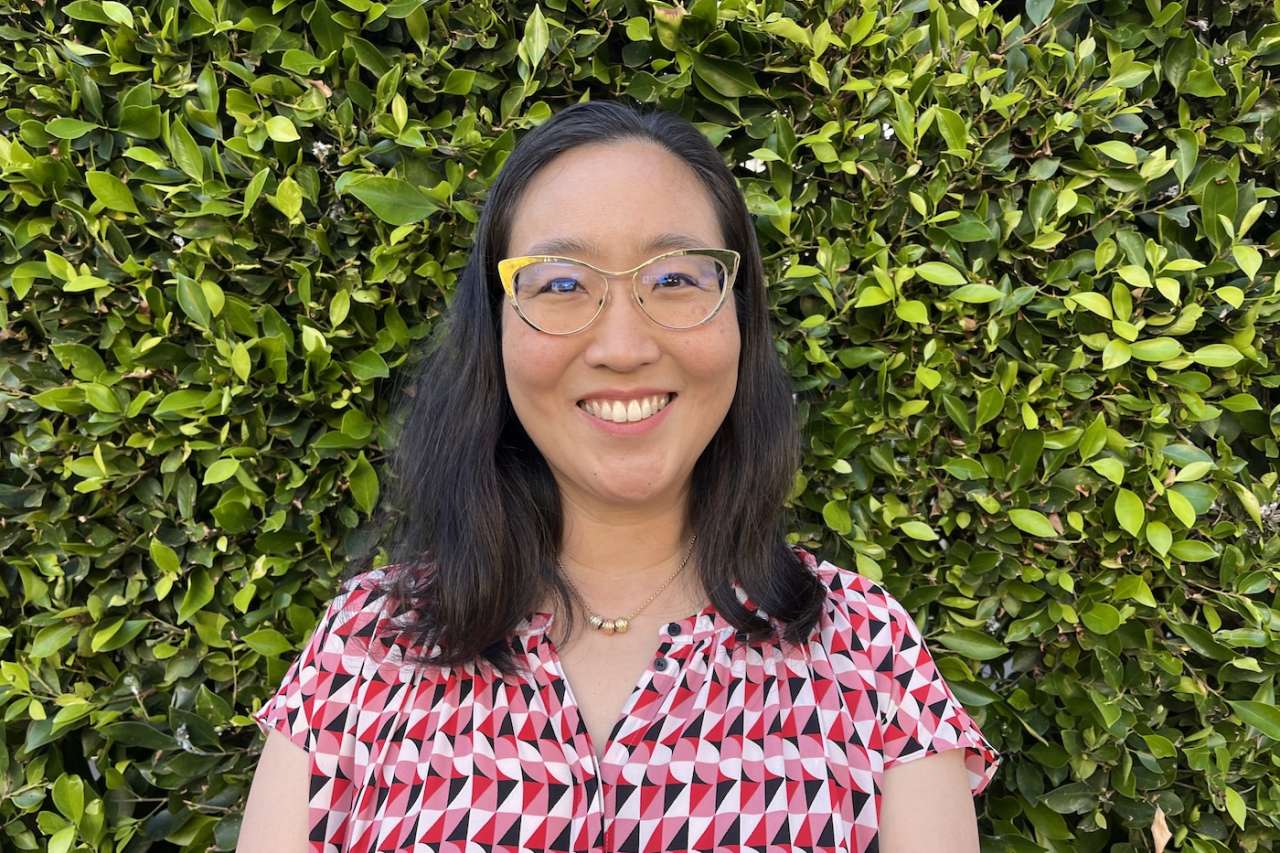
“That’s a key part of all this,” she said. “We hope we can continue to help build this patient community and have them be a resource and support for each other as well.”
While UCLA Health has a cancer predisposition clinic which runs year-round, the Bloom syndrome multidisciplinary clinic was developed taking patients’ unique needs into consideration, Dr. Chang said. She said at least two patients are flying in from other parts of the country to participate in this clinic.
Bloom syndrome is so rare that a historical patient registry only has 200 patients signed up over multiple decades. A new patient registry is launching this year, which Campbell and others believe will identify new patients from around the world. Bloom syndrome, like many other ultra-rare disorders, is thought to be underdiagnosed; many patients are only being diagnosed after having one or more cancers in their childhood or early adulthood.
Symptoms and risks of Bloom syndrome
The condition is “autosomal recessive,” which means a person must inherit a deficient Bloom syndrome gene (BLM) from both parents to be affected. Those who have only one copy of a deficient BLM gene are “carriers,” and could pass the carrier gene on to their children, but are not affected by the syndrome themselves.
While the most common and consistent symptom of the disease is small body size, other clinical symptoms may include:
- Lack of interest in feeding, particularly in infancy and early childhood
- Sensitivity to sunlight, resulting in a rash or blistering on the face and hands
- Immune-system deficiencies
- Frequent or chronic respiratory illness
- Recurrent ear infections
- Diabetes
- Decreased fertility or infertility
The biggest danger for people with Bloom syndrome is the high cancer risk. But cancer treatment for this group can be a tough puzzle to solve, Dr. Chang said.
“When they do develop cancer, it’s hard to treat because cancer treatments like chemotherapy and radiation work by damaging DNA, and these patients’ bodies don’t have DNA repair mechanisms in place,” she said. “We’re unable to give them full doses of chemotherapy or radiation because the side effects could kill them. And when we reduce the dosage, we can’t fully treat the cancers. It becomes this constant struggle of how much (drugs) we can give the patient to effectively treat the cancer, but also to have it be tolerable so the side effects aren’t overwhelming.”
Progress in diagnosis and treatment is slow
There is no cure for Bloom syndrome, but Dr. Chang said the focus is to improve cancer screening so cases are caught early. Cancer is what often shortens the life span of patients with the condition, she said.
“As genetic testing becomes more and more common, I believe we’ll be able to identify more patients with Bloom syndrome who have milder (cancer) cases, which are more treatable,” she said.
Another important development has been the creation of an international, virtual tumor board by the Bloom Syndrome Association, an advocacy group for affected individuals and their families, and its partners. Dr. Chang is on this board, which provides expert, multidisciplinary care recommendations for patients. The initiative connects treating physicians with global experts to help navigate complex cases. It also creates a mechanism to rapidly share insights across institutions, helping standardize care and accelerate learning about a condition where individual clinicians may only see one or two patients in a lifetime.
“We learn from each other about novel treatments and also improve our understanding of the treatment,” Dr. Chang said, adding that patients in the U.S. have more insurance barriers to genetic testing than patients from the United Kingdom or Europe, most of whom have universal health care.
“The whole genome sequencing can cost a few thousand dollars, which is prohibitive for many patients,” she said.
Multidisciplinary care
A multidisciplinary approach is crucial for people with Bloom syndrome because their condition is so complex, Dr. Chang said. Patients often have nutritional challenges because they lack appetite. Some patients may also need to be seen by allergists or immunologists because they tend to have immune deficiency.
“It’s important that all their care is coordinated and streamlined,” she said. “Being able to bring all these specialists together so we’re communicating effectively with each other and patients in terms of follow-up appointments, recommendations for blood work, imaging and so on, is vital.”
Experiences from treating patients like Calvin have directly informed the design of the clinic and related initiatives, ensuring they reflect real-world needs. Dr. Chang said it has helped avoid scenarios such as repeatedly poking children for blood tests. The UCLA Health Bloom syndrome clinic, which she hopes will become an annual event, enables all their health care needs to be addressed in one afternoon.
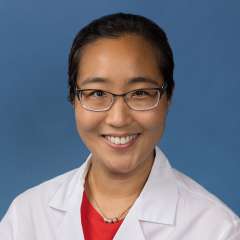
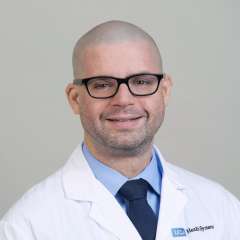
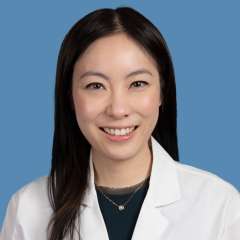
Dr. Chang said the Bloom syndrome clinic grew directly from the cancer predisposition clinic she started with clinical geneticist Julian A. Martinez, MD 10 years ago. In addition to Drs. Chang and Martinez, other participating specialists at the Bloom syndrome clinic include Caroline Kuo, MD (allergy/immunology); Carol Cheng, MD and Marcia Hogeling, MD (dermatology); Dennis Chia, MD (endocrinology); Elizabeth Marcus, MD and Marc Kaneshiro, MD (gastroenterology); Natacha Emerson, MD (psychology); and Wanxing Chai-Ho, MD (hematology/oncology).
A leader in Bloom syndrome research and treatment
Having Dr. Chang on their side and as a champion for the Bloom syndrome community has been a blessing, Campbell said.
“Vivian has an intellectual curiosity and emotional centeredness in the way she talks about what’s known and what’s not known,” she said. “She treats us as partners in Calvin’s care and recognizes that, unless we have evidence-based guidelines, it’s going to come down to individual decisions and bespoke treatment plans.”
Dr. Chang said she began treating patients with Bloom syndrome and other rare cancer predispositions in 2012. Her involvement grew out of a clinical and research focus on how genetics influence cancer risk. Since joining UCLA Health in 2012, Dr. Chang has established the first multidisciplinary genomics clinic for pediatric cancer disposition. She also worked on the genomic characterization of rare pediatric leukemias.
Her work has been heavily inspired by and built in collaboration with the Bloom Syndrome Association. She has co-authored position articles for the American Association of Cancer Research to create specialized cancer screening recommendations for those with rare DNA repair disorders such as Bloom syndrome. Her research looks into how the BLM gene deficiency affects stem cells and leads to leukemia, directly informing the bench-to-bedside care provided in her clinic.
Dr. Chang said the Bloom syndrome clinic will be strongly patient-centered.
“The one thing I kept hearing is that none of our doctors know what to do because they’ve never heard of Bloom syndrome,” she said. “So, we are really responding to what the patient community was asking for. We were also inspired by a similar clinic in the U.K.”
UCLA Health’s clinic addresses a crucial need
The UCLA Health Bloom syndrome clinic “is momentous” in so many ways for patients and families, Campbell said.
“Just to have the name ‘Bloom syndrome clinic,’ I didn’t know if it would happen in Calvin’s lifetime,” she said. “These clinics are paramount and necessary for improving care and ultimately developing treatments and cures.”
Campbell said taken together, these efforts -- including the new patient registry, the international virtual tumor board and the multidisciplinary clinic -- are designed to create a coordinated, learning health system for Bloom syndrome, where clinical care, data collection and research continuously inform one another.
It’s not just the medical care, but also the social support that comes with such a clinic, that’s invaluable to patients and their families. Campbell says patients and their families live with this sword of Damocles hanging over their heads, not knowing when they might be confronted with a cancer diagnosis.
“There are good days, but we know it’s not going to last forever,” she said. “Sometimes, it takes away from being able to live a carefree, happy life. Calvin is smaller than his younger brother. He also gets fatigued easily and can’t participate in sports or other activities. Some kids have a facial rash that requires sunscreens and hats to relieve. For many children, all this could mean bullying, people staring or making comments.”
Given these challenges, support becomes critical for patients and families, Campbell said.
“We have found great solace in connecting with others in the community because they understand what you’re going through.”