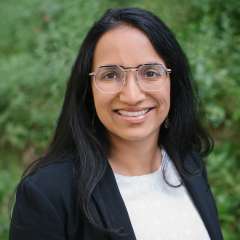
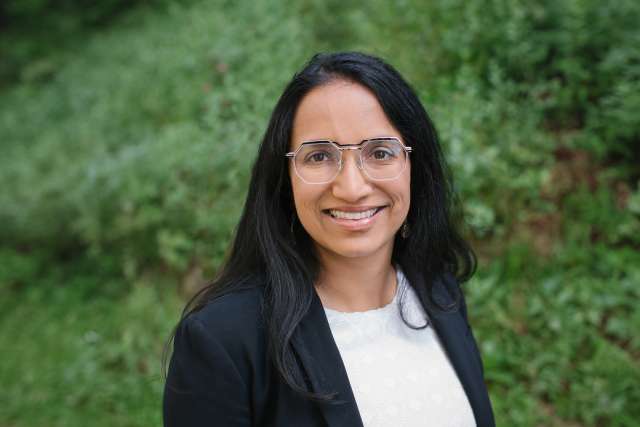
Dr. Aparna Bhaduri, assistant professor of medicine and biological chemistry at the David Geffen School of Medicine at UCLA, has been named a recipient of the 2026 Pershing Square Sohn Cancer Prize, a national award recognizing innovative early-career scientists pursuing bold approaches to cancer research.
Bhaduri, a member of the UCLA Health Jonsson Comprehensive Cancer Center and the Eli and Edythe Broad Center of Regenerative Medicine and Stem Cell Research at UCLA, is one of 13 scientists selected by the Pershing Square Sohn Cancer Research Alliance. The award provides $750,000 in funding to support high-impact projects at a critical stage in investigators’ careers, with the potential to transform cancer care.
Bhaduri’s research focuses on improving how scientists study and treat glioblastoma, an aggressive and difficult-to-treat brain cancer. She has developed advanced human organoid models that better replicate the complexity of tumors, including their interactions with the immune system. Using these systems, her team aims to identify the specific cell populations that drive tumor growth and resistance to therapy, and to test new targeted and immune-based treatments designed to eliminate them.
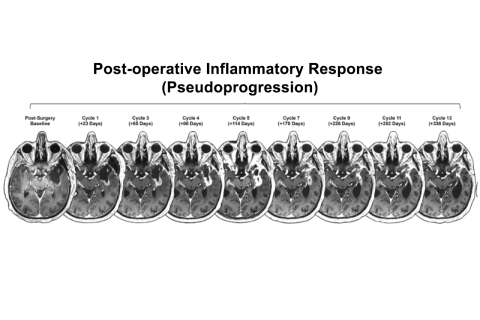
Most recently, her work was published in two studies in Cell Reports, demonstrating the power of these advanced organoid models. Bhaduri and her team showed how glioblastoma tumors interact with surrounding brain cells and the immune system to become more invasive and resistant to therapy. The studies identified key communication pathways driving tumor aggressiveness and revealed why immune-based treatments, such as checkpoint inhibitors, may activate the immune system but still fail to eliminate the cancer — offering insights that could help guide more personalized and effective therapies.
“This recognition supports our goal of building more accurate human models of glioblastoma to better understand how these tumors evolve and evade treatment,” said Bhaduri. “By uncovering the interactions between cancer cells, the brain and the immune system, we hope to identify new therapeutic strategies that can ultimately improve outcomes for patients.”