
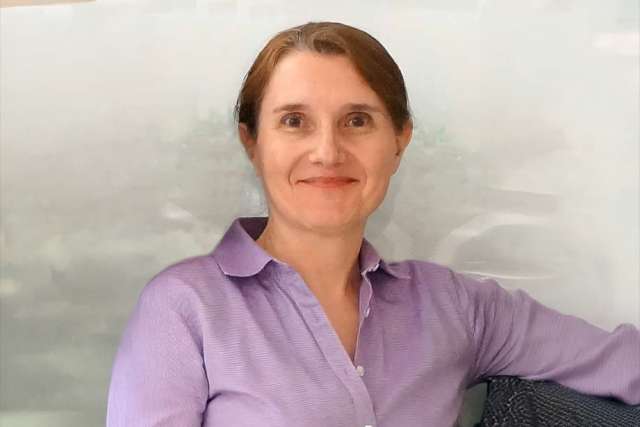
Dr. Sandra Orsulic, professor of obstetrics and gynecology at the David Geffen School of Medicine at UCLA, has received two federal awards totaling nearly $1.9 million to advance research aimed at improving outcomes for women with ovarian cancer.
The awards support research focused on preventing ovarian cancer recurrence after surgery and developing more accessible tools to guide personalized cancer treatment.
“Ovarian cancer remains one of the deadliest gynecologic cancers, in part because many patients are diagnosed at advanced stages and tumors frequently recur after treatment,” said Orsulic, who is also a member of the UCLA Health Jonsson Comprehensive Cancer Center. “We hope these newly funded studies will help address critical gaps in both the treatment and recovery of this disease.”
Preventing surgery from helping cancer spread
For the first grant, awarded by the Department of Veterans Affairs for nearly $1.1 million, Orsulic and her team will examine how the body’s inflammatory response after abdominal surgery may unintentionally help ovarian cancer cells survive and spread.
While surgery is often lifesaving, surgical injury triggers a wound-healing response that can lead to painful abdominal adhesions and other complications. Tissue damage caused during cancer surgery may also create an environment that helps microscopic cancer cells attach to healing tissue and grow, increasing the risk of recurrence.
Building on earlier research, Orsulic’s team found that neutrophils, immune cells that rapidly arrive at sites of injury, may help drive this inflammatory process and create conditions that allow cancer cells to take hold after surgery. Her team will test FDA-approved drugs that target neutrophils to determine whether they can reduce abdominal adhesions and decrease the likelihood of ovarian cancer recurrence after surgery.
The research could ultimately lead to new perioperative treatment strategies that improve recovery and long-term survival for ovarian cancer patients, while also benefiting patients undergoing surgery for other abdominal cancers and non-cancerous abdominal conditions.
Using AI to personalize treatment
The second grant, an $800,000 award from the Department of Defense’s Congressionally Directed Medical Research Programs through the Defense Health Agency, focuses on helping doctors choose the best treatments for ovarian cancer patients with the help of artificial intelligence (AI).
The team will use AI to analyze routine pathology slides and identify tumors with homologous recombination deficiency (HRD), a DNA repair weakness that can make cancers more responsive to certain therapies, including PARP inhibitors, a type of targeted therapy drug commonly used to treat ovarian cancer.
Currently, identifying HRD often requires expensive and time-consuming genetic testing. Orsulic’s team hopes to develop a faster, lower-cost alternative by teaching AI systems to recognize subtle patterns in tumor cell structure that may predict treatment response using standard pathology slides already collected during patient care.
The researchers will also use the technology to help identify new drugs that may be effective against difficult-to-treat ovarian cancers. The approach could help physicians more quickly match patients with the therapies most likely to benefit them.
“Together, the two projects reflect a broader effort to improve ovarian cancer care through innovative strategies that combine cancer biology, artificial intelligence and translational research aimed at rapidly moving discoveries toward patient care.”