
Hellen Jumo Spotlight
Meet Hellen Jumo
By Saket Rao and Suvan Yerramilli, October 20, 2026
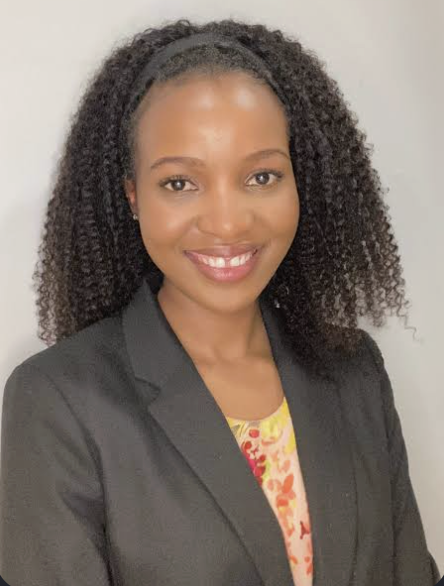
In the United States, some children dream of becoming astronauts, reaching for the stars. Others want to become professional athletes, achieving glory in front of millions. But as a young girl growing up in Kwekwe, Zimbabwe, Hellen’s dream looked very different. For her, the greatest dream was to one day become a gold panner. In her city, life revolved around gold. Nearly everyone was connected to mining in some way, whether as a miner, a gold panner, or through supporting those
who were. For most women in her village, their life’s path was already set: marry young, raise children, and begin motherhood as teenagers. Pursuing any kind of higher education or professional career was not only unheard of, but unimaginable.
On top of that, healthcare in Kwekwe looked different from what most of us imagine. Going to clinics was a rarity; in fact, the town itself had only one small clinic, staffed by one or two nurses. Instead, many were well-versed in the practice of traditional medicine, passed down through generations. Natural materials like tree leaves were used to soothe headaches, and steam to ease colds. These practices were familiar, trusted, and ingrained in the community and culture. As a result, hospitals were often seen as a last resort. As Hellen recalls, “The only time you would go to the clinic in my town was when you were very, very sick and about to die”.
This reality became devastatingly real when Hellen’s mother fell ill.
After traditional remedies and the town’s clinic failed to help heal her mother, Hellen’s family was forced to travel outside the town in search of a new form of medical care. For the first time in her life, Hellen encountered a doctor. Even as a child, the moment left a lasting impression. As the doctor explained her mother’s symptoms and diagnosis, Hellen was captivated. “I thought that was so cool… There are people in the world who exist just to give people answers.” While her mother ultimately passed away, the experience changed the course of Hellen’s life. For the first time, she began to imagine a future beyond mining gold or becoming a teenage mother. For the first time, she imagined that one day, she could be the one giving people answers.
But her journey only grew harder once it started.
After losing both of her parents, Hellen was raised by her grandparents, who sold firewood and maize to help pay for her education. There were even days when Hellen avoided the school administration because she knew they would ask about unpaid tuition. At a time when many of her peers were already married and raising children by the age of 14, Hellen remained focused on finishing school. And in classrooms where boys often outnumbered girls by as much as 50 to 1, simply continuing her education required persistence and resilience every single day. Yet amidst these challenges, Hellen thrived. In an environment where many around her abandoned their education and accepted the paths laid out before them, she chose the harder road instead. She continued her education despite the innumerable obstacles. Whenever the imbalance felt overwhelming, her grandfather would remind her to “pretend there was no difference” so she could continue pushing forward. Her perseverance was eventually rewarded. Her determination, academic excellence, and commitment to leadership eventually earned her acceptance into the United States Achievers Program (USAP), a highly selective initiative that identifies exceptional low-income students across Zimbabwe and prepares them to pursue higher education in the United States. The selection process was rigorous, involving applications, interviews, academic assessments, and evaluations of leadership and community impact. Out of hundreds of applicants, only a small group of students were ultimately selected. But even after being accepted, the path to the United States was far from guaranteed. Hellen initially received only a partial scholarship and still needed funding, a visa, and a passport to make attending college possible. For Hellen and her grandparents, the magnitude of the opportunity was difficult to fully grasp. The idea that their granddaughter could travel across the world for an education was far beyond anything they had ever imagined.
Arriving in New York was yet another major change that Hellen was prepared to face head-on. For the first time, she found herself surrounded by opportunities that had once felt unimaginable. Everywhere she looked, she saw women leading companies, conducting research, and pursuing careers she had never known were possible. Coming from an environment where women were rarely encouraged to pursue higher education, simply witnessing women in positions of leadership reshaped her understanding of what her own future could look like. Programs like the Women’s Scholars Program, where students were paired with women leaders in business and medicine, further expanded her sense of what was possible. As Hellen recalls, she would often walk around campus asking people about their careers, fascinated by the different paths their lives had taken. “I was so amazed… especially seeing women and thinking, wow, you’re a woman, and you can do this.” And as the world opened itself to her, Hellen embraced every opportunity she encountered, determined not to let any possibility pass her by. As her interests in medicine and research deepened, Hellen began conducting research on human brain development at Harvard Medical School and Boston Children’s Hospital. What began as a childhood fascination with finding answers had evolved into a passion for scientific discovery and patient care. Along the way, Hellen became involved with mentorship and professional development programs such as EACE/FCE, which connected students with physicians, researchers, and leaders in medicine. Through these experiences, she was introduced to Dr. Anjay Rastogi and the CORE Kidney team. The mentorship, research exposure, and sense of community she found through CORE further strengthened her commitment to medicine and ultimately helped guide her toward nephrology. Whenever people told her something was impossible, Hellen found herself returning to the same thought: “Do you know where I came from? There is no way you can tell me I can’t at least try.” These experiences culminated in her acceptance to the David Geffen School of Medicine at UCLA.
At UCLA, Hellen found herself drawn to nephrology, particularly the study of IgA nephropathy. What initially began as an academic interest in kidney physiology and chemistry gradually evolved into something much deeper through her clinical experiences and mentorship under Dr. Anjay Rastogi and the CORE Kidney team. Through her work with CORE, Hellen became involved in research surrounding a national registry for patients with IgA nephropathy, contributing to efforts aimed at better understanding and improving outcomes for individuals living with rare kidney diseases. During her discovery year at UCLA, Hellen also pursued a Master’s in Clinical Research while contributing to the CORE Kidney IgAN Registry, one of the largest IgA nephropathy databases in the country. For Hellen, the work resonated on both an intellectual and personal level. She was drawn not only to the science behind nephrology, but also to the long-term relationships physicians build with their patients and families over time. Coming from a background where healthcare often felt distant and inaccessible, she deeply values the sense of trust, continuity, and community that nephrology can provide. In many ways, Hellen sees echoes of the community-centered care she witnessed growing up around traditional medicine in Zimbabwe. When her mother was sick, care was never carried by one person alone—it involved family, support systems, and community. That same emphasis on long-term support and human connection is part of what drew her to the work being done through CORE Kidney. She describes Dr. Rastogi’s mentorship as transformative, emphasizing not only his guidance in research and medicine, but also his willingness to connect students with opportunities, projects, and people who can help them grow. Following that example, Hellen has embraced opportunities to mentor others herself through organizations such as the Bruin Beans Health Club, mentoring undergraduate students pursuing careers in medicine. While few students may fully relate to the circumstances she overcame, the resilience, perspective, and sense of purpose shaped by her experiences have become a source of guidance and inspiration for those around her. She hopes her story encourages others to better understand the realities faced by communities with limited access to education, healthcare, and opportunity.
Yet Hellen’s impact extends far beyond the classroom, clinic, or research lab. Remembering the barriers that once stood in her own way, she founded the GoalGetter Foundation to support orphaned girls, teenage mothers, and widowed women in Zimbabwe through education and vocational training. For Hellen, education was never just about academics, but about possibility. It was education that allowed her to imagine a future beyond the limitations that once surrounded her, and she wanted other young women to experience that same sense of empowerment and choice. Through the GoalGetter Foundation, thousands of girls and women have been supported in returning to school or completing vocational training programs in areas such as baking and cosmetology. But beyond the certificates and coursework, Hellen hopes to give these women something deeper: the confidence that they are capable of building futures for themselves.
To Hellen, leadership is not simply about achieving success for herself. It’s about creating pathways for others to rise alongside her. As she puts it, “It doesn't have to just be me sitting at the table, but I can create opportunities for others to come sit at the table with me.”
Looking back, Hellen’s journey has been defined not by the absence of doubt or hardship, but by her refusal to let either determine the boundaries of her future. From a childhood in Kwekwe where becoming a doctor once felt unimaginable, to conducting research at some of the world’s leading medical institutions and studying medicine at UCLA, her story is a testament to the power of perseverance, faith, and opportunity.
Along the way, there were countless moments where others questioned whether her dreams were realistic. Whether someone from her background could truly pursue medicine, let alone succeed in it. Yet through every setback and obstacle, Hellen continued to move forward, believing that possibility is often discovered only after choosing to try.
Today, that belief remains at the center of the advice she gives to others: “Do not tell yourself no before the world has the chance to answer.”