
The Movement System Syndromes of the Lumbar Spine
The Movement System Syndromes of the Lumbar Spine
May 16, 2026
8:00 am to 5:00 pm
1000 Veteran Ave., Los Angeles, CA 90024
Registration
UC Employees
Non-UC Therapists
Due to travel limitations, Dr. Shirley Sahrmann will deliver the lecture portion of the course via Zoom. To ensure a high‑quality hands‑on learning experience, four onsite lab assistants, all former Movement System mentors and fellows, will facilitate and support the lab sessions.
Course Description: The virtual component of the course will describe the kinesiopathological model, the theoretical construct of the movement system. The model consists of the proposed factors contributing to the development of movement as a cause or exacerbator of pathology and movement system syndromes. The movement-related lumbar syndromes of the system will be discussed. The systematic examination for the diagnosis of lumbar syndromes will be demonstrated. The onsite participants will be instructed in and practice the examination. The demonstration of the exam will provide information to the participants about the tests and impairments in patients with lumbar problems. The treatment of the syndrome will be described. The best available evidence for the movement system syndromes will be presented.
The participant should be able to discuss the key concepts of the Kinesiopathological model:
- Path of least resistance
- Law of Minimum Effort
- Neuromuscular activation patterns
- Relative musculotendinous active and passive tension
- Relative musculotendinous stiffness
- Joint relative flexibility
- Micro-instability
- Accessory motion hypermobility
- Suboptimal and provocative alignment and movement patterns
- The role daily activities are performed in cause and treatment
Learning Outcomes: By the end of this class, the participants will be able to:
- Discuss the components of the Kinesiopathological model.
- Discuss the movement system syndromes of the lumbar spine
- Describe and demonstrate the systematic examination used to diagnose the lumbar movement system syndrome.
- Discuss the treatment programs for the syndromes.
- Discuss the best available evidence.
Course Schedule/Agenda:
| 7:30-8:00 | Registration and breakfast (provided) |
| 8:00-9:15 | Kinesiopathological model and Lumbar Syndromes |
| 9:15-10:15 | Demonstration of exam – on Zoom |
| 10:15-10:30 | Q&A |
| 10:30-10:45 | Break |
| 10:45-12:30 | Demonstrate and practice tests in groups of 3 |
| 12:30-1:30 | Lunch (on your own) |
| 1:30-3:00 | Exam of subject with low back pain, diagnose and develop treatment program in small groups |
| 3:00-4:30 | Exam of subject with low back pain, diagnose and develop treatment program in small groups |
| 4:30-5:00 | Q&A |
Instructional Methods: Lecture and lab with hands-on practice
Target Audience: PT, PTA
Educational Level: Intermediate
Prerequisites: None
Completion Requirements: To earn a certificate of completion, participants must:
- Attend the entire duration of the professional development activity.
- Completion of post-course evaluation no later than 48 hours after the class. A link to the evaluation will be emailed to you following the class.
- Successfully demonstrated competency during the lab portion of the course.
- No partial credit will be awarded.
Cancellation Policy:
Provider Cancelation: The Rehab Education Committee reserves the right to cancel a course due to low enrollment, unforeseen circumstance, or instructor availability. In such cases, participants will be notified via email as soon as possible.
Participant Cancellation: If you are unable to attend, please email [email protected] at least 7 days before the course date. This class is nonrefundable for UC employees. Non‑UC participants are eligible for a refund if requested at least 7 days before the class.
Complaint Policy: UCLA Rehabilitation Education Committee strive to provide professional development that highlights today’s best practices. If you have complaints, please contact [email protected] no later than a week after the event and the Education Committee will review your concerns and respond to you as soon as possible.
Accommodation Request: For questions and accessibility request, contact Joan Vicente at [email protected] or at 424-440-0369 seven days before the course date.
Instructor Bios
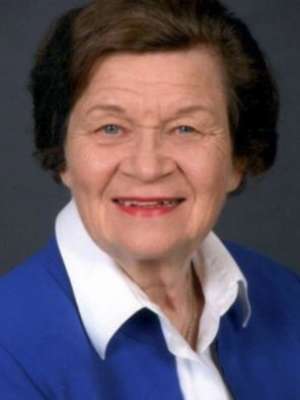
Shirley A. Sahrmann, PT, PhD, FAPTA
Shirley A. Sahrmann, PT, PhD, FAPTA is Professor Emerita of Physical Therapy at Washington University School of Medicine - St. Louis, Missouri. She received the BSPT, AM, and PhD in Neurobiology from Washington University. She was the first director of the PhD program in Movement Science. She is a Catherine Worthingham Fellow of the APTA and has received the Mary McMillan, Marion Williams research, Lucy Blair Service, Kendall Practice, and John H.P. Maley Awards Dr. Sahrmann has also received Washington University's Distinguished Faculty Award, the Distinguished Alumni Award, the School of Medicine’s Inaugural Distinguished Clinician Award and an honorary doctorate from the University of Indianapolis. She has also received the Bowling-Erhard Orthopedic Clinical Practice Award from the Orthopaedic Academy of the APTA. She has served on the APTA Board of Directors and as president of the Missouri Chapter. Her first book, Diagnosis and Treatment of Movement Impairment Syndromes, has been translated into seven languages; her second book, Movement System Impairment Syndromes of the Cervical and Thoracic Spines and the Extremities, has been equally influential in promoting movement diagnoses. Dr. Sahrmann has been a keynote speaker at the World Confederation of Physical Therapy, Canadian, Australian, New Zealand, Japan, Thailand, Sweden, Finland, and Danish national congresses.
Disclosure: Dr. Sahrmann receives royalties from a book Diagnosis and Treatment of Movement Impairment Syndromes published by Elsevier.
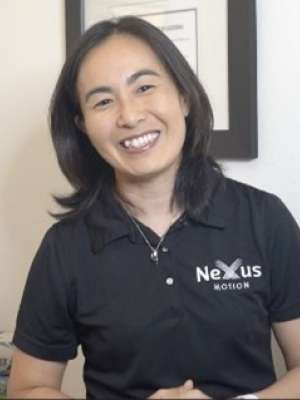
Maiko Morotani, PT, DPT
Maiko Morotani, PT, DPT is from Osaka Japan. She received her DPT degree from WashU Medicine Physical Therapy. It has been Maiko’s mission to continue learning about the movement system, and to share the knowledge with her Japanese physical therapy community. She is one of seven Japanese translators of the textbook Movement System Impairment Syndromes of the Extremities, Cervical and Thoracic Spines. Since 2014, she started Nexus Motion, a continuing education company to primarily help Japanese physical therapists. Her role has evolved more recently, as Nexus Motion collaborates with WashU Medicine Physical Therapy to organize their flagship movement system continuing education courses. Maiko has taught movement system courses in Japan, US, Thailand, and was a keynote speaker at the 2023 Asian Confederation of Physical Therapy Congress. She treats patients with neuromusculoskeletal dysfunctions in the Los Angeles area and provides mentoring services to clinicians.
Disclosure: Maiko Morotani does not have any relevant financial or non-financial relationships to disclose.
Joan Vicente, PT, DPT, PhD
Joan Vicente, PT, DPT, PhD earned her physical therapy degree in the Philippines in 2004 and is a Board-Certified Clinical Specialist in Orthopaedic Physical Therapy. She completed fellowship training in Movement System at Washington University in St. Louis and currently serves as a Rehab Clinical Educator at UCLA Health. Dr. Vicente is also an adjunct faculty member in the Doctor of Physical Therapy program at Hawai‘i Pacific University, where she teaches Movement Science and Musculoskeletal coursework.
She earned her PhD in Health Sciences from Rocky Mountain University of Health Professions with a concentration in Orthopedic Sports Science. Her research focuses on thoracic spine and how it affects the other regions of the body. Dr. Vicente integrates Schroth-based scoliosis management into her clinical practice and has served as a regional mentor for the Movement System Clinical Fellowship at Washington University in St. Louis, contributing to Movement System Syndromes education.
Disclosure: Dr. Vicente is the Rehab Clinical Educator at UCLA Health. She has no other relevant financial or non-financial relationships to disclose.
Michael Salazar PT, DPT
In 1997, Michael Salazar PT, DPT received his physical therapy degree in the Philippines. He became and Orthopedic Certified Specialist in 2010 and received his Transitional DPT in 2011 at Western University of Health Sciences. Attending Clare Frank’s courses kindled his keen interest in Movement Science. He became a Movement System Fellow at Washington University and was fortunate to learn Movement System from Dr. Sahrmann and the faculty and mentored by Maiko Morotani. Michael also became a Therapeutic Pain Specialist in 2021.
Michael practices at UCLA Health in Santa Monica, California. He has lab assisted for several Movement System classes in Los Angeles.
Disclosure: Michael Salazar is a paid UCLA Health employee. He has no other relevant financial or non-financial relationships to disclose.
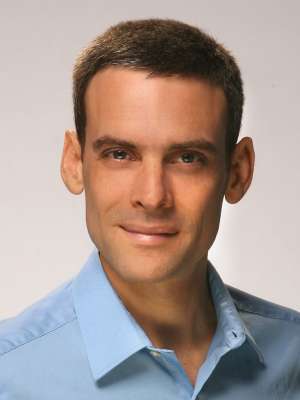
Nick Kietzman-Greer, PT, DPT
Nick Kietzman-Greer, PT, DPT is a Senior Physical Therapist at Adventist Health Glendale’s Therapy & Wellness Center in Los Angeles, where he treats patients with orthopedic and movement system conditions, with particular expertise in running-related injury prevention and rehabilitation. He earned his Doctor of Physical Therapy and BA in Spanish from Creighton University and completed a Movement System Clinical Fellowship at Washington University in St. Louis. As a board-certified Orthopedic Clinical Specialist and a Level 2 certified running gait analyst, Dr Kietzman-Greer works with athletes ranging from recreational to collegiate level track and ultra-distance runners.
Dr. Kietzman-Greer previously served in the Dominican Republic as a clinician, educator, and researcher, contributing to competency-based curriculum development, organizing continuing education programs, and supporting the establishment of the national professional association as a member of World Physiotherapy.
Disclosure: Nick Kietzman-Greer does not have any relevant financial or non-financial relationships to disclose.
UCLA Health Rehabilitation Services is recognized by the PT Board of California as a Continuing Competency Approval Agency to approve providers offering continuing competency courses. This course is approved for 0.775 CEUs (7.5 contact hours).